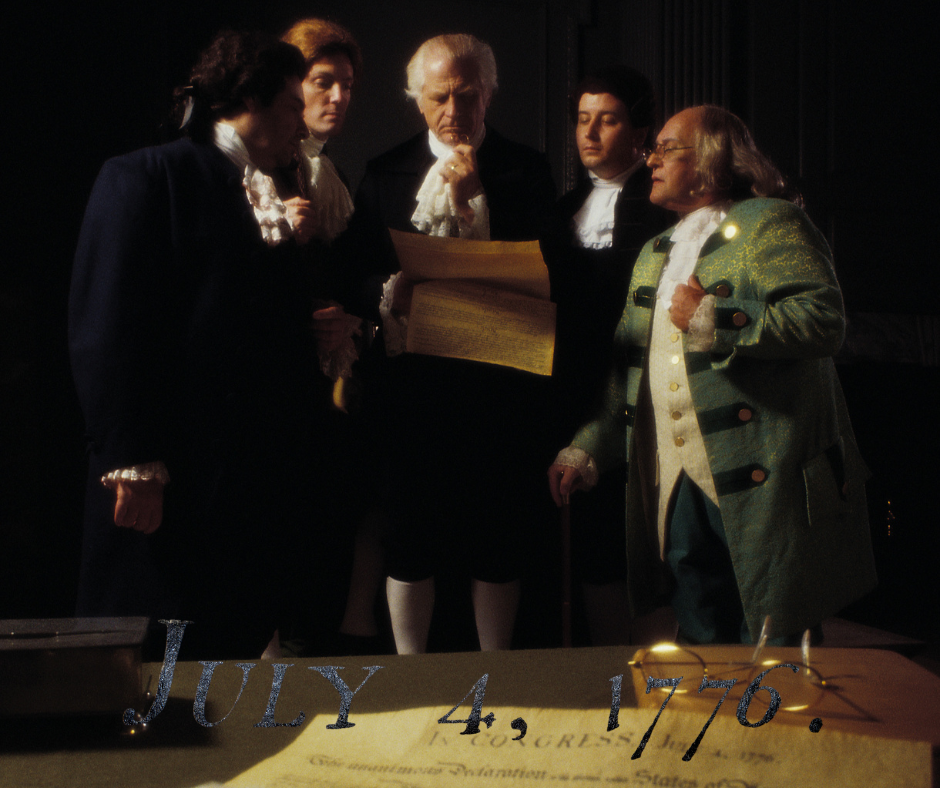
The Founding Fathers of the United States are often revered figures, seen as brilliant and virtuous individuals who single-handedly crafted the nation we know today. However, history is rarely so simple. Over time, certain myths and misconceptions have taken hold, obscuring the complexities and nuances of these individuals and their actions. In this blog post, we'll delve into some of the most common misconceptions surrounding the Founding Fathers, aiming to provide a more balanced and accurate understanding of their lives, motivations, and the world they inhabited.
This blog post serves as a companion piece to our latest podcast episode, "America Explained | What America’s Founders Got Right and Wrong." In that episode, we discussed the legacies of figures like Ben Franklin, George Washington, and Thomas Jefferson, examining both their achievements and their shortcomings. We encourage you to listen to the episode for a more in-depth exploration of these topics. Now, let’s jump into debunking some myths!
Separating Fact from Fiction
Myth: The Founding Fathers All Agreed on Everything
One of the most pervasive myths is that the Founding Fathers were a unified group with identical beliefs and goals. The reality is far more complex. While they shared a common desire for independence from British rule, they held widely divergent views on the ideal form of government, economic policy, and the role of religion in public life.
Reality: Debates, Compromises, and Diverse Ideologies
The Constitutional Convention of 1787 was a hotbed of debate and compromise. Figures like Alexander Hamilton, a staunch Federalist, advocated for a strong central government, while Thomas Jefferson, an Anti-Federalist (at least initially), championed states' rights and individual liberties. James Madison, often hailed as the "Father of the Constitution," played a crucial role in mediating these conflicting viewpoints and forging compromises that ultimately led to the ratification of the Constitution.
The Federalist Papers, a series of essays written by Hamilton, Madison, and John Jay, provide valuable insights into the different perspectives and arguments that shaped the early American government. Reading these essays reveals the depth and complexity of the debates that took place, demonstrating that the Founding Fathers were far from a monolithic group.
Myth: They Were All Elites and Out of Touch
Another common misconception is that the Founding Fathers were all wealthy elites, disconnected from the concerns of ordinary Americans. While many came from privileged backgrounds, this is not universally true.
Reality: Diverse Backgrounds and Professions
While some, like George Washington and Thomas Jefferson, inherited wealth and land, others rose through the ranks through hard work and talent. Benjamin Franklin, for example, was the son of a candle maker and apprenticed as a printer before becoming a successful entrepreneur, scientist, and statesman. John Adams was a lawyer of modest means before entering politics. Even those who came from wealth often had diverse experiences. Many served in the military, participated in local government, and actively engaged in the political and social issues of their day.
Furthermore, the term "elite" can be misleading. While they may have held positions of power and influence, many of the Founding Fathers were deeply committed to the principles of republicanism and believed in the importance of civic virtue and public service. They saw themselves as representatives of the people and strived to create a government that would serve the interests of all citizens, not just the wealthy and powerful.
Myth: The Founding Fathers Were Deists
It is often said that the Founding Fathers were all Deists, subscribing to a belief in a distant, uninvolved God. While Deism was indeed a prevalent philosophical current during the Enlightenment, it is inaccurate to paint all the Founders with the same brush.
Reality: A Spectrum of Religious Beliefs
The religious beliefs of the Founding Fathers were diverse and complex. Some, like Thomas Jefferson, were indeed influenced by Deistic ideas, emphasizing reason and natural law over traditional religious doctrines. Others, like John Adams, were more conventionally religious, adhering to Christian beliefs and practices. Patrick Henry was a devout Christian and his religious conviction heavily influenced his stance on many political issues.
It's important to avoid imposing modern categories and definitions onto historical figures. The religious landscape of the 18th century was very different from our own, and the Founding Fathers' beliefs often defied easy categorization. They engaged with questions of faith, reason, and morality in ways that were unique to their time and context.
Myth: They Created a Perfect System
Perhaps the most dangerous myth is the notion that the Founding Fathers created a perfect political system, free from flaws and immune to future challenges. This belief can lead to complacency and a reluctance to address the very real problems facing our nation today.
Reality: Recognizing Imperfections and Striving for Improvement
The Founding Fathers themselves recognized the imperfections in the system they created. The Constitution was a product of compromise, and it contained provisions that were deeply problematic, most notably the issue of slavery. Many of the Founders grappled with the moral implications of slavery, but they were ultimately unable to resolve the issue, leaving it to future generations to address.
The process of amending the Constitution demonstrates the Founders' understanding that the system would need to evolve over time. The Bill of Rights, added shortly after the Constitution's ratification, was a direct response to concerns about the potential for government overreach and a testament to the ongoing dialogue about the balance between individual liberties and collective security.
Myth: The Separation of Church and State
The phrase "separation of church and state" is often invoked in discussions about the role of religion in American public life, but its meaning is frequently misunderstood.
Reality: A Nuanced Understanding
The First Amendment to the Constitution prohibits Congress from making any law "respecting an establishment of religion, or prohibiting the free exercise thereof." This clause, often referred to as the Establishment Clause and the Free Exercise Clause, has been interpreted in various ways throughout American history. The Founding Fathers held different views on the proper relationship between religion and government.
While some, like Jefferson, advocated for a "wall of separation" between church and state, others believed that religion played an important role in fostering civic virtue and morality. Understanding the nuances of their perspectives is crucial for navigating the ongoing debates about the role of religion in public schools, government funding for religious organizations, and other contentious issues.
Spotlight: Ben Franklin - The Entrepreneur
Benjamin Franklin embodies the spirit of American ingenuity and entrepreneurship. From humble beginnings, he rose to become a successful printer, publisher, inventor, scientist, and diplomat. His life and career offer valuable lessons for aspiring entrepreneurs today.
The Junto: A Mastermind Collaboration
One of Franklin's most innovative creations was the Junto, a club for mutual improvement and intellectual exchange. The Junto brought together individuals from diverse backgrounds to discuss important issues, share knowledge, and support each other's endeavors. This early form of mastermind group fostered collaboration, innovation, and civic engagement. The Junto reflects the essence of individuals coming together for the common good.
Spotlight: George Washington - The Reluctant Leader
George Washington is often regarded as the indispensable man of the American Revolution. His leadership during the war and his willingness to serve as the first president of the United States were crucial to the success of the new nation.
Stepping Down: A Moment of Moral Authority
One of Washington's most significant contributions was his decision to step down from the presidency after two terms. This act of self-restraint established a precedent that has been followed by nearly every president since, reinforcing the principle of civilian control of the military and preventing the rise of a potential dictator. This continues to be a moment of moral authority for all leaders today.
Spotlight: Thomas Jefferson - Philosopher and Dealmaker
Thomas Jefferson was a complex and multifaceted figure. He was a philosopher, writer, architect, inventor, and statesman. His contributions to American political thought and his role in shaping the nation's early history are undeniable.
The Louisiana Purchase: An Instance of Improvisation
Jefferson's decision to purchase the Louisiana Territory from France in 1803 was a bold and pragmatic move that doubled the size of the United States. While the purchase raised constitutional questions, Jefferson believed that it was essential for the nation's long-term security and prosperity. It remains a testament to his vision and his ability to seize opportunities when they arose.
Lessons for Modern Leaders: What We Can Learn From the Founders
Despite the vast differences between the 18th century and the 21st, the Founding Fathers offer valuable lessons for modern leaders in all fields. Their emphasis on civic virtue, public service, and the importance of compromise are as relevant today as they were centuries ago. Their struggles with difficult ethical dilemmas, their commitment to reasoned debate, and their willingness to adapt to changing circumstances provide a roadmap for navigating the complex challenges of our own time.
Appreciating the Complexity of the Founding Fathers
In conclusion, the Founding Fathers were not mythical figures, but complex and flawed individuals who grappled with difficult challenges and made difficult choices. By acknowledging their imperfections and complexities, we can gain a deeper and more nuanced understanding of their contributions to American history. We can learn from their successes and their failures, and we can use their example to guide our own efforts to create a more just and equitable society.
We hope this blog post has shed some light on the common misconceptions surrounding the Founding Fathers. For a deeper dive into the topic, be sure to check out our podcast episode: "America Explained | What America’s Founders Got Right and Wrong". Thanks for reading and listening!

The Entrepreneurial Spirit Knows No Age: Launching Businesses After 60 and 70

 RSS Feed
 Goodpods
 Apple Podcasts
 Spotify
 Amazon Music
 TuneIn
 iHeartRadio
 Pandora
 Podchaser
 Castbox
 Overcast
 Podcast Addict
 Castro
 PlayerFM
 YouTube