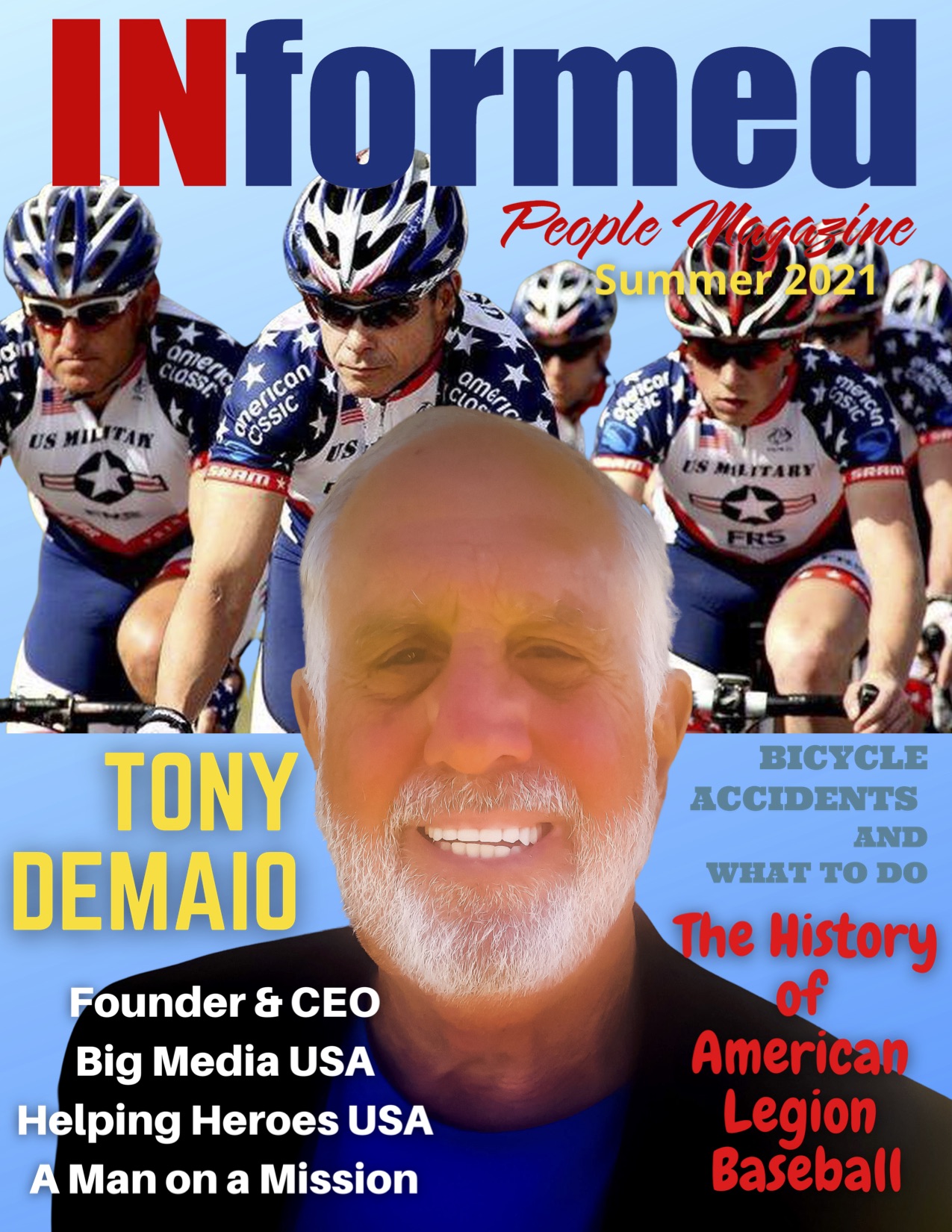
Tony DeMaio, founder of Helping Heroes USA, joins Rich Bennett for a deeply moving conversation about veteran suicide prevention, compassion, and the power of human connection. Tony shares real warning signs, practical ways anyone can help, and the incredible role his service dog Coco Bear plays in bringing comfort to veterans and seniors. This is an episode every listener should hear and share.


Tony DeMaio, founder of Helping Heroes USA, joins Rich Bennett for a deeply moving conversation about veteran suicide prevention, compassion, and the power of human connection. Tony shares real warning signs, practical ways anyone can help, and the incredible role his service dog Coco Bear plays in bringing comfort to veterans and seniors. This is an episode every listener should hear and share.
Sponsored by Eco-Cool HVAC
Guest Bio:
Tony DeMaio is the founder of Helping Heroes USA, a 501(c)(3) nonprofit dedicated to preventing veteran and first responder suicide through awareness, education, and community connection. Though not a veteran himself, Tony has spent years working closely with veterans, listening to thousands of stories and building programs that empower families, friends, and communities to recognize warning signs and take action. His book Silent Battle serves as a practical guide for supporting those at risk.
Main Topics:
· Veteran suicide prevention and warning signs
· Why connection matters more than credentials
· The role of family, friends, and community
· Breaking stigma around mental health
· Firearms safety during mental health crises
· Support Angels and mentorship
· Isolation, depression, and behavioral red flags
· Coco Bear’s impact as a service dog
· Why gratitude and compassion save lives
· Helping Heroes USA – https://helpingheroesusa.org
· Silent Battle by Tony DeMaio
· American Legion
· Tunnel to Towers Foundation
· Be The One Program
· 988 Suicide & Crisis Lifeline
· Episode Sponsor: Eco-Cool HVAC
· Supporters at end:
o Supporter: Full Circle Boards
o Supporter: Sincerely Sawyer Photography
o Supporter: Joppatowne Lions Club
Eco-Cool HVAC
YOUR FRIEND IN THE SUMMERS & WINTERS! Heating & Air Conditioning Service and Repair, Furnace & Boil
Disclaimer: This post contains affiliate links. If you make a purchase, I may receive a commission at no extra cost to you.
Rate & Review on Apple Podcasts
Follow the Conversations with Rich Bennett podcast on Social Media:
Facebook – Conversations with Rich Bennett
Facebook Group (Join the conversation) – Conversations with Rich Bennett podcast group | Facebook
Twitter – Conversations with Rich Bennett
Instagram – @conversationswithrichbennett
TikTok – CWRB (@conversationsrichbennett) | TikTok
Sponsors, Affiliates, and ways we pay the bills:
Hosted on Buzzsprout
SquadCast
Follow the Conversations with Rich Bennett podcast on Social Media:
Facebook – Conversations with Rich Bennett & Harford County Living
Facebook Group (Join the conversation) – Conversations with Rich Bennett podcast group | Facebook
Twitter – Conversations with Rich Bennett & Harford County Living
Instagram – Harford County Living
TikTok – Harford County Living
Sponsors, Affiliates, and ways we pay the bills:
Recorded at the Freedom Federal Credit Union Studios
Hosted on Buzzsprout
Rocketbook
SquadCast
Want to be a guest on Conversations with Rich Bennett? Send Rich Bennett a message on PodMatch, here: https://www.podmatch.com/hostdetailpreview/richbennett
Disclaimer: This post contains affiliate links. If you make a purchase, I may receive a commission at no extra cost to you.
If you’re interested in podcasting and are looking for equipment and services, here are some of the ones we use and recommend:
Podcast products we have used, use, and/or recommend
Buzzsprout - Let's get your podcast launched - Start for FREE




00:00 - Introduction
01:04 - Who Is Tony DeMaio and Helping Heroes USA
02:52 - How Tony Entered the Veteran Space
05:22 - Warning Signs and “Radar Up” Awareness
08:57 - Suicide Prevention Without Judgment
12:43 - Why Veterans Don’t Always Open Up to Veterans
17:44 - Behavioral Red Flags and Isolation
22:52 - The Power of a Smile and Human Connection
29:42 - Support Angels Explained
36:35 - One Word Every Veteran Needs to Hear
41:52 - Sponsor: Eco-Cool HVAC
57:05 - Rapid Fire Questions
01:00:34 - Coco Bear’s Superpower
01:14:37 - Final Message and How to Help
Wendy & Rich 0:01
Coming to you from the Freedom Federal Credit Union Studios, Hartford County Living presents, Conversations with Rich Bennett.
I love the time.
I love the time.
I love the time.
You're not that show up!
You're not that show up!
You're not that show up!
You're not that show up!
I never play football.
You're not that show up! >> It's probably the second hour of the year. >> Just don't, just don't. >> It's probably the second hour of the year. >> No, no, it's fine.
Rich Bennett 0:27
>> Tony DeMio is the heart behind helping heroes USA. A mission-driven organization working to stop veterans suicide by showing veterans something many of them haven't felt in years. Real connection, real support, and someone who refuses to give up on them. After thousands of raw conversations with veterans carrying invisible wounds, Tony has become a lifeline for those who feel unseen. His work inspired by his own service dog, Coco Bear, is built on compassion, mentorship, and the belief that every veteran deserves a hand to hold when a darkness hits. Today, he's here to remind us that one voice, one moment, one act of care, truly save a life. I want to say that again, everybody, please listen to this. One voice, one moment, and one act of care. Contrary to save a life, you've heard me talk about that before, some of the things I've done, and where people just say that we saved their life. So, Tony, first of all, how's it going, man?
Tony DeMaio 1:39
>> It's great having a great day out here, I'm out, and not so sunny, California today.
Rich Bennett 1:44
[LAUGH]
Tony DeMaio 1:46
>> We need to make so it's a great
Rich Bennett 1:49
>> Yeah. >> Yeah. All right, so I wanted, you and I were talking in the green room before, because a lot of times when people think of nonprofits and American Legion, all that, a lot of people figure that you're a veteran. But you're not. To explain how you guys tied up, let's go with the Legion before we talk about help and hear us, how you got tied up in the Legion. That doesn't sound right.
Tony DeMaio 2:15
day.
Rich Bennett 2:16
Let me say, connected with the American Legion.
Tony DeMaio 2:19
>> There you go. Well, I'll tell you what, how I got involved in the whole veteran space, was I was consulting to an organization called Project Curell.
Rich Bennett 2:28
>> Mm-hm.
Tony DeMaio 2:29
>> Ride recovery. And what we do is we do cycling events and take advice on. So we'll take 200 veterans and we'll ride a thousand miles a week, 700 miles a week. And so
Rich Bennett 2:41
wow,
Tony DeMaio 2:42
like we do a leg from San Antonio Texas to Houston, or Jacksonville, Florida, Atlanta, and we have a hundred, you know, 150, 200 veterans and their service dogs on these bike rides. And the whole purpose of that was there's a cycle and suicide, and the whole process is that people get isolated.
Rich Bennett 3:02
>> Yeah,
Tony DeMaio 3:03
one thing, they start to get isolated and then to get depressed. And then that depression starts to bring on, maybe drugs and alcohol. And then she's suicide. So that's, so the major thing was to get guys involved, men and women involved in these cycling events and get them to create their own support groups. And so we start to have support groups. So I was apprehensive when I took on the consulting project because I wasn't a veteran.
Rich Bennett 3:29
>> Right.
Tony DeMaio 3:30
>> But what I learned was that talking to veterans and listening to their stories, they were just grateful that you were there to help them, whether you were a veteran or not.
Rich Bennett 3:39
>> Yep.
Tony DeMaio 3:40
I think that was an important lesson for me because what we advocate now with helping heroes is having a lot of people have the radar up to realize that there's people out there hurting. And so many times I hear one of the things I want to mitigate is hearing, I just wish I would have known. If I would have known. So we decided to create a toolbox to help people know. And that's a lot of what my book is about, that's a lot of what we do symposiums and workshops is to get the word out. So there we have more people aware that they may be a coworker or the family member, there's somebody in their community that's really hurting and on their verge. So we're trying to reach out, just come on and say it. But if you have a radar up you start to hear certain things and you can understand their behavior. So that's what we teach and that's what we're working on is to get a mass group of people and we call them support angels. >> that
Rich Bennett 4:45
>> Right.
Tony DeMaio 4:45
are aware that somebody's at risk.
Rich Bennett 4:48
>> So when did helping heroes start?
Tony DeMaio 4:51
>> 2017.
Rich Bennett 4:53
>> So not that old yet, not even 10 years old yet,
Tony DeMaio 4:58
pretty close, you know.
Rich Bennett 4:59
>> Yeah, all those, yeah.
Tony DeMaio 5:00
>> Yeah, well I'm getting old, but um.
Rich Bennett 5:03
>> [LAUGH]
Tony DeMaio 5:05
One of the reasons why I started helping the U. S. A. was to take and also look at other activities except for recycling. So we've been a lot of golf clinics, we've been a lot of golf tournaments, we've partnered up with a lot of nonprofits. Our mission is really the only service that we deliver is suicide prevention, but we do partner up with other folks that are doing affordable housing for veterans, and that's a big space for us. So that's a long way to not answer your question. How did I get involved with the American Legion? What I got involved with the American Legion was I have a business partner that I've known for 20 years and his name is Amato Solinas. He's very active in the American Legion, he's a national congressional representative for the Legion, he's the judge advocate for the state of California. He's like
Solinas. Amato invited me down to Legion, which I'll never forget, I won't forgive him for doing this, but anyway, I'll listen, they need some help, they need some marketing help and
Rich Bennett 6:08
Amato
Tony DeMaio 6:08
they need a way to drive membership and to help in retention. So my podcast company, big media USA, we started producing digital magazines and podcast for the Legion, and then we got involved in building websites for them, and we didn't want their social media. And so I was put on several committees, now I'm on a national committee for the Legion and I'm on the Department of California Communications Committee. So we've just we've been involved in the, with the Legion helping them, a lot of marketing materials, we put together one of the fundraising documents for Boys and Girls State and,
Rich Bennett 6:53
oh, wow.
Tony DeMaio 6:54
So you know, there's good news and the bad news about working in the Legion, though, it's all independent, each poll. is independent. And the commanders turn over quite a bit,
Rich Bennett 7:05
Yep,
Tony DeMaio 7:06
they're only in there for a year. So a lot of times a guy wants to start a project by the time you get started, he's gone. And so, a lot of things that we do on helping hero, helping heroes, we just take and we do them and then sort of gift them to the Legion. Because it's hard to work through, I don't know, badmouthing, I'm just saying we found that we can work better as an agency working with them and trying to work through them.
Rich Bennett 7:33
Yeah,
Tony DeMaio 7:34
and so that's what we do. So working in the space, suicide prevention, there's there's some things that we found when we talked about one pattern, when we see people in isolation, and then they get into depression, that's, that's one that happens. And, but we're a program that helps people identify what are some of the drivers that get people into that situation and help you get to radar up. So some of the things that happen, number one is that there's a vet or first responder. That's how horrific event happened to them. So it's event driven somewhere along the way. Whether they didn't get the last person out of a brilliant building or a buddy got shot or whatever that story is that they're carrying around,
Rich Bennett 8:19
Right.
Tony DeMaio 8:20
that's a driver. Other things that happen are financial barriers, financial problems. Now, I'm there 29 palms, marine base, and what happens is, I find we're working with some guys right now, they've been deployed. They come back, and they have a hard time getting employment. Then on top of that, they end up getting divorced, and then they ended up in child custody battle.
Rich Bennett 8:46
Yeah.
Tony DeMaio 8:46
So it's a whole sequence of things that start to happen to them that drive them into depression. And that's when you need to reach out, you know, it just reaching out sometimes, and talking to somebody and not being judgmental. One of the things that we work with, there's a lot of stigma, there's a lot of attitude people have about somebody that's in jeopardy and so in my book, just came out silent battle, we talked about, you know, how to identify some certain certain things, you know, when people are getting depressed, or things that they're saying. Then number two is how to engage into a meaningful conversation, so you know, it might be something like, are you okay, as opposed to, well, I really noticed you're feeling depressed, lately, you know,
Rich Bennett 9:29
yeah,
Tony DeMaio 9:29
coming from judgment. So that's a critical piece, because if you can enter into the conversation, and then start to develop a conversation and chat on somebody, just they know you care.
Rich Bennett 9:43
Yeah.
Tony DeMaio 9:44
So I have, you know, the American Legal Initiative program is called Be the One. It's a veteran's reaching out to veterans. I think where we, we take off on is to, it may not be a veteran that's the closest person to a veteran.
Rich Bennett 10:01
True. That is true.
Tony DeMaio 10:02
So it's going to be a family member, it's going to be a buddy, a fishing buddy, a golf buddy, somebody that maybe has not been a veteran, and how to do with that. It's okay to approach somebody. It's okay to be asking them how they feel, and let them know that they care about you, that you care about them. And we talk about other things too, like the number one thing involved, and somebody taking their life for firearms, and especially in the veteran first responder space, a law enforcement, we've got a lot of folks that have a lot of firearms. So how to have that discussion, and maybe get that firearm away from them on hold for a little bit while they're feeling bad, while they're feeling depressed, maybe get it into a safe that you have a combination on, something like that. But those are things that if you're radar-selfing or understanding that, it's a lot easier to work with somebody than if you just, you know, again, they can't tell you how many times you hear, I only would have known. I only want to know and I would have done more.
Rich Bennett 11:09
Yeah,
Tony DeMaio 11:09
and that's okay, but now once you go through one of our talks or seminars, then you know more.
Rich Bennett 11:16
Right, exactly, which is important.
Tony DeMaio 11:18
Right, right.
Rich Bennett 11:20
And the thing is you mentioned something to, and like with Be the One, where it's veterans talking to other veterans. And I found this out the hard way. I started another podcast years ago called Lifetime Oatth, and the goal was to get veterans on to, two goals really, but to get veterans on in first response or as active military, that were having problems, whether it be PTSD or any other type of mental health problems, because I figured they'd be more comfortable talking to other veterans. I found that, that's not always the case. not always the case at all. And well, it needs to say that podcasts did not work the way I wanted it to, so I no longer do it.
Tony DeMaio 12:05
So
Rich Bennett 12:06
But
Tony DeMaio 12:06
that's
Rich Bennett 12:06
it's, it's funny. I mean, you hear that a lot, people will say, well, veterans will talk to other veterans. Veterans will talk to other veterans, but not about everything. Not about it, because one of the things we learn when we, like for me, in the Marine Corps, we don't talk about our problems.
Tony DeMaio 12:22
All right,
Rich Bennett 12:23
you know, if we had depression, we don't tell another guy. And that, because first of all, they're going to tell us to suck it up.
Tony DeMaio 12:29
That's right.
Rich Bennett 12:30
Yeah. But yeah, talking to some, I found that, when you talk to somebody else, it's not a veteran, it makes a big difference.
Tony DeMaio 12:38
Yeah, so, so what we've done, you get on, you get on an important point while you were talking to everybody about your podcast.
When I started the suicide prevention on symposium, it was really built for family and friends.
Rich Bennett 12:54
Right.
Tony DeMaio 12:55
And in there, we would get some people undercover that were suicide candidates. So now we've changed our marketing strategy. And this was sort of an experiment. I knew this was coming, but give me an example when, I used to own a company called Lifetime Management, we did time management and sales seminars for BitCorp operations.
Rich Bennett 13:16
Okay.
Tony DeMaio 13:16
And then they'd have somebody come in and they wanted to talk about credit cleanup. Well, nobody wanted to go down and walk down and hallway and go to that workshop on credit cleanup because they didn't want anybody to know they had better credit.
Rich Bennett 13:27
Exactly.
Tony DeMaio 13:28
So nobody wants to go to an event saying, you know, I'm thinking about suicide. So we've created more of our taglines to be more of from adversity to accomplishment. To be talked about improving your life as opposed to stopping thinking about taking your life.
Rich Bennett 13:49
Mm-hmm.
Tony DeMaio 13:49
So we've had a shift in our marketing and next year, we're not going to be doing suicide prevention. We're going to be doing success-driven workshops that are for people that are maybe coming into adversity. And so we change our whole, or, and I knew this going in. It was sort of a test saying suicide prevention. But anyway, I'm happy that we there are research and now we're moving forward. But that's the truth. Just covers and guys don't want to see one week. They don't want to give up their power for somebody. And that's where we, that's, you know, as men, you know, be boys from Christ, suck it up. We want to talk about knowing who to go to. I mean, if you're in a position where you've got to suicide, you know you've got some friends that you're going to go to and say, oh, I broke my leg and I'm going to go, suck it up. And you know, you've got other friends that are going to go, well, how can I help you? Give me a little there or there.
Rich Bennett 14:42
Yeah.
Tony DeMaio 14:43
So don't go share with it somebody's going to say to suck it up. We need to suck it up people, but it may not be the right time at that point.
Rich Bennett 14:50
Exactly. Exactly. That's one of the things people got to realize. When it comes to mental illness, you got to be careful what you say to the person. You have to be very careful. It's like, what do they say, treading on thin ice?
Tony DeMaio 15:08
Great. Yeah. You've got a, you know, what I, what I found, actually, I'll tell you, it's interesting, I found that the best way to really handle this is to just be a good listener.
Rich Bennett 15:20
Thank you, yes.
Mm hmm.
Tony DeMaio 15:38
What's really bothering you because really deep down inside a reperson has an answer. And if you're a good interviewer, you can extrapolate that.
Rich Bennett 15:46
Yeah.
Tony DeMaio 15:46
Like they know, they know where it is. They know what's holding them back. And they might say they don't know, and when I was in the seminar business, let me say, I don't know, and say, well, if you did know, what would it be? It's a little harsh, but it's,
Rich Bennett 16:04
it's like, I like that though.
Tony DeMaio 16:06
Yeah. It cuts right through the chase. I mean, it's something.
Rich Bennett 16:07
Yeah.
Tony DeMaio 16:08
You know, well, if it didn't know what would it be, and then they start thinking, well, you know, well, this is really what it is. It's either a money problem, it's a relationship problem, a health problem. One of the things that we found working with, you know, female veterans, I think are the most underserved part of the veteran population. You know, and we found there wasn't a lot of things available for them the way there are for
Rich Bennett 16:36
Yeah.
Tony DeMaio 16:36
real veterans. So a lot of times you're also working with, and I was just interviewed on a podcast by a female veteran, is they, they're also, they're dealing with maybe an injury, but they're also dealing with some sort of sexual abuse or sexual harassment.
Rich Bennett 16:51
Yeah.
Tony DeMaio 16:52
And so it's hard for them then to reach out in that community because they have a lot of feelings that come up on that. A lot of times you'll see sometimes there's a. Some of the signs are for men and women, but the person hygiene just goes,
Rich Bennett 17:07
yeah,
Tony DeMaio 17:08
they start to not take care of themselves.
Rich Bennett 17:11
Wow.
Tony DeMaio 17:11
And so you start to see somebody that all of a sudden, you know, maybe they really, you know, they always dress with a nice or they, you know, wanted to have her hair fixed or makeup and all of a sudden that goes away and that's that's a process that's part of a process that's starting. So first, the hygiene is a clue a lot of times.
Rich Bennett 17:29
I did not know that.
Tony DeMaio 17:30
Yeah, another clue is they'll start to give away things, wow. Like you may have a series of, you know, metals or something,
Rich Bennett 17:38
right?
Tony DeMaio 17:39
and you start to give them away. You're just going, here, you're not missing anymore, you know, and they give away some of their possessions. And that's a sign that
Rich Bennett 17:48
Oh,
Tony DeMaio 17:50
sometimes they're giving you an example of, you know, one Saturday we were, we finished the cycling ride. It was like 60, 70 miles and a bunch of skies in the parking lot and we're putting our bikes on our cars or whatever we're doing. And one of our buddies goes, hey, how much of it take you guys to lunch? A bunch of guys here, you know, they go, hey, I don't know, I was going to, you know, it might be the last time we get together. So we'll give them a minute. So then you know,
Rich Bennett 18:14
yeah,
Tony DeMaio 18:15
four or five of us went to lunch. And so there's things that people say that our little reaching out for help. And if you have to rate our up, you'll get them. Or if you don't, you won't give you another example is isolation. And now I live in a 55 plus community out here, we've got a couple golf courses with them. By the way, I just made her. No, I'm kidding, but,
Rich Bennett 18:44
know,
Tony DeMaio 18:46
you
Rich Bennett 18:46
I was going, I wouldn't believe you.
Tony DeMaio 18:47
Yeah. So in the mornings, I'm not walking my service style. We walk for an hour and a half every morning. And I have somebody from up to me, and they'll start talking. And I used to be, they kind of added to let me this is an hour of my life. I'm never going to get back again. But then I started realizing I might be the only person they see for a couple of days.
Rich Bennett 19:05
Yeah.
Tony DeMaio 19:06
And they need to talk and they need to listen. Because that connection is something I need you know, I kind of learned that from my dad. My dad lived to be 90. My mom had died 20 years prior to that. So he had been alone.
Rich Bennett 19:21
Mhm.
Tony DeMaio 19:21
But he had a routine. So every Wednesday, he didn't burn every Wednesday, he would take his car in the garage, drive it down to the car wash and then drive it back, put it away for the week. But he got out and talked to all the folks at that car wash. That was a fun thing for him. Then he'd get his different pension checks. He were for Disney for 21 years and he would,
Rich Bennett 19:40
wow.
Tony DeMaio 19:41
He would get him and he'd go to the bank and my sister's wanting to get him to have a direct deposit. And I said, no, you know, that's his deal. That's a thing for him. And he gets dressed up when he goes out and goes to the bank talks to everybody there. They all know him. And so, you know, when people are isolated, they find little things. If you can help him find little things. Like, I got a group of guys here. There's a lot of groups around the country. But just group right here every Tuesday morning get together and have coffee with us. And that's
Rich Bennett 20:06
Okay.
Tony DeMaio 20:07
something I'm looking forward to. And if you're out there and you've got somebody invited to something like that,
Rich Bennett 20:14
Yeah.
Tony DeMaio 20:14
lunch,
Rich Bennett 20:14
Yeah!
Tony DeMaio 20:14
it's not a financial event to build a McDonald's for a cup of coffee, but it's something that somebody that's going down at isolation depression path, that could be a huge thing for them to give them something to look forward to.
Rich Bennett 20:31
Exactly.
Tony DeMaio 20:32
So those are the kind of things that that I advocate and encourage I've seen work over the years. And I know for me, if I can assure this, and this is what I really appreciate you letting me get the message out today is because if we can get more folks just to realize that somebody's hurting in our busy world that we're all tied up in our lives and that's good. You know, you know, it's still a story. If you're really hurting, the best way to fix that is reach out and help somebody
Rich Bennett 21:03
because
Tony DeMaio 21:04
that'll help you help them, you know, that'll go away. So that's sort of my soapbox that I like to get up on and say, "Look, there's things out there going on in people's lives. And if you can have your radar up and you can start to see things that they're doing, another one is that somebody will start to get their financials in order. You know, they maybe never had a will. They maybe never had a trust or they might be sharing with somebody. Here's my financial information. Here's the phone numbers on my family. You know, I just want you to have those. Well, they're saying basically in case something happens.
Rich Bennett 21:42
Yeah, exactly.
Tony DeMaio 21:43
You know, so having your radar up is huge.
Rich Bennett 21:48
Wow, yeah, something else. And I've said this millions of times. And people got to realize too, when you when you're out and about, you see somebody, even if you don't know, smile, say hello because you could be saving that person's life. But it's amazing. How many people will just walk walk by with their head down, not even looking at anybody. Say a word.
Tony DeMaio 22:15
There's a story about that. There's a guy that put a note, let her note, put it in a plastic bag and put his pocket, and he started walking across the ability bridge. And he got to the highest point of the bridge and he jumped off. And when they found a note what it said was, I'm going to walk across this bridge. And if I don't, if not one person smiles at me, I'm going to jump off.
Rich Bennett 22:40
Wow.
Tony DeMaio 22:41
He was at the end of his rope. He had determined his mind that he just couldn't, you know, get anybody, just you know, everybody had their head down, like city had down, he don't realize, he'll be cured. So a lot of that, a lot of that, we'll talk about something else too here. You don't mind me just talking to you, I mean, I'm talking a lot.
Rich Bennett 22:59
Oh no, you're fine. Go ahead.
Tony DeMaio 23:01
There's a cycle that people get into and it's called victim. And then it's called persecutor and then it's called rescuer. So what happens is somebody comes to the victim. They think that the world's down on them, it always happens to them, and you know, they get, they get this victim attitude. Well, then they get to a certain point that they start to lash out on people and they become a persecutor and they're, they're angry and they're mad at everybody and it started off because they were victim. They were beat up so much, they thought they were beat up so much. And then they become a rescuer and what happens is they're, I'm so sorry, like, they feel bad that they, they yelled at you or they did something. And so then they start to come and they try to be nice to you again. If you are aware, you can think maybe somebody's in that cycle. And what's the best way to, to stop the cycle I always get asked is to, to help will not be a victim anymore. That's the best way. But so when people get into that, that's just really a cycle that, that victim will then take them farther and farther away from people sometimes. And that's, goes down that path. You know, there's a suicide in our country every 11 minutes. I don't know. But in every time there is a suicide, there's 135 people affected. I mean, there's friends and family and people, a lot of times somebody's affected, you didn't actually know the person but you need the family.
Rich Bennett 24:28
Yeah.
Tony DeMaio 24:28
So, you know, there's a big ripple effect. And I don't want to be like a downer. We try to encourage that when you work with us, you read the book, you're equipped. You're like, "Well, better." Because you know what, like when I go out and I sit there and I listen to somebody and I have no idea, somebody I don't even know what they're talking about, but they're telling me something. And I know that they're not going to talk to anybody else. I feel empowered. I feel good that I was able to do something.
Rich Bennett 24:55
Yes.
Tony DeMaio 24:55
You know. And so that's when we want people to about the space is that I'm able to reach out, I've got some skills. And the best thing is that you can help somebody, you can help. So the title would be the one and I'll just say this. It puts a big burden on somebody. I don't want to let be the one that if something happens to you, if you are successful at taking your life, then I have a huge guilt feeling that I couldn't help. So we encourage people to help somebody get help. So if you're in this situation where somebody's going on the path and refusing drugs and alcohol, then you need a professional.
Rich Bennett 25:39
Yes,
Tony DeMaio 25:40
You don't have a skill set. You know, I know myself. I've failed at that several times trying to help. I'm not calling. I'm not calling. It's just a self-road. And you need a professional to get that swimming before you reach out. Try to help them get help. If they're the kind of person that weren't even called to suicide hotline, help them dial that 988. Stay with them while they do it. You know, just help them. That's all you need to do. You don't have to have this big burden on your back. That oh my gosh,
Rich Bennett 26:05
right.
Tony DeMaio 26:05
I started in this. I'm going to be responsible for this person's life. It's huge. So there's a lot of things out there, and it's just really helping that person reach out. Maybe get in and down to a Legion hall, where they can hang with some buddies.
Rich Bennett 26:21
Yeah.
Tony DeMaio 26:22
You
Rich Bennett 26:22
Yeah.
Tony DeMaio 26:23
know, Legion BW hall. You know, I can remember in San Diego, when I was talking to Guy and we were talking about the Legion. His dad was a member of the Legion. And his dad had away. And he said, you know, at the funeral, a bunch of his buddies came from the Legion post. He was post number six down there. And he said, I never realized all the things that my dad had gone through in the war, because he wouldn't talk about them.
Rich Bennett 26:56
Exactly.
Tony DeMaio 26:57
You know, he wouldn't share them. And we've learned from his buddies down there, of all his that you know, that had happened to him and he hadn't been involved in it. And so I encourage guys to get down there and get into some of these veteran groups. Well, that's the Legion or WDAB. Because you can't share, you can't even not share like this is how I feel, but you can't share, and I've heard some of these atrocities that guys have been through. And at least you could share them with somebody that's not going to get freaked out. It's not going to let
Rich Bennett 27:27
Yeah.
Tony DeMaio 27:28
you
Rich Bennett 27:28
Yeah.
Tony DeMaio 27:28
know, throw up and just oh my god, I can't believe that. This ain't even the firefighters and same thing with law enforcement. We're involved with law enforcement. They have things that they're carrying around. And the only person that really may understand that is another buddy that's been through it. I'm good. I get.
Rich Bennett 27:42
And they go through a lot. They see it every day.
Tony DeMaio 27:46
Right.
Rich Bennett 27:46
I mean, I know veterans, you know, we see a lot, but you can ask any veteran, and they'll tell you when it comes to the first responders, Holy cow.
Tony DeMaio 27:57
yeah.
Rich Bennett 27:57
They. They. They. They. Every. And so, oh, God. I feel for them.
Tony DeMaio 28:04
Well, sure. You know, we have it. We had a time. And we still haven't now. But there was a while. There was a lot of suicide by cop.
Rich Bennett 28:13
Yeah.
Tony DeMaio 28:13
And the aftermath of that was to pour a cop. You know, that that that was a huge thing in their life that happened and and they had a tremendous amount of feelings. I need to really get some counseling around that. And so you know, as we exchange ideas and how we, I mean, my whole thing is how can I as an individual have an impact on the space?
Rich Bennett 28:39
Yeah.
Tony DeMaio 28:40
And those are some of the tools that we try to bring forward. And we want people to reach out. We want them to help people reach out not to try to be so burden that if I start talking to somebody, I'm going to be responsible for their life.
Rich Bennett 28:54
Well, and we, I want to talk about that and then here with the help and hearers, explain what the support angel is. Support angels.
Tony DeMaio 29:05
Support angels are people that have been through some of our programs and they've acquired a skill set.
Rich Bennett 29:12
Okay.
Tony DeMaio 29:13
And they can they can refer it. It's just a nice way to say, help or buddy or you know, we found it
Rich Bennett 29:19
almost like a peer recovery coach in the addiction world.
Tony DeMaio 29:22
Yeah.
Rich Bennett 29:23
Yeah.
Tony DeMaio 29:24
It's it's somebody, you know, there's a difference between coaching somebody and just holding somebody accountable. You know, and a lot of people don't understand that. Like, my whole deal accountable to meet me every Tuesday at McDonald's for coffee. I may not know a damn thing helping you with your drug addiction.
Rich Bennett 29:42
Right.
Tony DeMaio 29:42
When I was I knew as I held you accountable to that something you've committed to and then you're going to get help. So I maybe can hold you accountable to getting help, but I don't necessarily have to understand what what I need to help you go through.
Rich Bennett 29:55
It's being a good mentor.
Tony DeMaio 29:57
Exactly. Yeah.
Rich Bennett 29:58
Yeah. And which is important. And I it all honestly, I think guy is something that not just veterans, but I think a lot of people are missing, are good mentors either that or they don't even realize that they have a mentor.
Tony DeMaio 30:14
Yeah.
Rich Bennett 30:15
Yeah. Because they don't listen. Mentors are important. Very important.
Tony DeMaio 30:22
Well, that's, and see that's where that that break away that isolation, they lose that. And you know, that's where it's good to have a program that reaches out to people, you know, like to be the one program that reaching out, calling, you know, doing buddy calls and stuff like that. But you can't let people just fall into a black hole.
Rich Bennett 30:43
Now,
Tony DeMaio 30:44
so any kind of organization and there's a lot of things available that veterans begin, you know, and now pickleball pickleballs it easier sport to pickle.
Rich Bennett 30:53
God,
Tony DeMaio 30:54
and, and uh, but that gives somebody, you know, you're involved, you're you're not isolated, you're not in that low as me, you're not that victim role, and I think that's important.
Rich Bennett 31:04
That's that pickleball is freaking huge. Now, I mean, I, and it's, I love it because you see a lot of seniors playing
Tony DeMaio 31:13
it. Yeah,
Rich Bennett 31:14
I haven't, I haven't tried it yet. My luck, I probably tripped over my own two feet.
Tony DeMaio 31:19
Well, there's a lot of sports. If you look at things over the years, racquetball got huge.
Rich Bennett 31:24
I love, I love playing racquetball and handball.
Tony DeMaio 31:27
Yeah. So what happened was at the time, I owned a company called Duraflex Sports Products we manufactured exercise equipment and skis and skateboards. Matter of fact, we were so big, we manufactured 6,000 skateboards a day.
Rich Bennett 31:39
Wow,
Tony DeMaio 31:39
and, um, racquetball was was becoming hot. We were actually acquired by Carlson Industries, everybody, $8 billion conglomerate and they had a, well, they owned or made a racquetball racquet. And so I, I tune around a lot of playing racquetball, but one of the things that we're talking about here is there's easy entry sports. It's a lot easier than two guys that just are uncoordinated, could go in and smack a racquetball around or pick a ball around, which is different than tennis. Tennis takes it more of a skill set because you've got to be able to serve that ball over the net and return it, you know what I mean, it's,
Rich Bennett 32:15
yeah.
Tony DeMaio 32:16
So there's sports that are just a easier pickup. And I think the popularity where all of a sudden you see things skyrocket like racquetball, I mean they couldn't build racquetball courts,
Rich Bennett 32:26
basketball. Yeah,
Tony DeMaio 32:27
one pick a ball. Pick a ball, you know, one of the fastest growing sports. It's because it's an easy entry point. You can have a lower skill set and you get involved in it. And I think that's great. I think there's a lot of activities we need left out like golf a lot. And, um, you know, it's kind of funny. There's a, a 50% of the golfers never break 100, you know. And, um, three percent of the golfers ever break 80. So there's a lot of guys out there golfing and there's a lot of guys out there buying real expensive golf and golf equipment but they just aren't good golfers. But you can go out there and golf, you know, and I was, one of the things I knew about tennis was if the ball, if you served it number one, you didn't get it over the net. Number two, the person didn't return it. That was the end. There was no volley.
Rich Bennett 33:12
Right.
Tony DeMaio 33:13
Right. So you didn't really ever get to going because you both failed on the first part of it. And I got a buddy. My buddy of motto that brought me into the, um, the Legion, you know, you know, there's two ways to find water. There's a thing called a dicker ride that you walk around and to point down and then there's a golf ball. So those are the best ways to find water.
So my buddy of motto he uses the golf ball. He can find water. He can sometimes find water on a golf course. It doesn't have water. But he's out there having fun and he's hanging with the guys and we're all out there. So
Rich Bennett 33:50
it's fun.
Tony DeMaio 33:51
Yeah, you know, it's good to play with people. I don't, you know, they don't care that, you know, they take three shots or whatever and they're not getting upset throwing clips in the water.
Rich Bennett 34:02
But
Tony DeMaio 34:05
so those are the kind of things that in a success mode are just getting people involved in things and so that's why we did a lot of golf clinics. So golf clinic was where we would take 23 vets and we go to golf course and have it all set up and and we'd have an instructor out there and maybe on the driving range and put in the chipping game and we'd have different golf coaches out there just to help them get exposed and to to start to figure out if they wanted to play golf.
Rich Bennett 34:34
Mm hmm.
Tony DeMaio 34:34
That they could then buddy up and golf. At the time, one of our partners on our national basis was American golf. And so we had a special rate for veterans and that was our thing was to just, you know, show them how to hold golf club. You know, how to swim in the club, how to putt it a little bit and it just gets people out. And that's the whole thing is to get them out of depression and to encourage as many people out there as we can to identify when somebody's struggling.
Rich Bennett 35:03
I've always found golf to be a stress reliever. some people will get stressed over it when they play to me, it was always a stress reliever. I just hain I needed you back to doing it, but I didn't care if the ball went into the water, into the woods, which seemed to happen a lot, uh, into the sand trap. I didn't care. Yeah, we were just out there hain a good time.
Tony DeMaio 35:27
Yeah.
Rich Bennett 35:28
It it was, it was a blast. Um,
Tony DeMaio 35:31
I go to play within a week, so, uh, we have time, we live on a golf course. I get to play four days a week, so it's kind of, it gets so a point where it gets free intense, but it's still a good outlet.
Rich Bennett 35:43
Oh yeah, so what is actually one word that you think every veteran deserves to hear? One word,
Tony DeMaio 35:58
gratitude.
Rich Bennett 35:59
Oh wow. Yeah, okay.
Tony DeMaio 36:03
I mean, thank you for your services. Kind of, uh, sometimes I just never want to say that, you know, it's so cliche.
Rich Bennett 36:09
yeah,
Tony DeMaio 36:11
But the gratitude that understanding that, with somebody sacrificed to, um, to protect our country, you know, um, a couple years ago, through the legion, we started a movement of welcoming home Vietnam vets. So what, what that was all about was there was a pen. And it was, we got from the government, there was a pen. And there was two proclamation signed by a couple of presidents thanking them, for their service, so to speak.
Rich Bennett 36:40
yeah,
Tony DeMaio 36:40
Sorry, doing it was having dinners. And I remember the first one we had, we didn't know what to expect that the Palm Springs Post, we had a hundred guys show up. These guys,
Rich Bennett 36:52
wow.
Tony DeMaio 36:53
These guys all in their 60s, right? And they're lining up. And, um, we've got officers there, you know, we are covers on our American legion,
Rich Bennett 37:04
Right.
Tony DeMaio 37:05
putting the pins on guys, giving them these two proclamations and thanking them for their service. Well, my gosh, you know, then all of a sudden we went to another post and the words started getting around. And guys line up. And we, they have dinner, but I mean, they're not all homeless guys or guys are business business stuff like that, but they were on bets. And they're like, my God, you know, we waited all these years for somebody to really thank us for what we did, you know, and, uh,
Rich Bennett 37:30
yeah.
Tony DeMaio 37:30
So that's a movement. And I think it's still going on. I think it's still rotating through different posts and things where, and gosh, if there's a commander here or somebody in the legion that's listening and they have it done it. It's amazing experience to be able to pin that pin on on a die and say, thank you. And hand on these two documents. And, um, it's just I couldn't believe it. Guys were lined up for maybe 15, 20 minutes. No, we had this whole event going on. It was huge. It was huge.
Rich Bennett 37:59
Oh, I bet. Yeah, because the Vietnam vets and even the Korean war vets. It's like, a lot of people were spitting on
Tony DeMaio 38:05
them. Yep,
Rich Bennett 38:06
you know, they didn't get the gratitude. And actually, there were even some veterans, like World War Two veterans that were given the Vietnam veterans a hard time.
Tony DeMaio 38:20
Right.
Rich Bennett 38:21
Yeah. And it's sad. I mean, you, you can't control what the government is going, you know, it tells you to do what you can, but then you go, hey, well, you get locked up.
Tony DeMaio 38:32
right,
Rich Bennett 38:33
Yeah, but it's, you know, when you, when we sign that paper, we are technically a part of the government.
Tony DeMaio 38:44
Yeah.
Rich Bennett 38:44
Yeah. They are our boss. We have to do it. They, what they say. It's just the way it is.
Tony DeMaio 38:49
What did
Rich Bennett 38:49
that?
Tony DeMaio 38:49
that
Rich Bennett 38:49
Do we like it? Not always.
Tony DeMaio 38:51
You know, in the 60s, I was in college in the 60s. So there's a lot of demonstration going on. There was a lot of educational system. You know, we had a lot of, I'm going to just say left wing liberal professors that were just against the war and
Rich Bennett 39:07
yeah,
Tony DeMaio 39:07
they bred that environment. And you know, it was just tough duty. But, you know, think about that and think how bad it was, but how good it is now that we can thank these guys. And, you know, I'm happy every time we have one of those events to go to it to be able to be there and see the guys line up. And you get, you get guys come out, you know, different commanders and regional guys and district guys come out and help pin the pins on them. It's very cool.
Rich Bennett 39:37
Do, I don't know if there's numbers out there or not. And I'm, if there is, I'm sure it's probably very high, but when it comes to veterans and the different errors, but World War Two, career, war, Vietnam, Afghanistan and all that, do we know which error had the highest number of suicides? I would think it would have been Vietnam.
Tony DeMaio 39:59
Well, I don't know if we haven't broken down that way, but I can tell you that we've had more suicides than we've had lost people more.
Rich Bennett 40:06
From Vietnam or altogether.
Tony DeMaio 40:08
All together. All the wars together.
Rich Bennett 40:09
Oh, yeah, yeah, I do
Tony DeMaio 40:11
know that. Yeah, no, we lose, you know, there's probably less than 200,000 World War Two veterans to around.
Rich Bennett 40:22
Yeah.
Tony DeMaio 40:22
We lose about 5,000 a month
and now that's going to be the same cycle with the VNNOM bets. As guys are getting in their 60s and 70s, we're going to start losing them. I think the climate now and how we've shifted and how we feel about our military for the most part of our country is really a better climate than it was.
Rich Bennett 40:52
Oh yeah.
Yeah, absolutely. Absolutely. And I think you're starting to see that too, even with the respect towards the, in the gratitude towards the first responders.
Tony DeMaio 41:04
Yeah. Well, you know, it's interesting. So talking to some first responders and we work with some law enforcement agencies. So
Rich Bennett 41:15
you're listening to the conversations with Rich Bennett. We'll be right back.
Let me take a moment to talk about a sponsor. I trust and highly recommend EcoCool HVAC. One thing I love about these folks is how clear and up front they are. Have you ever wondered whether bigger HVAC systems heat or cool faster? Well, here's a spoiler. They don't. In fact, oversized units can cost you more in the long run. EcoCool helps you get the right system, not the biggest. And that saves you money while keeping you comfortable. They're not in the business of overselling. They're in the business of doing it right the first time. Plus the veteran, Ode, which means they bring discipline, honesty and service to every job. Whether you need heating repairs, a system upgrade or just some honest answers. EcoCool HVAC is the team to call. They offer same day service and free replacement quotes. Give them a call at 443-324-9714. Again, that's 443-324-9714 or visit EcoCoolHVAC.com. That's e-c-o-o-l-h-v-a-c.com. With EcoCool, you don't just get HVAC. You get peace of mind.
Tony DeMaio 42:54
They can put an ad in the paper for fireman by 10 o'clock. They've had 4000 applicants. They can put an ad in the paper for a sheriff or a police officer by 10 o'clock. They've got two.
Rich Bennett 43:06
Yeah.
Tony DeMaio 43:06
So that hot seat and we're shifting and I think we're shifting away from that area that we went through a while ago, hating law enforcement. And people realizing that you needed. Now talking to, I remember I was golfing with a former police chief of LA. And he said that crime in a community is based on how much the community is willing to tolerate it.
And he said, if you look at different communities, they just don't have any tolerance for they're either through the police or the way they're voting or the way their funding is, is it just not going to tolerate crime. But there's other people that just have learned to live with
Rich Bennett 43:56
it.
Tony DeMaio 43:56
it. And
Rich Bennett 43:56
And
Tony DeMaio 43:56
that's the environment. And I think what we're seeing now is a crossover in our nation where people are saying, hey, we don't want 26 shootings on a weekend.
Rich Bennett 44:08
You
Tony DeMaio 44:08
know, we had enough of that. And so I think we're on a good trip. I think we're on a really good trajectory to make that not be the norm and not what we'll tolerate anymore.
Rich Bennett 44:20
Yeah, I see, at least I believe I see it as well. With the Hopen Heroes. Because you say you started as a 2017. And right now you're strictly based in California, right?
Tony DeMaio 44:35
Yeah, right. Right now. I have to tell you, Hopen Heroes USA is a self-funded, pretty much self-funded non-profit.
Rich Bennett 44:43
Right.
Tony DeMaio 44:43
And you don't see us on TV, advertising, getting money, and things like that. We're pretty much self-funded, but what we engage with, let's say, on a national basis, is we've worked with Frank over at Tunnel to Towers.
Rich Bennett 44:58
And
Tony DeMaio 44:59
we've been involved with, so I think there's people out there that deliver programs that are really in a transfer to that. We worked on a project down here at Mark's Air Force Base where Tunnel to Towers came in and they were like the bank.
Rich Bennett 45:13
Okay,
Tony DeMaio 45:15
the Legion was like the screening of who would live in these apartments, but then the DAV or US Vets actually were the ones that were on site. So you had different skill sets. You had US Vets that are helping Vets get their radiance. You had Tunnel to Towers come in and they were the financial engine and he had the Legion helping screen who could be in there. So there's some good being done and That's what I think that we do. I think the role that, uh, helping heroes does is we help with some of these relationships, and working with other veterans or organizations that can deliver, um, services, like, for example. We're not going to train served dogs.
We can support that, and just like we're doing different division posts and things like that. So that's, that's, that's our mission. Um,
Rich Bennett 46:19
you've got.
Tony DeMaio 46:19
And, and, um, getting out there and really, you know, creating awareness to people that are real, that are potential to have death by suicide. That's, that's a big plan that we have, big program.
Rich Bennett 46:33
And you guys are 501 C3, right?
Tony DeMaio 46:36
Yeah, absolutely. Yeah.
Rich Bennett 46:38
So, so something very important here, Tony. How do people either make a donation to help in heroes USA or become a sponsor?
Tony DeMaio 46:47
They, um, on our website, helping heroes USA. org will have people donate. A lot of the grassroots kind of relationships that we have is where we've gotten funding. We've gotten some funding from different corporations, and, um, we've had around our symposiums, like we're doing, let's say we're doing one in Riverside, we've got a credit union involved that's sponsoring. We've got a bank. We've got a auto repair guy. We've got a car dealer. So we kind of work around different locations like that. And, um, a lot of times we use a Legion post as a location for one of our symposiums.
Rich Bennett 47:37
Hmm. Okay.
Tony DeMaio 47:39
So, go
Rich Bennett 47:41
ahead.
Tony DeMaio 47:42
So my, my, um, business plan that we want to, because we wanted to do some marketing
tests before we just roll it out on a national basis.
Rich Bennett 47:55
Okay.
Tony DeMaio 47:56
In other words, we wanted to make sure our message is home. I think I told you that we shifted from the suicide prevention. And now we're
Rich Bennett 48:03
Right.
Tony DeMaio 48:03
more of a success. So in my background, I know the company called lifetime management. The lifetime management we produce, we printed. We did time management seminars, produced the systems. And we had a couple different programs. We did a thing called train the trainer. We would go in a corporation like 3M. We would go in and train all their trainers to deliver our program. And, uh, we would work with, uh, other corporations would want us to bring a trainer in. I think the way to grow this on a, on a large scale is to take our workshop that we're ever going to end up all on it, which we'll, we'll know soon.
And have a canned program that we put together and empower different Legion posts to do this.
Rich Bennett 48:54
Yeah.
Tony DeMaio 48:55
Okay. So it doesn't conflict with be the one. It's sort of an adjunct to be the one. Uh, it's, it's, it's like an additive as opposed to being a conflict. So in our plan is to build this package that anybody around the country then could do this. Workshop and they could go through and we'll probably put a, um, a PowerPoint with it, you know, to help guide the instructor through. So what we used to do it. And just talk about the different stages and have it as an empowerment package and help identify people that are at risk in that community.
Rich Bennett 49:36
I like that.
Tony DeMaio 49:37
That's our expansion plan. And it's just, I didn't want to just jump out there and It'll be all over.
Rich Bennett 49:43
do it.
Tony DeMaio 49:44
I didn't work, you know, and it's always it's, it's good to keep it close to home right now. So the California. We're finding out what works and as the most in fact, um,
Rich Bennett 49:54
that's,
Tony DeMaio 49:54
and that's what we're expanding.
Rich Bennett 49:56
That's smart because there are a lot of people and an nonprofit is a business, but there are a lot of people that will. And try to make it the biggest thing possible. Well, you can't do that. You have to take those small steps first. See what works. And then if it does work, they then go on to the next step. And then I like the idea, which you said you're more or less collaborating with be the one. And
Tony DeMaio 50:26
yeah, we have some other, uh, some other nonprofits that are out there. There's a group on Montana where the night that leads that group actually is a suicide survivor. He shut himself in the head and survived. And
Rich Bennett 50:41
wow.
Tony DeMaio 50:41
Yeah. So he's got a couple of groups going and they're like, you know, breakfasted Denny's, you know, lunch at Denny's, that group, you know, and, and he's provided great service. Now, he doesn't have it. So from a businessman standpoint, from my businessman side of me, is to create a scalable product, a scalable model.
Rich Bennett 51:04
Okay,
Tony DeMaio 51:05
and so that's what we're doing as opposed to words that founder driven. You know, it's like, the guy in Montana is a great guy and he's got a wonderful story in a way to work with people. But he doesn't only have the ability to scale that on a national basis. But now maybe we'll partner with him and make part of what he is a message to be part of our message.
Rich Bennett 51:24
Right.
Tony DeMaio 51:25
So there's just looking at it on a national basis, you know, you brought it up. There's, see, I don't think there's any programs. Or not a lot of programs that are successful because every rate every year or a suicide rate goes up.
Rich Bennett 51:39
Yeah.
Tony DeMaio 51:40
Matter of fact, we've had a 4% increase the last two years with women.
Rich Bennett 51:46
So,
Tony DeMaio 51:48
and we have youth now. And so if you live in some of the drivers like with youth, bullying is a huge thing. And then cyberbullying. there's just a thing that was actually just in front of Congress about two weeks ago that there's companies that have created these chat bots that actually,
Rich Bennett 52:08
Now,
Tony DeMaio 52:09
they encourage somebody to come to suicide. There
Rich Bennett 52:12
Yeah, seeing.
Tony DeMaio 52:13
was a dad that his son with this chat bot relationship had been encouraged 1100 times and he finally took his life. So that's a whole space that we're driving into. On the other end of the spectrum, on the senior side, you have chronic pain as a driver.
Rich Bennett 52:32
Yeah,
Tony DeMaio 52:33
you know, it's just people are just living with chronic pain to a point where they just can't take it anymore. So, the space is not going away.
Rich Bennett 52:42
No,
Tony DeMaio 52:43
we just need to get better at it. And we need to let people understand more what's happening in people's lives and people who care more compassion. You know, I struggle with the word. We need to say to me, what's the one word I had two words come in on my head. And the one I said was gratitude, which I think was important. The other one was compassion.
Rich Bennett 53:02
Yeah, yeah.
Tony DeMaio 53:03
And that was a great question. I really appreciate that.
Rich Bennett 53:08
Well, the other thing is too, a lot of people don't realize. And you mentioned the teens and the kids. When it comes to veteran suicide, a lot of people, you know, they don't understand that you mentioned it before. And it is a ripple effect because if they have kids, some of those kids end up taking their own lives as well, because it's hard for them. And even the wives, the spouses, it's hard for them to deal with.
Tony DeMaio 53:34
Yeah, it is.
Rich Bennett 53:35
And it's not just veterans. It's anybody that, you know, unfortunately takes their own life that it can affect everybody in the family in the worst way.
Tony DeMaio 53:44
I was in a situation where a dad had a community suicide. And the son was around 12 or 14 and people in the family started saying, well, you're just like your dad.
Rich Bennett 53:59
You know,
Tony DeMaio 54:00
you're depressed and you're isolated. You're just like your dad. Well, that's almost like sending you up the field.
Rich Bennett 54:07
You
Tony DeMaio 54:08
know, people don't think about what they're planning into somebody's brain. And definitely there's a stigma that's... I remember the first time I encountered suicide. I was in high school. And on the football team, we had two brothers, twin brothers. They're a dad's human suicide. And we all went to the funeral as a team and, you know, all of that. And there was a real stigma attached to which we're all with these guys, you know. And that still exists in some places today. That once it happens in a family, then that family gets identified with somebody coming to suicide in a family. We have to stop doing that as a society.
Rich Bennett 54:49
Yeah.
Tony DeMaio 54:49
We have to stop that.
Rich Bennett 54:51
All right. So Tony, before... Well, I want to do some rapid fire questions with you.
Tony DeMaio 54:57
Okay.
Rich Bennett 54:57
But before I do that and then get to my last question, is there anything you want to add?
Tony DeMaio 55:03
I think, you know, you've done a great job as an interviewer to bring out what our mission is. And our mission is to really just get the message out there to make people aware. To help get the radar up, give them some ideas of what some of the drivers are that are driving people, things that happen. You may have a couple that's been married for 60 years and the life partner dies. 90 of you got somebody that's all alone and they're struggling with that. They're a candidate.
Rich Bennett 55:28
Yes.
Tony DeMaio 55:29
They're a candidate. So just talking, you know, getting our message out to as many people as you can, and say, look at it. You know, it's all around you. Where's one every 11 minutes? And, and, you know, just, so that's, that's why I'm one party and shot. I think I would say that, that we have to, you know, just kind of capitalize what we've talked about.
Rich Bennett 55:50
thing is, everybody, everybody listen, you start talking to people, look for the signs, we could change that one in every 11 minutes to one in every 11 hours, that one in 11 days, one in 11 months, one in 11 years. You know, gradually, you see, compassion goes a long way. It goes a long way. And if we just, and I keep thinking about that story, you talked about with the male walking across the Golden Epe bridge with that note in his pocket. Somebody
Tony DeMaio 56:19
Yeah.
Rich Bennett 56:19
would have just smiled.
Tony DeMaio 56:21
So, the living form,
Rich Bennett 56:22
said hi.
Tony DeMaio 56:23
yep,
Rich Bennett 56:23
He would have still been here. Alright, so I've never done this. You ready for some of these rapid fire questions?
Tony DeMaio 56:28
Well, we'll see. We'll sell well I do here, so feel if it's
Rich Bennett 56:31
See
Tony DeMaio 56:31
tall.
Rich Bennett 56:31
how well I do, because I've never done this.
Tony DeMaio 56:33
Okay,
Rich Bennett 56:34
alright. So, what's the trait you admire most in the veterans you work with?
Tony DeMaio 56:43
I think there's the, the, the ability to sacrifice their to put aside everything that they've had going on in their life, and step out of that, and go serve.
Rich Bennett 56:52
Okay. One thing civilians often get wrong about the veteran community.
Tony DeMaio 56:58
I think a lot of times there's some civilians out there that are jealous because they hear about the benefits that veterans get and they want to know why they don't get them.
Rich Bennett 57:06
Oh God. Yeah. And the thing is, a lot of veterans don't even take advantage of these benefits.
Tony DeMaio 57:11
Right. But there's,
Rich Bennett 57:12
I know I don't.
Tony DeMaio 57:13
Yeah, there's things like home loans and stuff like And people feel like they shouldn't be entitled. And we have an entitlement mentality. So I think that that's probably the thing that I I have noticed
Rich Bennett 57:24
the most. What's the biggest myth about suicide prevention?
Tony DeMaio 57:29
I think there's a, that's a good one. There, there's a lot of money spent on research. And that's, there's, there's, you know, TBI, which is, you know, traumatic brain injury that can lead to PTSD that leads to suicide. But I think that the myth is that one of the things I find is people are doing that to get attention.
You know, there's a stigma that says, well, you're just, you know, you might get into somebody and they're having a little suicide discussion, well, you're just trying to get attention.
Rich Bennett 58:01
Yeah.
Tony DeMaio 58:02
Well, no, they are. They're trying to get attention. They help me.
Rich Bennett 58:07
Oh, this is a good one. Alright, so finish this sentence. A hero is someone who
Tony DeMaio 58:16
first thing that in mind is we'll show up was,
Rich Bennett 58:20
I like that.
Tony DeMaio 58:21
You know, whatever the situation is, whether it's somebody.
Last Sunday, I was sitting here at my, my desk, my desk looks out over the golf course and there's a bite, there's a bite path and all of a sudden this woman was tatted, just kind of trailed on the back of the bike or tried to go behind and go, "Well, you fell over." So I ran out there and helped her pick it up. You know, this, it's a thing, but it's, that's the kind of more of those actions that we have or what everyday heroes are. I think we hear that everyday hero. And that's important. I mean, there's heroes there's guys. I remember coaching, you know, we made like, you know, three cents an hour and we sacrificed a lot just to be a coach to be out there with the kids and they helped them. There's heroes everywhere you look. Matter of fact, one of the things that did was, it was a good question because with helping heroes, we've given out some awards, but they've been not all to veterans or first responders. They've been sometimes to educators.
You know, we work with the Napoleon Hill foundation.
Rich Bennett 59:29
Oh yes.
Tony DeMaio 59:30
And Don Greene, who's a CEO that we gave him one of our awards a couple years ago, because the work that they do. So I think hero is a broad term, which is a good term, I think. And it's somebody that will just step up.
Rich Bennett 59:49
Yeah. Alright, you ready? I like this question.
Tony DeMaio 59:53
What
Rich Bennett 59:54
is Coco Bear's superpower?
Tony DeMaio 59:57
You know, it's funny about Coco Bear. Coco Bear was a rescue. He was in Palm and he's a General Shelter for the first three years of his life. He was adopted nine times and returned for being,
Rich Bennett 1:00:07
wow,
Tony DeMaio 1:00:07
for being too wild. But I'll tell you what, his superpower is. And we work a lot of veterans' stuff. I've seen him go right up to somebody in wheelchair and get up. He's 75 pounds. He's a big boy. He'll get up there and lift their face. And I had a guy cry and say, you know what? I haven't had anybody hug me for two years. And we'll see somebody on a walker and he'll go over to him and they'll pet him. We're in the market. And you know those little ride around carts they have for people.
Rich Bennett 1:00:36
Yes.
Tony DeMaio 1:00:37
He'll be right over to them. And they'll start petting them. And so what happens is people start telling me stories about when they lost their job? And so I think his greatest superpower, and of course he keeps me in check, is he just has his ability to grow up to people that are in need
Rich Bennett 1:00:58
Wow.
Tony DeMaio 1:00:58
and he'll need them against them. And I remember we did a new porch, the Newport Legion post. Second largest post in the country. We had a luncheon for World War II vets. And most of those guys are on walkers or wheelchairs.
By chance I ended up being sitting there at the beginning of the buffet line and guys would come in through and Coco Bear was sitting there and he would go up and they would stop. And they would pet him and they would reach over the side of their wheelchair and try to kiss him and hug him and he would just sit there next vessel and come along same thing.
It, you know, that was a great question. I like that because that's something that you know, that's not a coachable thing. That's just a talent.
Rich Bennett 1:01:57
Now,
Tony DeMaio 1:01:58
that's just something to him. Whatever, whatever that is. That's what's in him to be able to understand that somebody on one of those little carts or on a walk or wheelchair needs something.
Rich Bennett 1:02:09
And what kind of dog is he?
Tony DeMaio 1:02:11
He's a Rhodesian Ridgeback and a lab.
Rich Bennett 1:02:15
Route D, I never heard that.
Tony DeMaio 1:02:17
There's only 4% of the dogs, they're, they're nicknames, they were bread and South Africa and they were, their nickname is Lionfillers.
Rich Bennett 1:02:27
Okay.
Tony DeMaio 1:02:27
So he's got lab in him. When you look at him, he looks like a bearer. That's how he got his name. They named him at the shelter. And uhm, when we went to see if we want to adopt him, some Coco Bearer, he snapped his head around. And he knew his name and that's so that wouldn't have a change. And uh, uh, the actually, what we saw him was, he did a video with him to promote the shelter. And it was thing called, um, instead of Starbucks. It was called Starbucks. And they had a like a Starbucks setup, but it was, he sat there in the girl talked to him and he made a different kind of a dog treat Sunday with whipped cream and all that. And that was, when I happened to see that and see if we got to see his dog. And um,
Rich Bennett 1:03:13
oh man.
Tony DeMaio 1:03:14
I didn't want to adopt him because everything they said about him, they said his wild is, he, he, he, he, he, uh, he has a separation anxiety. He escapes from the shelter every night. And I'm like, last night I need him. Boy, but pretty soon we got him discipline. We got him trained and he's been a great dog.
Rich Bennett 1:03:32
One of the best moves you made. Isn't
Tony DeMaio 1:03:34
it? It's a great move. It was a great move. Change. You know, when we put on the cover, it's funny. We put on the covers of some man who's in together. Um, in the golf cart. I take him the golf ball.
Rich Bennett 1:03:44
He
Tony DeMaio 1:03:45
said some of the cart and he knows when it's hot, you jump out of the cart and goes sit under a tree until he hit the ball and they don't mean us at the ball. And, you know, guys love it. It's really interesting. It's funny. I didn't know.
Rich Bennett 1:03:56
Very smart dog.
Tony DeMaio 1:03:58
Yeah. Yeah. You know, stay out of the way and he doesn't chase the ball. People go, Oh, and this he gets all for it, you know, you don't chase the ball. You know, and he knows he doesn't want the green on the plenty of green. And, um, so anyway,
Rich Bennett 1:04:13
he's
Tony DeMaio 1:04:14
been a real asset, real asset for me. I had tbi. Um, in my cycling days, I, I cycling in groups of big packs of guys. You end up in a hospital lot.
Rich Bennett 1:04:25
Yeah,
Tony DeMaio 1:04:26
and um, the last major crash I had, they found me unconscious in the street. And, um, and I had gotten a little bit of tbi and little bit of PTSD along with that, along with a bunch of concussions for playing football, but my doctor recommended that you get a service job. And, and so that's we decided to get him.
Rich Bennett 1:04:47
Wow.
Tony DeMaio 1:04:48
As you know, that's one thing is that you know, tbi or PTSD is not just for first responders or the military.
Rich Bennett 1:04:56
No, it's not.
Tony DeMaio 1:04:57
You know, and in my football background, you know, working a lot of athletes. Um, you know, actually, there's time, they're saying there's a lot of it, kids had these balls and soccer.
Rich Bennett 1:05:08
Yeah,
Tony DeMaio 1:05:09
you know, um, that there's a lot of tbi that's happening. And, and which, should become a part of PTSD. So there's a lot of going on in the world. And I think, you know, podcast, doing a service like you're doing is helping people get the word out and create awareness.
Rich Bennett 1:05:25
People are talking about it more this way.
Tony DeMaio 1:05:28
Yeah. And so it's a great service that you're providing. I really appreciate it.
Rich Bennett 1:05:31
Oh, thank you. Thank you. All right. So the last question depends on you.
Tony DeMaio 1:05:35
Okay.
Rich Bennett 1:05:36
I need you to pick a number between one and 100.
Tony DeMaio 1:05:39
Seven.
Rich Bennett 1:05:40
know, set, why is everybody always pick the low numbers?
Tony DeMaio 1:05:44
Well, you Seven is a biblable number. And,
Rich Bennett 1:05:48
well, yeah.
Tony DeMaio 1:05:49
And so I mean, I can pick, I can pick 50, which is my whole football number. I can pick that.
Rich Bennett 1:05:53
Now, seven's good. This is a good question.
Tony DeMaio 1:05:56
All right.
Rich Bennett 1:05:57
What's a small act of kindness? You witnessed or experienced that profoundly impacted you.
Tony DeMaio 1:06:11
Been a lot of
Rich Bennett 1:06:13
them. Mm hmm.
Tony DeMaio 1:06:15
I think learning to... I'm gonna say this. I could always tell somebody. This is very interesting. I'll learn this in business. And I'll say it in my daily career. Like, how does somebody treat the waiter or the waitress?
How do they treat them? It's a, it's a test you get all the time. See, are they compassionate? Are they demanding? They look down at them.
I can remember being involved in companies where we would have lunches and we'd invite everybody from the custodian, you know, from the custodian, you know, the workers and the executives. And when I went to visit Rick Goins, who was the chairman of the board and CEO of Tupperware, and Rick was a buddy of mine. And I went down to Florida and we met at the Tupperware. The Tupperware Worldwide Facility was, it looks like the Kennedy Center, it was designed by Frank Lloyd Wright. That's quite a thing.
Rich Bennett 1:07:21
Oh wow.
Tony DeMaio 1:07:22
And Rick goes, come on we're in his office because let's go have lunch. Well, he goes down and has lunch in the cafeteria. Not a separate dining room, not an executive dining room. He went down and he had lunch. And then combined and say, hey, Mr. Goins, how you doing? You know, everybody said hi to me, new everybody. And so acts like are huge.
Rich Bennett 1:07:39
that.
Tony DeMaio 1:07:40
And
Rich Bennett 1:07:40
Yeah,
Tony DeMaio 1:07:41
I think if people can remember that, it's to really go out of their way. My community has 5,000 homes in We have two golf courses. We've got pickleball rugby by ourselves. And every day when I'm walking, I see the guys, the gardeners, the pool guys, wave to them, say hi to them, and they love it. They say hi back. You know, and of course, they recognize me now because of Cucumberware, walking with him all the time. But those little acts like that making them feel, you know, stop talking for a minute, if they, if they, if it's appropriate to talk to them,
Rich Bennett 1:08:17
it.
Tony DeMaio 1:08:18
I think that's where you get the most benefit of your buck if you want to be compassionate.
Rich Bennett 1:08:24
Makes your heart grow too, doesn't
Tony DeMaio 1:08:25
it? It does, you know, I think it's, it's, I can tell you, one night when I was in a Bible study and I had, I kind of went off. I had this guy talk about celebrities and celebrities helping out at surely events. And he says, well, they just go to do that because they just want to get their face in front of the camera,
Rich Bennett 1:08:46
photo ops.
Tony DeMaio 1:08:47
And I said, you know what? Let me tell you something, because I work with a lot
Rich Bennett 1:08:51
of them,
Tony DeMaio 1:08:53
they get up sometimes at four o'clock, three o'clock in the morning to get to an event to get me up on to do all that. To lend their star power to help that nonprofit drive revenue.
Rich Bennett 1:09:06
Yes.
Tony DeMaio 1:09:06
And, and I'll tell you what, you know, I asked me, one of the most gracious guys I ever met with metal arc one,
Rich Bennett 1:09:13
really,
Tony DeMaio 1:09:14
I owned business called, you got a golf and we managed shorty golf tournaments. And, and I met metal arc lemon. And, um, metal arc, we did his tournament. We, I love that guy. He, he would not, I'd have to fight with him to carry his briefcase through the airport. He would not let me do it. And you know what? He would carry deflated basketballs and a pump And he's a kid and he'd pump up, you know, his red white blue basketball is a
Rich Bennett 1:09:43
with him.
Tony DeMaio 1:09:43
harmless.
Rich Bennett 1:09:43
Yes.
Tony DeMaio 1:09:43
He's,
Rich Bennett 1:09:44
Yup.
Tony DeMaio 1:09:44
and he'd pump up that ball, he'd sign it for him. And, um, he was the most gracious guy I tell you.
Rich Bennett 1:09:51
He was awesome.
Tony DeMaio 1:09:52
He wouldn't let you carry this thing, he had to fight with them and metal arc living, you know. He was a funny guy. He was funny. People come up to him everywhere. Wherever we go that come on, I saw you at Madison Square Gardens. I saw you at the, you know, the arena. My dad took me to see you. He was a great guy. And he stopped and talked to him. And, um, I remember one time, a guy came on and said, "My dad took me to, to uh, see you at the Madison Square Gardens and I walked away and metal arc said, "it's all in my own."
Rich Bennett 1:10:23
I
always loved watching them, guys. Him and Curly and who was the other one? Goose?
Tony DeMaio 1:10:30
Yeah. So I'll tell you the finishing show. Him and Curly and you--
Rich Bennett 1:10:32
Him
Tony DeMaio 1:10:33
and Curly Nail and Keith Erickson who played for UCLA under John Wooden then played for the Lakers, we did a golf tournament and, um, that was my force of metal arc and Curly. Curly was a really good golfer. And they brought a basketball and they'd be out throwing a ball around and doing all of this stuff we're putting and, and... there's having a hoot, there's having a good time. And, um, so what happened was, metal arc called me one day on Thanksgiving and he said, "I want to raise some money and feed the homeless for Christmas." I said, "Okay." He said, "I want to do a golf tournament." I said, "metal arc, it's Thanksgiving."
Rich Bennett 1:11:12
And
Tony DeMaio 1:11:13
you want to do this before Christmas. I don't know how we're going to do it. So let me think on it. I'll call you back. I thought about it. Call him back. I said, "Okay, I'll tell you what, here's deal. If you will autograph a ball for everybody that plays, I'll do it." He said, "I'll do it. Here's the number of where you call to buy the balls." And he sat there and autographed the night before the tournament, 144 golf balls.
Rich Bennett 1:11:42
Wow.
Tony DeMaio 1:11:42
We filled up and we turned it up a certificate because I sat there with him and it was then it.
Rich Bennett 1:11:47
Right.
Tony DeMaio 1:11:48
And we filled up 144 guys paid money to plan a golf tournament with three weeks notice before Christmas. and play with Metal Arc and we flew curly out he was in Florida and what we wanted to do this was one of the most this is a great thing you know you know holy one and different you see his half time shots and all kind of stuff that's all
Rich Bennett 1:12:10
Yeah.
Tony DeMaio 1:12:10
it's insurance
Rich Bennett 1:12:12
right exactly
Tony DeMaio 1:12:13
okay so Metal Arc said look at why do we do this because you know he's got his hook shot his famous hook shot you go up and stand he he packs that every day he was 80 years early prex at every day so I said say Metal Arc why don't we do this why don't we sell tickets raffle tickets like and we'll do a hook shot we'll set up a basketball court at the golf course set up a bad board and you do a hook shot if you make it the person wins a quarter million dollars yeah he says great I'll do it that's a calling insurance company and I said how much would it be doing sure Metal Lemon to do a half colored shot for a quarter million dollars
Rich Bennett 1:13:02
guys you're limiting about it for a minute
Tony DeMaio 1:13:03
he said you'd be a quarter million dollars he said he's done it in a minute so I told Metal I listened I got to tell you something we're not gonna be able to do this he was a what's matter and I don't tell you why I called and to ensure you for a quarter million dollars they want a quarter million dollars now he was beaming from year to
Rich Bennett 1:13:17
year he
Tony DeMaio 1:13:18
was so happy to hear that that the funniest thing he was a great guy we lost him but
Rich Bennett 1:13:25
here's it go isn't
Tony DeMaio 1:13:26
it yeah yeah they want a quarter million dollars insure the quarter million dollar shot
Rich Bennett 1:13:32
that's
what you know you are good
Tony DeMaio 1:13:37
yeah
Rich Bennett 1:13:38
I
Tony DeMaio 1:13:38
yeah
Rich Bennett 1:13:39
actually have a friend of mine that actually played with the Harlem Group Charters before a while
Tony DeMaio 1:13:44
okay
Rich Bennett 1:13:45
yeah he was when he played with him he was the shortest he made his choice because he was the shortest player
Tony DeMaio 1:13:54
okay
Rich Bennett 1:13:54
are the home club Club Charters then he left then they got somebody even shorter Tony I want to thank you so much it's been a pleasure those of you listening make sure you go to Helping Heroes USA dot org and actually when you're there you can purchase Tony's book Silent Battle a family and friends support guide for veterans and first responders at risk of suicide and actually instead just buy in one book buy several of them because yeah you get I know there's a lot of people or organizations or groups that you can pass them out to put them in firehouses put them at the police station put them at the legions put them at the VFWs put them everywhere Tony thanks you thank you so much
Tony DeMaio 1:14:45
well thank you for having a great host I really appreciate it and George's Lord's podcast thank
Rich Bennett 1:14:50
you thank you for listening to the conversations with Rich Bennett I hope you enjoyed today's episode and learned something from it as I did if you'd like to hear more conversations like this be sure to subscribe to the podcast so you never miss an episode and if you have a moment I'd love it if you could leave a review it helps us reach more listeners and share more incredible stories don't forget to connect with us on social media or visit our website at conversationswithrichbent.com for updates giveaways and more until next time take care be kind and keep the conversations going you know it takes a lot to put a podcast together and my sponsors help add a lot but I also have some supporters that actually help me when it comes to the editing software the hosting and so forth there's a lot that goes into putting this together so I want to thank them and if you can please please visit their websites visit their businesses support them however you can so please visit the following Full full circle boards nobody does charcuterie like full circle boards visit them at fullcircleboards.com sincerely Sincerely, Sincerely sincerely, soil your photography live in the moment they'll capture it visit them at sincerely soyer.com the japa tan lines club serve in the community since 1965 visit them at japa town lines club dot org don't forget the e at the end of japa town because they're extraordinary