RSS Feed
 Goodpods
 Apple Podcasts
 Spotify
 Amazon Music
 TuneIn
 iHeartRadio
 Pandora
 Podchaser
 Castbox
 Overcast
 Podcast Addict
 Castro
 PlayerFM
 YouTube
What happens when you leave everything familiar behind and start over in another country? Marc Alcobé Talló shares his journey from Barcelona to Germany, Greece, and Italy, revealing the challenges, surprises, and personal growth that come with building a life abroad.
From language barriers and culture shock to finding community and redefining what "home" means, Marc offers a refreshing and honest perspective on international living that goes far beyond travel photos and social media highlights.
What happens when you leave everything familiar behind and start over in another country? Marc Alcobé Talló shares his journey from Barcelona to Germany, Greece, and Italy, revealing the challenges, surprises, and personal growth that come with building a life abroad.
From language barriers and culture shock to finding community and redefining what "home" means, Marc offers a refreshing and honest perspective on international living that goes far beyond travel photos and social media highlights.
Guest Bio:
Marc Alcobé Talló is a UX/UI designer, futsal goalkeeper, improv theater performer, and host of the podcast Almost Local Living Abroad Stories. Originally from Barcelona, Marc has spent the last eight years living in Germany, Greece, and Italy. Through his podcast and personal experiences, he explores themes of cultural adaptation, identity, belonging, and the realities of creating a life far from home.
Main Topics:
· Growing up in Spain and discovering futsal
· Moving from Barcelona to Germany at age 23
· Navigating culture shock and language barriers
· The realities of living abroad versus social media perceptions
· German work culture and work-life balance
· Meeting his German partner and moving to Greece
· Greek hospitality and community culture
· Food traditions in Germany, Greece, and Italy
· Learning German, Greek, and Italian
· How different countries shape personal identity
· The evolution of his podcast
· Building communities across multiple countries
· Redefining the meaning of home
· Travel, adaptation, and personal growth
Resources mentioned:
Website: Almost Local: Living Abroad Stories
Places Mentioned
- Barcelona
- Frankfurt
- Athens
- Bologna
- Germany
- Greece
- Italy
- Uzbekistan
- Armenia
If you enjoyed this conversation, please subscribe, leave a review, and share this episode with someone who dreams of exploring the world or starting a new chapter in life.
Celebrate the Magic of Words in Bel Air, Maryland!
Rate & Review on Apple Podcasts
Follow the Conversations with Rich Bennett podcast on Social Media:
Facebook – Conversations with Rich Bennett
Facebook Group (Join the conversation) – Conversations with Rich Bennett podcast group | Facebook
Twitter – Conversations with Rich Bennett
Instagram – @conversationswithrichbennett
TikTok – CWRB (@conversationsrichbennett) | TikTok
Sponsors, Affiliates, and ways we pay the bills:
Hosted on Buzzsprout
SquadCast
Follow the Conversations with Rich Bennett podcast on Social Media:
Facebook – Conversations with Rich Bennett & Harford County Living
Facebook Group (Join the conversation) – Conversations with Rich Bennett podcast group | Facebook
Twitter – Conversations with Rich Bennett & Harford County Living
Instagram – Harford County Living
TikTok – Harford County Living
Sponsors, Affiliates, and ways we pay the bills:
Recorded at the Freedom Federal Credit Union Studios
Hosted on Buzzsprout
Rocketbook
SquadCast
Want to be a guest on Conversations with Rich Bennett? Send Rich Bennett a message on PodMatch, here: https://www.podmatch.com/hostdetailpreview/richbennett
Disclaimer: This post contains affiliate links. If you make a purchase, I may receive a commission at no extra cost to you.
If you’re interested in podcasting and are looking for equipment and services, here are some of the ones we use and recommend:
Podcast products we have used, use, and/or recommend
Buzzsprout - Let's get your podcast launched - Start for FREE




00:00 - Introduction to Marc Alcobé Talló
02:32 - Discovering Futsal and Goalkeeping
04:57 - Leaving Barcelona for Germany
09:07 - First Impressions of Germany
11:07 - Learning German and Adapting Abroad
15:37 - German Food, Beer, and Culture
21:27 - Following Love to Greece
22:17 - Life and Culture in Athens
25:27 - Greek Food and Hospitality
29:57 - National Identity and History
35:52 - Moving to Italy by Choice
39:32 - Italian Food and Regional Differences
43:47 - Lessons Learned from Three Countries
48:07 - Starting the Almost Local Podcast
51:17 - Building a Global Community Through Podcasting
55:47 - The Meaning Behind "Almost Local"
56:52 - Redefining Home
58:37 - Future Travel Plans
01:01:47 - Advice for Anyone Considering Living Abroad
01:03:02 - Where to Find Marc
01:04:12 - Community, Connection, and Belonging
01:09:12 - Closing Thoughts
Wendy & Rich 0:01
Coming to you from the Freedom Federal Credit Union Studios, Hartford County living presents conversations with rich Bennett.
Rich Bennett 0:30
This is about geography, a new city, a new language, a new culture. But what nobody really talks about is how it changes you, your identity, your relationships, your confidence, I would say even your love for food, and even your understanding of what home really means. My guest today, Marco Cobie has spent the last eight years building a life far from where he started in Barcelona, living in Germany, Greece, and now Italy. Along the way, he's learned what it actually takes to stop feeling like an outsider, and become what he calls almost local. But Mark's story goes far beyond travel. He's the UX UI designer who studies human behavior for living, a professional soccer keeper, goal keeper, who's learned how to adapt under pressure, an improv theater actor, comfortable with uncertainty, and the host of an awesome podcast called almost local living abroad stories where he has deep conversations with people creating lives far from home. Mark, how's it going?
Marc Alcobe 1:44
Happy, very happy to be here. Thanks for the invite. I'm looking forward to this conversation, Rich.
Rich Bennett 1:50
Oh, me too, a goalkeeper?
Marc Alcobe 1:52
Yeah, yeah, yeah, I have memories. I think like I started off futile for the American audience. It's like a version of soccer indoor. It's like five versus five indoor soccer. Much more fast, much more goals. So the field, it's the same as humble. The goals are also the same as
Rich Bennett 2:16
Really?
Marc Alcobe 2:16
humble. Yeah, exactly. So it's a very reduced size. And it's much, much more fast than soccer. There is also much more actions. There is much more goals also. So it's, yeah, it's closer to basketball and humble in terms of the pitch. And yeah, I remember I started playing it because in Spain, it's kind of common to start this as a kind of extra activity after school.And yeah, I don't know exactly why, but I decided that I wanted to be a goalkeeper instead of playing in the field. And I started this sport when I was four. I'm 32 now. So it has been more than 25 years being a goalkeeper.
Rich Bennett 3:03
Yeah. Pretty fast pace, too, right?
Marc Alcobe 3:05
Yeah. Yeah, absolutely.
Rich Bennett 3:06
So I be honest, is it more fun to watch that than soccer?
Marc Alcobe 3:11
Y, absolutely.
Rich Bennett 3:12
Okay, now I see now I gotta
Marc Alcobe 3:14
Absolutely.
Rich Bennett 3:14
look at all the ESPN channels to see if they carry it somewhere.
Marc Alcobe 3:18
That would be, I assume in America, the closest league that you would be able to find around would be the Brazilian one. Brazilian Spain has the biggest leaks in Futza right now.
Rich Bennett 3:28
Okay.
Marc Alcobe 3:29
So Brazilian has a pretty solid in the American side. Brazil has the most solid league in in Futza for sure.
Rich Bennett 3:39
Yeah, I didn't realize that's what it was. I thought it was just another version of soccer on a regular size field and everything.
Marc Alcobe 3:48
No, no, it's a completely different sport, even different federations. It has its own World Cup, its own Champions League, its own like tournaments happening. So yeah.
Rich Bennett 4:00
Wow. I want to get into this travel in and then the podcast and everything, because when you first left Barcelona, you were what 24, right?
Marc Alcobe 4:11
Yeah,
Rich Bennett 4:12
23.
Marc Alcobe 4:12
23,
Rich Bennett 4:13
Did, did it feel more like an adventure or did it feel like you were leaving a part of yourself behind?
Marc Alcobe 4:22
no, I don't think I was considering the whole identity part of it, like, or leaving anything at home. And I
Rich Bennett 4:30
Yeah,
Marc Alcobe 4:30
would relate that also to the fact that when I left, I had this kind of security in the sense of like, "Okay, I went to Germany because I got a job offer there." So I wasn't going to an uncertainty. At the same time, this same job was still related to my company in Barcelona. So they were giving me some kind of benefits of coming and flying back home regularly. So, it didn't happen until I met my girlfriend and partner until now
who is German
what I started staying more and more in Germany and traveling less and less at home for obvious reasons. And that I started, like, disconnecting a little bit from home.
Rich Bennett 5:20
Yeah.
Marc Alcobe 5:21
And when the question of what is like, what is important to me to keep from my roots and from my identity home while evolving and growing up, this is something that everyone does, no? Like Age also marks you as a person, but the fact of not being in this safety net that you had had until now, of course, affects which decisions do you take and how do you react in each of these moments of life? When I was twenty-four, I had, like, I always explained it, but the end, like, my company came to me and said, "Hey, we have this client. They are looking for someone on your position. Do you want to go there?" In two days I said, "Yes, in three weeks, I was in Germany."
Rich Bennett 6:09
Alright, so with that, because you're, I mean, you're young.
Marc Alcobe 6:13
Yeah.
Rich Bennett 6:13
Myself being in the Corps, I mean, we traveled to different countries all the time, but it was... we were with a bunch of friends. Was it just you or were there other, you know, people from your job that went as well? And were you all staying together at the same place?
Marc Alcobe 6:29
No, not all together, but
Rich Bennett 6:31
Okay.
Marc Alcobe 6:32
yeah, it happened to be that a colleague of mine was already in Frankfurt in Germany, so he went a little bit earlier than six months before me.
Rich Bennett 6:43
Okay.
Marc Alcobe 6:43
That, of course, helped in the sense of like, he could tell me, "Okay, this neighborhood better than this other," or like, "Hey, here it's where you will hang out," or, "There is good restaurants here." And they're like giving me an introduction, although six months doesn't give you a perspective of a country neither of a city in a much deep detail.
Rich Bennett 7:04
Yeah.
Marc Alcobe 7:04
I had that advantage and then the developer from the company also left at the same time as me. We ended living together with this developer, so we shared flood with this guy, funnily enough during Barcelona, we met like once before. I mean, yes, outside professional environment, I mean like we had contact because we were working in the same teams as the
Rich Bennett 7:32
of development. Yeah, but
Marc Alcobe 7:33
development
Rich Bennett 7:33
that doesn't really let you know the person.
Marc Alcobe 7:35
No, a all, at all.
Rich Bennett 7:37
Wow.
Marc Alcobe 7:37
And we lived together for more than two years. We're still good friends, of course. Like, he already brought, like, his own experience about living abroad because he's from North Macedonia. So he already immigrated before. He went to study in Mallorca in Palma and he ended in Barcelona working. And then he moved with me in Frankfurt. We lived there together for some years and he's now back to Barcelona. But yeah, he already had a little bit of experience on navigating life abroad, so I suppose it also helped
Rich Bennett 8:18
him.
Marc Alcobe 8:18
having
Rich Bennett 8:18
Yeah,
Marc Alcobe 8:19
definitely.
Rich Bennett 8:20
So what do you remember most about those first few weeks in Germany?
Marc Alcobe 8:27
The week that I arrived with my two big suit cases, for whatever reason it was snowing in March, which is not typical in Frankfurt. So I
Rich Bennett 8:38
Okay.
Marc Alcobe 8:39
remember the cold and dragging cases around the snow room. I remember thinking, oh, wow, I moved to a country. I don't speak the language at all.
What the hell am I doing here? And I remember thinking I don't have clothes for this country at all. Like,
Rich Bennett 8:59
oh, God.
Marc Alcobe 9:00
I didn't have boots. I didn't have boots at all until I my second year in Germany, actually, when I met my girlfriend and she was like, what are you doing with Adidas sneakers in the middle of the winter? It's normal that you are cold. Like, your feet are cold. You are cold. And I'm, come on, I'm from Barcelona, the winters are not
super hot but they are
Rich Bennett 9:25
yeah.
Marc Alcobe 9:25
bearable nothing compared to the darkness of Germany in that sense. So yeah, I think the first weeks was adaptation in the sense of like realizing the weather, saying wow okay, I need to appreciate the moments of sun because they are not a lot and then a lot of adaptation and meeting colleagues and luckily enough at that point of time, the environment at the office was really international so there was a lot of people in similar situations as the ones that we were so we kind of created a lot of environment in the office we used to do barbecues I don't know getting beers after work like this kind of cool environment at the same time like banging against the bureaucracy for the first time in a foreign country while you don't speak the language it's it's interesting.
Rich Bennett 10:18
What and how long were you over there
Marc Alcobe 10:21
for four years in Germany
Rich Bennett 10:22
four years
Marc Alcobe 10:24
yes
Rich Bennett 10:24
so and talk about you know the language barrier god how how hard was that and did you try to learn German at all
Marc Alcobe 10:34
yeah yeah I tried I did actually I mean
Rich Bennett 10:38
ok
Marc Alcobe 10:38
German I understand much better than I speak it because now it's not really nearly six years that I'm not in Germany so I don't have this constant communication in it while I speak English regularly at work I don't speak German that often I should having a German partner she speaks Spanish in English so at home we speak Spanish in English I actually went the two most complex European languages well that would be Hungarian which I don't even want to try but one of the two most
Rich Bennett 11:11
yeah
Marc Alcobe 11:12
complex ones definitely so I did German and then Greek
Rich Bennett 11:16
oh
Marc Alcobe 11:17
so yeah it it took time it takes time but it's clear that when you are in a place and you are learning the language of the country that you are living it's much more fast and much more easy than trying to learn it from outside that's that's much more
Rich Bennett 11:32
right
Marc Alcobe 11:33
difficult I must say that the first year of in Germany I enrolled into a course I left it but I also because I was struggling with this finding myself abroad and
Rich Bennett 11:47
yeah
Marc Alcobe 11:47
making friends and learning how to live with with the whole fact of not being at home and reinventing myself and trying new things so it was a little bit overwhelming and then I left it and we take it in the second year that I was there and then I used to do one less on per week weekly for nearly three years so yeah
Rich Bennett 12:14
so you were going to a class not because I heard some people say like if they get the I don't know the books tapes whatever you call it and you listen to it while I'm going to sleep it helps I've never tried that
Marc Alcobe 12:29
I
Rich Bennett 12:30
no
Marc Alcobe 12:30
think that might work when you are ready at a certain level of a language from and it depends of course if I do that with Italian I will grab vocabulary because it's a Latin language it's close to Spanish it's close to Catalonia which are my mother tongues we both everyone in Catalonia speaks Catalonia and Spanish by default let's say we study both languages then Italian it comes relatively easy the same way that easy in the sense it comes easier than other languages with a completely different route like might be with German and with with Greek I must say I'm a person that learns from a purely talking perspective I'm horrible at writing I'm horrible at grammar but I'm horrible at grammar with my own languages it's not a matter of like the other languages
Rich Bennett 13:22
I'm the same way hey man I'm the same way
Marc Alcobe 13:25
so yeah I do enjoy more the fact of like throwing myself into the streets and talking with people and that's how I really improve languages I love listening to music to learn languages I actually learned Italian mainly by listening to music so
Rich Bennett 13:45
really
Marc Alcobe 13:46
but yeah as I said very very close language to Catalonia
Rich Bennett 13:49
yeah
Marc Alcobe 13:50
so different story
Rich Bennett 13:53
I I love listening to people think I'm weird because I love listening to music from different countries I don't understand what they're saying if it's got lyrics but it just sounds so good some of it sounds kind of scary like if you ever listen to like Viking metal from these I guess live it's Norway, Sweden area
Marc Alcobe 14:18
yeah yeah
Rich Bennett 14:18
It's kind of kind of scary. And why not be getting into believe it or not? It's like Ethiopian jazz.
Marc Alcobe 14:27
Oh, well, okay.
Rich Bennett 14:28
Oh, yeah, it's
Marc Alcobe 14:29
That's nice.
Rich Bennett 14:29
it's interesting. And of course traditional Japanese. All right. So I have to ask you because you just mentioned it a little while ago about beer and barbecue while in Germany. Because look, here's my thing. I've always said if you go to another country Or sometimes, like here in the United States, even to another state, you have to try the cuisine from there. Beer. What was your favorite thing from Germany?
Marc Alcobe 14:56
Besides,
Rich Bennett 14:58
besides
Marc Alcobe 14:58
beer. Beer,
Rich Bennett 14:59
beer.
Marc Alcobe 15:00
beer, beer, beer, beer, Um,
Rich Bennett 15:03
food wise.
Marc Alcobe 15:05
So
Germany has very different culinary scenes, depending on where you are. Um, I, in the region that I was, which is Hessen, which is where Frankfurt and Main is. They are famous for the schnitzels, which is
Rich Bennett 15:23
Yes.
Marc Alcobe 15:23
kind of a pioneer to meet, um, with, uh, with sauce. And they do something that they call guru na sausage, which means green sauce, literally. And it's a sauce that they made with, uh, seven different herbs and then boil it eggs and boil it, potatoes and stuff. Pretty interesting if you've never tried. It's a cool,
Rich Bennett 15:45
a pesto.
Marc Alcobe 15:47
Kind of, but you eat it alone without pasta. Let's say like this. It's more like a, you eat like, more like a soup on top of, uh, of the potatoes and boiled eggs. It sounds a little bit strange. It is pretty nice. It's cool.
Rich Bennett 16:02
Okay.
Marc Alcobe 16:04
Germany has very good meat in
Rich Bennett 16:06
Yeah,
Marc Alcobe 16:06
general. And I, I, I won a lot of kilos actually, in four years in Germany, like I, my weight exponentially went up due to eating mainly meat, drinking beer. And,
Rich Bennett 16:21
probably more of the beer part, right?
Marc Alcobe 16:23
yeah, I mean, that's That's one of the shocks that I had in Germany also. Like the moment that you enter in this, uh, they call it kiosk. It's like small supermarkets. And you enter into it. And besides the wall where the counter is where the guy is selling you stuff, the three other walls are fridges with beer. So you might have a,
Rich Bennett 16:49
wow.
Marc Alcobe 16:50
A variety of 200, 300 beers in any of these small supermarkets that you have. So it, it is deeply cultural at the end, you know, like, you, you need. And at some point you start trying stuff and you start, like realizing, oh man, like I have, in Barcelona with drinking beer, but with drinking pills and we have like three,
Rich Bennett 17:12
Yeah.
Marc Alcobe 17:12
four brands, five brands that are known and that you drink that. You have no idea behind that. You don't understand killer beer. You don't understand box. You don't understand eyepays. APA's and all of this, which normally you would consider even here in Italy, a specialty of certain beer shops or beer coffees or whatever. No, beer, beer places. Germany, no. You, you, if you know your beer, you know your beer then you drink it, you bite in the supermarket. If you're a book person, you will buy book in a mini market. If you are a person who likes APA, you will go for APA in a mini market.
Rich Bennett 17:54
Wow.
Marc Alcobe 17:56
It's dangerous. It's
Rich Bennett 17:58
Y'all
Marc Alcobe 17:58
very
Rich Bennett 17:58
know I've
Marc Alcobe 17:58
dangerous.
Rich Bennett 17:59
never been there. I'm afraid to go there now. Holy cow.
Marc Alcobe 18:03
Yeah, it's crazy. It's incredible. And on top of that, there is this region. It's also famous for something that it's called Afelbahn, which
Rich Bennett 18:12
one.
Marc Alcobe 18:12
is like Yeah. Apple wine, which is mainly like cider, but it's a little bit more acid and they mix it with sparkling water. Also, extremely dangerous thing to drink. Never combine Afel wine with beer. You will end badly. Yeah.
Rich Bennett 18:31
Yeah. Okay. Well, you were in Germany. Were you playing Fuzball?
Marc Alcobe 18:35
I actually did in the last two years.
Rich Bennett 18:40
Yeah. Yeah. How hard was how hard was that, especially if there are night when you're around drinking all that stuff?
Marc Alcobe 18:46
Yeah, I say, yeah, I learn how to sweat alcohol. Yes. That's also true.
Rich Bennett 18:50
Okay.
Marc Alcobe 18:51
And it's one of the advantages of being a goalkeeper probably, it's that you don't run that much. But yeah, it happened. It happened more than once, definitely.
Rich Bennett 19:01
Oh, man. Well, I remember back in the day when I was a kid here, I mean, because you know, you have the NFL football here and even baseball.
Marc Alcobe 19:19
And
Rich Bennett 19:20
I remember reading some of the books from people talking about how they were, you know, game day. They were down there hungover or drunk and playing it's like how in the hell? I guess you just didn't feel any pain. I guess?
Yeah.
Marc Alcobe 19:44
So, in Greece, for example, I was training, like, four days per week plus matches, so it was already
Rich Bennett 19:50
wow,
Marc Alcobe 19:50
but I played in first division. So, that was like high level. At some point, there is stuff that you do, like without thinking. Like, you could be sleeping and you would be capable of, your body would be capable of doing that kind of movements because you are so into it, so routinary into it that it does it automatically. So, assume there is a little bit of that.
Rich Bennett 20:13
And, and you said you met your wife in
Marc Alcobe 20:16
Germany? Yes, yes, I did.
Rich Bennett 20:17
So, and she is German?
Marc Alcobe 20:19
She's German, yeah.
Rich Bennett 20:20
Okay, so, and then after did you get married in Germany?
Marc Alcobe 20:24
I'm not married yet. I'm
Rich Bennett 20:25
Oh,
Marc Alcobe 20:26
not
Rich Bennett 20:26
you're not married yet. Okay.
Marc Alcobe 20:28
married.
Rich Bennett 20:29
Okay, but you're still with her.
Marc Alcobe 20:30
Yeah, eight years together.
Rich Bennett 20:32
Eight years. Okay, so, when and after Germany was Greece, right?
Marc Alcobe 20:37
And she
Rich Bennett 20:38
She goes
Marc Alcobe 20:38
was the
Rich Bennett 20:39
with you.
Marc Alcobe 20:39
main reason of going to Greece. I went with her to
Rich Bennett 20:42
Oh.
Marc Alcobe 20:42
Greece. That's the other way around.
Rich Bennett 20:44
It was in job, it wasn't job related.
Marc Alcobe 20:47
It was her job related. So, she is an archaeologist
Rich Bennett 20:51
profession.
Marc Alcobe 20:51
by
Rich Bennett 20:52
Come on.
Wow. Okay.
Marc Alcobe 20:57
And it makes sense. No, you're going to Greece when you are an archaeologist kind of makes sense.
Rich Bennett 21:02
Yeah.
Marc Alcobe 21:02
So, I followed her. Luckily,enough , I was working remote already when she got the job opportunity. So, yeah, I took it and we left for Greece and lived in Athens for four years also. Like, whilst she was working there.
Rich Bennett 21:18
Yeah. So, from Barcelona to Germany, which was almost like, well, it was culture shock to you. How much harder was it when you left from Germany to Greece?
Marc Alcobe 21:31
It was a different shock in the sense of Athens. It's a barricaotic city. It's enormous. And we pass from a
Rich Bennett 21:39
Yeah.
Marc Alcobe 21:39
city of a million and a half people. Frankfurt relatively small to a seven million people in an extension enormous compared to what Frankfurt is. In Frankfurt, you'd travel around with a bicycle. And you're okay. In Athens, if you see a bike, call me because I've never seen a bike. It's more probably to see a donkey than seeing an in Greece than a bicycle. Th is no bicycle culture in there. So, everyone moves with motorbikes or with the car. The metro system works okay, but it doesn't arrive everywhere.
So, in the sense of maybe the metropolis and the size of the city took a little bit like the culture shock to adapt to it. From a culture perspective, it was a little bit like going back home. Because the Mediterranean Sea countries connect somehow from a culture identity. So, the Greeks feel much more close to what I grow up with, let's say like this. So, it was easier to adapt, I would say, to Greece than it was to Germany. Language wise also. Although, it's a very difficult language to learn. There are two topics in there. As many languages as you speak, as suppose you heard about these, or learning new ones, adds on top of that. The funny fact is that Greek sounds like Spanish from a tonality perspective, but it's structured grammatically exactly like German. So, they have declination, they have three genders like feminine, masculine and neutral. So, it's similar. So, the fact of learning German help learning Greek, and the fact of speaking Spanish helped speaking Greek. So, from that perspective, it felt a little bit more easy, but also because the people are open and they are a little bit more prone to have a conversation with strangers or if you do the effort of speaking Greek, they take it as... Hey, this guy is making the effort of speaking Greek. Let's have a conversation, you know, although Greeks speak crazy good English. It's
Rich Bennett 23:56
Oh yeah.
Marc Alcobe 23:56
something that you don't expect because the rest of the Mediterranean countries are not that good at this. The Greeks speak very, very good English, but they really appreciate if you make the effort and speak
Rich Bennett 24:09
Right.
Marc Alcobe 24:09
some Greek and they will, I mean, the life of Greece outside. You finish work, you go to the square, you have coffees, you talk with people, you like they are much more prone to, they have a next level of hospitality. So yeah, that helped a little bit more. So I, well, clearly felt comfortable in there. Yeah, I like
Rich Bennett 24:33
it. So I, no, you know what I'm gonna ask you because now you're in another country, food wise. Not as much beer in Greece though, right?
Marc Alcobe 24:43
No, there is
Rich Bennett 24:45
kind of all that.
Marc Alcobe 24:46
It's growing.
Rich Bennett 24:47
or the coach or stomach.
Marc Alcobe 24:48
Yeah, sure.
So it's growing, like the culture of beer in Greece, it's growing. Slowly, there are new brands appearing and so on, but it's not, there is nothing comparable in Germany Maybe Czech Republic would be in there
Rich Bennett 25:10
as in Germany.
Marc Alcobe 25:10
with
Rich Bennett 25:10
Okay.
Marc Alcobe 25:10
when it comes to beer culture. Greece, it's an amazing place for vegetables, for olive oil, of course, for a limited amount of cheese, but really good cheese. Like in the sense, yeah, fat dog, or gravitas, all of these kind of cheeses are really incredible.
Rich Bennett 25:33
Yeah, oh yeah, I didn't know that they were limited amounts of different types of cheese though.
Marc Alcobe 25:38
There is a lot of cheeses, but they are more regional. So if you want a certain thing, you need to go there, you know, so if you want a gravita and a shoe, maybe you get it in Athens, but it is traditionally from Nexo Island, so you would, the good one, you would eat it there. The only national wide cheese that everyone's, a graviera is one of them, but the big one is Feta, so Feta cheese is everywhere. After four years in Germany, I think the thing that you notice the most, it's the quality of the vegetables. Due to the fact that the vegetables in Germany are not good. Yeah, it's difficult to find good vegetables. Tomatoes are plastic, we normally use to do the joke like that you can bounce the tomatoes in Germany, because it will rebound.
Greek vegetables is another level, but also like the way of treating food, like, and doing stuff in a simple way, but all the ingredients are good, so that the taste is complete and full, you know, like they do relatively good roasted meat, like the whole culture of Pita Giro's, Soflakia, Kalamakia, all of that. It's incredible, very good lamp if you are a lamp person.
But it's grilled meat. And you start learning a little bit more. I think the restricting part of Greece is that normally, in majority of the places where you go, the menu will be the same everywhere. So you will have the same kind of food all over, extracting certain traditional dishes from regionality. Menus look very similar between places. At some point, you might get tired of repeating food, but the quality is incredible. I miss Greek food, and I miss the capability of eating a Pita for 3 euros. There is no concept of fast food in Greece. In Athens, it's a 7 million people's city, and I think they opened the other days, as far as I remember, the fifth or the six McDonald's in the whole city.
The change doesn't exist, like literally left
Rich Bennett 28:11
well, they're healthier over there, I think.
Marc Alcobe 28:14
They are expensive, also, compared to buying a Pita, a burger of McDonald's or burger can cost you like 7 or 8 euros, and a Pita costs you 3.
Rich Bennett 28:23
The
people over there are more focused on health, maybe that's why they don't have as many fast food places.
Marc Alcobe 28:32
They have their own street food and their own fast food. Why would they need to import anything from outside? Also, they are critical, if something you learn about the Greeks is that they are proud of pre-Engliic, and they are proud of their traditions, their food, culture. and therefore, they will protect their food in any ways that they can.
Rich Bennett 28:58
Actually, act with that, with... I know we haven't gotten to Italy yet, but with Germany and Greece, out of the two countries, at least, I'm on mainly about the people,
Marc Alcobe 29:12
where either
Rich Bennett 29:16
one more, uh, I guess... I don't wanna say proud, but... well, yeah, I guess proud of their history, focused on history a lot, because I know, like, in Italy, they, yeah, they're, like, very... they believe in their history. Uh, but did you see, like, a difference?
Marc Alcobe 29:37
Yeah, absolutely.
Rich Bennett 29:38
Other countries do,
Marc Alcobe 29:40
there is a kind of proudness in certain countries, for sure.
Rich Bennett 29:43
yeah,
Marc Alcobe 29:44
There is a statistic of, uh, of Italy and men thinking about the Roman Empire at least once per week. Uh, and it's like a 75%
Rich Bennett 29:53
yeah.
Marc Alcobe 29:54
of Italian men thinks about the Roman Empire once per
Rich Bennett 29:57
Absolutely,
Marc Alcobe 29:57
week.
That's
Rich Bennett 29:59
of... That's
Marc Alcobe 30:00
the kind of, like, uh, history. Um, between Greece and Germany, of course, it's much more... the Greeks are much more proud of their nationality, and they are much more proud of their history. In a lot of sense, they will remind you of, well, things, like, we do the joke sometime with Greek friends, who's, or who say, because the sentence, oh, this comes from Greece. It's common. Like, and then they're like, uh, you're telling him, I'm making this dish from my hometown, and my friends will say, but you know that this is also coming from Greece, and I'm just like, everything comes from Greece. Like, it's, it's, it's the joke that I have with friends of mine, like, Yanis is a good friend. I always tell him, no, because, I mean, everything comes from Greece, you know, like, uh, K-pop, uh, it's not, it's not from Korea. It's, it's,
Rich Bennett 30:52
Wait, what?
Marc Alcobe 30:53
it's from Greece. No, no, no, no, it's, it's, it's the joke that I make with, because everything comes from Greece. It's this kind of level of ridiculous, sometimes of having discussions where they are telling, no, this comes from Greece because they,
Rich Bennett 31:06
It's, oh.
Marc Alcobe 31:06
they are, I mean, there is things, of course, because they a cradle of civilization of, of democracy. I get it. I mean, yes, you
Rich Bennett 31:14
yeah.
Marc Alcobe 31:14
have a history that it's very interesting, but not everything comes from you, guys. Like, there was other ancient civilizations, you know, like before you. And, and there is this, of course, like, part of it with the Greek way of doing things.
Rich Bennett 31:31
Yeah.
Marc Alcobe 31:32
Germans, unfortunately, because of the history of Europe, I do not have that and cannot have that proudness. Let's say like this. I mean, it's not, it will not be nice. Okay.
Yeah, it's, it's difficult. It's difficult to talk about history with German people, although it is interesting to see because they are probably the ones who did the exercise about talking about it the most in schools and educationally wise. Um, so it's difficult to talk about Nazis and it's difficult to talk about the history of Germany in general with German people, although they are highly educated on it and they are normally, have done processes to redeem themselves. Let's say more than, I mean, I come from Spain. We were like 60 years of dictatorship with Franco.
Rich Bennett 32:28
they
Marc Alcobe 32:28
We didn't participate in the Second World War because we had a civil war just before the Second World War and the fascist won and they were in power for 60 years. And there is still a lot of work to do from an Spanish perspective on accepting that that happened, learning from it. And I don't know, make trials to people who did crimes of war, for example.
Rich Bennett 32:57
Yeah.
Marc Alcobe 32:58
Germany that, but they are still very much blamed by the rest of the countries as the bad guys and it's a very random generalization, not to blame a whole culture and a whole country for the acts of some, let's say like this.
Rich Bennett 33:16
Yeah, that's
Marc Alcobe 33:16
because that would be ridiculous. Like it's like, there is German Jews who were living in Germany and felt German and they are German and they are Jews and these people were also persecuted. So are you blaming people who are also in the other side of it? It's a difficult topic.
Rich Bennett 33:37
I mean, you don't, you don't want to repeat history, but you could still learn from it.
Marc Alcobe 33:42
Absolutely.
Rich Bennett 33:42
I would not do the things that some others have done.
Marc Alcobe 33:45
Yeah.
Rich Bennett 33:46
And now I'm just, I'm just waiting for Greek pop to become a thing now.
Marc Alcobe 33:51
There he
Rich Bennett 33:51
is. There he is. Actually. Oh, come on.
Marc Alcobe 33:54
Of course, of course,
Rich Bennett 33:56
yeah.
Marc Alcobe 33:56
yeah,
Rich Bennett 33:56
Well, there's pop everywhere. One of my favorite musicians is from Greece.
Marc Alcobe 34:01
Really?
Rich Bennett 34:23
Yeah.
Yeah. There's like third row center. And it was the second part of the concert was the best. It was when he was doing his live at a crop list tour.
Marc Alcobe 34:33
And
Rich Bennett 34:36
I'm sitting here watching and I'm a metalhead. I love heavy metal. But when that, he came out to perform and I didn't know he used to play in a metal band too. From my understanding I think called chameleon or something. But would they did a bass solo, drums, all these different solos. I'm like, I was just blown away. But yeah, definitely one of the one of the best concerts I ever been to. Alright, so now you go from Greece to Italy, right?
Marc Alcobe 35:06
Yeah.
Rich Bennett 35:07
I now, I was at because because of your girlfriend or was this job related this time
Marc Alcobe 35:12
No.
Rich Bennett 35:13
or
Marc Alcobe 35:13
neither. Neither. Every, every move it's a different reason. So... Hello, my Germany, my job. Germany Greece, her job. Greece, Italy, freedom in the sense of being able to do whatever we want. We both work from home now. So we have this flexibility of working remote and being able
Rich Bennett 35:37
Right.
Marc Alcobe 35:37
to work from whatever we want. We arrived at the point in Greece that we were four years in Athens. We had a life completely established routines, ways of doing everything was fitting in place. Let's say like this.
Rich Bennett 35:54
Yeah.
Marc Alcobe 35:56
At that moment we said okay, we are 30. Do we want to try something else before doing the last step? Let's say like this. Like we went to try another country before. We really established routes and decided to take bigger decisions in the sense of like buying an apartment, having family, et cetera, et cetera. It was clear for us that if we stay one year more in Athens, we never leave Athens. So we took the decision because we were really comfortable and we really like
Rich Bennett 36:37
Right.
Marc Alcobe 36:37
it there. So we said, okay, let's try one last country to be sure that we have an opinion idea of where we want to live. I speak Italian since quite some years, but I wanted to perfection at the language. Same happens with my partner.
We decided to come to Italy to try one last Mediterranean country. She also lived in Catalonia. So we know more or less the same countries. Yeah, we are just one year and a half here in Bolonia. We are considering staying for a couple of years more, but for now it is pretty sure that either we go to Spain or we go back to Athens after this.
Rich Bennett 37:28
Right.
Marc Alcobe 37:29
And that would be the last move, the last move. It's like this. You never know,
Rich Bennett 37:34
I was going
Marc Alcobe 37:34
but
Rich Bennett 37:34
to say
Marc Alcobe 37:35
say never. Yeah,
Rich Bennett 37:35
never
Marc Alcobe 37:36
exactly. If everything goes as planned, probably, we will go back to Greece to Athens at some.
Rich Bennett 37:43
Okay.
Marc Alcobe 37:44
Yeah, we love it together.
Rich Bennett 37:46
So, wait a minute, and you see your booth working from home?
Marc Alcobe 37:50
Mm hmm.
Rich Bennett 37:51
Yeah. How does an archaeologist work from
Marc Alcobe 37:53
Yes,
Rich Bennett 37:53
whom?
Marc Alcobe 37:54
she's sweet sectors. She is like a...
Rich Bennett 37:57
Okay, that was...
Marc Alcobe 38:00
Yeah, she went to the tourism industry now, and she's working like organizing trips to Central Asia, mainly Uzbekistan, Turkmenistan, all the stunts and Caucasus in these areas, yeah.
Rich Bennett 38:14
Well, wait a minute. So does this mean you both get to go on trips to other countries?
Marc Alcobe 38:19
I'm actually living in such a day, in two days now, to Uzbekistan for two weeks,
Rich Bennett 38:28
yeah. Really? Wow.
Wow. Okay. So, you're in Italy. This is a scary question, and you know where I'm going with this already, the food wise, what's your favorite there, because I'm sorry, every country is going to say they have the best food, even though I never been to Italy, I have a funny feeling Italy does have the best food.
Marc Alcobe 38:58
You know, I don't know if... The Italians will kill me now.
Rich Bennett 39:05
*laughs*
Marc Alcobe 39:07
Uhhh, I prefer olive oil from Greece...
Rich Bennett 39:10
*laughs* Yeah, but that's not really a food.
Marc Alcobe 39:14
You know, the thing with the food in Italy, but not only with the food with everything in Italy, Italy is really a divided country. There is north and south, and it's
Rich Bennett 39:26
really completely
Marc Alcobe 39:28
two different worlds. I think you can eat well everywhere,
but the quality of vegetables, the quality of a product, probably from the south, it's a little bit better than from the north. Although the majority of the people live in the north, because the job market in the north is much more strongly than in the south. That of course means excluding Napoli and Rome, which are south cities, but they are really big. And at the same time, I would say that while there is incredible food in Italy, not, I think that in Greece, wherever you go, even if you enter a small restaurant in the middle of a road that doesn't even have windows, you will eat very well.
Rich Bennett 40:19
Yeah.
Marc Alcobe 40:20
In Italy, not everywhere where you eat will be good, and that's mainly because it has been to justified until a point that it's ridiculous. Italy made a whole marketing campaign around the brand. And what Italy means that has been gentrified until a point and crucified until a point that also attracts, of course, doing tourist traps, as we would say. No, so there is a risk on any city that have tourism regularly to end eating in places where the quality of the food would not be as you would imagine as a standard that you would imagine from Italian food. Now, if you know where to go, nobody does pasta like the Italians. Sure.
Rich Bennett 41:08
Oh, yeah.
Marc Alcobe 41:09
Stir. Nobody does pizza like the Italians. And in here also, pizza from the north, different from pizza from the south. There is differences, there is regions that do pizza, which is not even pizza. It's like the
Rich Bennett 41:24
Yeah.
Marc Alcobe 41:24
square version a little bit more bread wise. The pizza from the north, it's thinner. It's a little bit more crunchy while the south pizza is a little bit more fluffy and with more bass. So there is regionalities, even with the pizza.
Rich Bennett 41:40
Yeah.
Marc Alcobe 41:41
And there is regionalities on the pasta, not in the past itself. I mean, also with types of pasta, but especially with types of sauce. If you want a proper carbonara, you need to go to a Roman restaurant. If you want to have a proper pesto, you want to go to a Genovese restaurant. So understanding the regions and which food do they prepare in each of these regions would give you the advantage of choosing the restaurants. Of course, you will have the option in the menu to order carbonara everywhere, but nobody prepares carbonara like the Romans.
Rich Bennett 42:20
Wow.
Yeah, I definitely have to get, there are so many countries I got to get to now. I have a lot of friends that are Greek. I wouldn't mind going to Greece. I would love to go to all these different places of course, for the culture to experience the cuisine and the people, because every place is so different. And actually, speaking to people with the four different countries now, what did each country actually teach you about actually about life and people, such as like work, culture, the pace of life, all that?
Marc Alcobe 43:11
I mean, professionally wise, of course, the
Rich Bennett 43:14
mm-hmm.
Marc Alcobe 43:15
time in Germany was critical for my career. Like, it gives
Rich Bennett 43:18
Right.
Marc Alcobe 43:18
me a leap on the curriculum and financially wise that I would never had had if I was not in Germany. Therefore, I need to give that to that country. Like, it created the professional that I'm right now. It created the person who is a structure as it is right now when it comes to work, which comes together with the nice thing of German environment, working environment. And it's that they kind of respect a lot the work life balance. It is something that you close your laptop, and you're done. My boss would never call me at 8 p. m. in the afternoon or at 9 p. m. in the afternoon. He would might send me a mail or an email message in a weekend, but he would never expect that I reply. I will reply on Monday when my work schedule starts. So I think the work life balance and of course having a German salary in other countries of Mediterranean or helps. Let's say like this for now. For sure. In Greece I learned to enjoy the times in between because I'm a person that does a lot of things. I'm constantly on. If you see my Google calendar it's like one. I block time for even going to the toilet as I normally say joke but I do block time for everything, I'm a really organized person, I have obsessive compulsive disorders. I have obsessive thoughts.
Sometimes you need to know that the Greeks take time with their own necolaterials, their own relative perspective of time. It will be late, there will be moments that you will be waiting for people for sure and I learned to enjoy that times. Grab a coffee sit down. It's incredible climate, there is never a day that you say it's really cold or whatever you can survive every day out in the streets so enjoy that small times in there and they are in the next level of hospitality.
Rich Bennett 45:40
They
Marc Alcobe 45:40
are like especially restaurants and bars like their capacity of making fuel you welcome without overwhelming you without like whatever the whole giving you things for free because whatever you look nice or giving you a beer for free. This kind of stuff you know, it's nice, it feels, it teaches me how to treat people from a service perspective a little bit also. Italy clearly showed the importance of languages and how easy it is to do things when you speak the language.
Italian bureaucrats see it's difficult, it's not an easy one, Greek, bureaucracy, it's an nightmare but it is a big difference when you are capable of going to a place and speak with a person who
Rich Bennett 46:33
Greek,
Marc Alcobe 46:33
needs to do a paper one you speak the language while you don't in comparison to not speaking the language properly. I mean so far Italy has been one year and a half so I don't have the same experience with the country as I would have but I am able to communicate with Italians in a way that in Greece or in Germany I was not able to do in their native language and I am really enjoying this fashion in Italy also in the north of Italy. It's an excellent level, no I love certain ways of dressing in certain cities and like the style that they have, it's remarkable. So something that you...
Rich Bennett 47:17
Yeah.
Marc Alcobe 47:17
For yourself also.
Rich Bennett 47:20
Wow. Now with the podcast. Because you... actually when did you start a podcast? Was it 2022?
Marc Alcobe 47:31
2020 actually it has been 6.00.
Rich Bennett 47:33
Oh. Cove.
Marc Alcobe 47:35
Yeah. It's a Cove Kid. start.
Rich Bennett 47:41
So
Marc Alcobe 47:41
In
Rich Bennett 47:41
you format.
Marc Alcobe 47:41
podcast
Rich Bennett 47:42
You were in Greece?
Marc Alcobe 47:43
No. I was in Germany still.
Rich Bennett 47:45
Oh you were in Germany?
Marc Alcobe 47:46
Yeah. I changed name actually. That's why I count more or less almost localized from 2022. Previously it was called the Ausländer which means the immigrants in German and I was mainly interviewing German people foreigners living in Germany. That was the focus of the podcast back then. But of course, as soon as I moved out of Germany, it didn't make sense to keep a podcast about German only. So I expanded it and it's when it start taking the form that it has now as a format which is more like an interview based with other foreigners who lived abroad and it grow up mainly in Greece when it's start becoming a big product in that sense.
Rich Bennett 48:35
So when you started it in Germany, were you actually interviewing people in person or was it still virtual?
Marc Alcobe 48:43
No, majority of it was in person.
Rich Bennett 48:46
Yeah. Okay.
Marc Alcobe 48:46
Yeah. I was a little bit of like the work around on the COVID restrictions.
Rich Bennett 48:55
Yeah.
Marc Alcobe 48:56
Podcasting was kind of considered job in the sense of like you are doing a project and therefore I could invite my own friends home and had a chat with them while there was a quarantine in Germany. So
Rich Bennett 49:14
I would just think with I didn't realize that you were in Germany when you started it. Because all the people that you've met in these different countries. You ever feel like- you wish you had, and you might, I don't know, have the handheld recording thing. Like, I know Zoom makes a couple of them and just go back and just talk to these people on the street.
Marc Alcobe 49:38
Yeah, yeah. It's a format that I thought about it multiple times in the sense of-
Rich Bennett 49:43
Yeah. Going
Marc Alcobe 49:44
with a small recorder and recording with people and random people. It requires much more work, also, it's the truth.
Rich Bennett 49:52
Well that's true.
Marc Alcobe 49:53
Uhm, you have much less control than something that it can be prepared in the sense of, like, now I do mainly virtual, uh, online, uh,
Rich Bennett 50:02
Right.
Marc Alcobe 50:03
Recording's due to that, also, I can prepare the script in advance, I can check a little bit the background of the guest, the same that you do at the end, no?
Rich Bennett 50:11
Mm-hmm.
Marc Alcobe 50:11
Uhm, and that gives you a little bit more of calm and tranquility around what it would come out of it, so a little bit more control.
Definitely there is conversations in my life with people that I would have loved to have had recorded because they would make amazing content. Yeah.
Rich Bennett 50:28
Likewise. So you're talking to people from all different countries, right?
Marc Alcobe 50:35
Hmm.
Rich Bennett 50:36
But ones that have visited, visited or actually lived-
Marc Alcobe 50:41
Lived, lived,
Rich Bennett 50:42
lived. Lived in other Oh okay, maybe that can be hard to find some people I would think at times.
Marc Alcobe 50:51
I mean, At the very beginning, as I said, I was interviewing my friends, and
Rich Bennett 50:56
Right.
Marc Alcobe 50:56
when it- when it finished the list of my friends that I could interview, I started mainly with social media, Instagram, and so on, sending private messages to people. A lot of people were open to it, and now it's kind of reverted. I mean, we met through Potmuch.
Rich Bennett 51:13
Right.
Marc Alcobe 51:13
It's worth to mention what Alex has been building there.
It is an amazing platform to finding guests, so it's like- I call it the Tinder of podcasting. It's like swiping left and right. own guests, so
Rich Bennett 51:36
oh my
Marc Alcobe 51:38
God. Yeah.
Rich Bennett 51:39
I've never heard that before, but you're right.
Marc Alcobe 51:43
It's the Tinder of podcasting.
Rich Bennett 51:45
Oh God.
Marc Alcobe 51:47
So
Rich Bennett 51:48
I've
Marc Alcobe 51:48
yeah.
Rich Bennett 51:50
been with them since the start, and it's funny because I wasn't using them. I was signed up, and I wasn't using them, and I had Alex on, and I told this story. Alex sent an email out. This is when he was going to a paid platform. And I looked at it because I was just like you. I was talking to people locally. That was it. And I read this email. Like, who is this? What? Check it out.
It's weird because at the same time a friend of mine had told me I should change the name of the podcast. Look to grow it globally instead of locally. So it's like they both lined up perfectly. And the podcast has been a god sent in. Yeah. The Tinder of podcasting. It's never considered, but it is a giant network. I mean, think about all the people you've met through pod match. How often do you still stay in touch with them? Whether email, social media, whatever.
Marc Alcobe 52:57
Quite a lot of them.
Rich Bennett 52:59
Yeah. It's amazing. I've had people on
some of them three times.
Marc Alcobe 53:07
Okay.
Rich Bennett 53:07
Is it that you are there anymore on the yeah,
Marc Alcobe 53:09
Nice.
Rich Bennett 53:10
because you know people when listeners, you know, respond back to you and say they really love that episode. Or they learn this from that. And you cannot. There's so much there's only so much you can cover.
Marc Alcobe 53:25
Like
Rich Bennett 53:26
with your story. Oh my god. There's so much more that we could cover that we haven't covered.
Marc Alcobe 53:42
Yeah.
Rich Bennett 53:46
Oh yeah.
Are you still with the pie I told you by the podcast again almost local living.
Marc Alcobe 53:56
A broad
Rich Bennett 53:58
story. So those of you listening, whether you're using good pods, Spotify. Apple pocket cast whatever. Subs to the plot. Or subscribe to his podcast. Listen to it. Give it a review. You have some great guests on air. Yes. A wonderful guest. a lot.
Marc Alcobe 54:22
I do, and I think it's like, it's a matter of not feeling alone in that sense, like something that
Rich Bennett 54:29
Yeah.
Marc Alcobe 54:29
we all share as people who lived and you live behind your safety net. And that's one of the conditions of living abroad. You suddenly are in a place where you might even speak the language, but those whole layers that you had and that support that you had, you don't have it anymore. But not because you are in there or planning to put yourself in there, you need to think that you are alone, it's not true.
Rich Bennett 54:56
A
Marc Alcobe 54:57
lot of us have passed through the same things. And definitely moving abroad and traveling, even traveling, it's not as rainbowy and nice as social media sometimes shows.
Rich Bennett 55:06
Nope.
Marc Alcobe 55:06
So yeah, explaining the stories from the reality, it's important. I call it almost local because it's how I feel like the end you never feel 100% as a local because you are not a local. While at the same time you have your own identity and roots which are valuable and it's a whole balance, while you're living abroad you need to understand and embrace that, like it's good to be from somewhere else, it's good to be having your roots, your identity, kept from where you are from while integrating and adapting to a new culture, it's what makes you interesting, if you're capable of like showing to others still, hey, I'm... these traces of what you lived before while being able to, I don't know, speak the language, adapt to the culture, talk with local people, do local things, that's... that's in
Rich Bennett 56:00
Actually,
Marc Alcobe 56:00
green.
Rich Bennett 56:01
being on the local part here, Barcelona, Germany, Greece, Italy, how has your definition of home changed?
Marc Alcobe 56:16
I would say that I mean, of course, when I was in Barcelona and I didn't move anywhere, although I'm not originally from Barcelona, so I didn't move internally and from 20 kilometers away from Barcelona, so I moved when I was 16 to study in Barcelona, the identity of home was probably Catalonia, probably the region itself, now this blurs a lot, in Germany probably the first years I was still considering home Barcelona, for sure. Then I met my partner and think change. Your family circle and your group of friends doesn't belong anymore to a single place, you still have friends back home, but you're starting a new life with an partner, with whatever and I have two cats, so that also part of the family I suppose somehow.
And
don't know, I still from time to time say, oh, I'm going back home, when I say I'm going back to Barcelona, so that's home, but
Rich Bennett 57:21
I
Marc Alcobe 57:21
who put the rule that your home can be only one place?
Rich Bennett 57:26
Bingo.
Marc Alcobe 57:29
Who said that?
Rich Bennett 57:30
How many people have more than one house in different countries or even different cities? So where is home? Home is where you make it.
Marc Alcobe 57:41
Exactly.
Rich Bennett 57:42
Where do you feel comfortable? percent.
Marc Alcobe 57:45
A hundred
Rich Bennett 57:45
I love that. Alright, so Mark, be honest, is there any country you haven't been to yet that you want to go to? And if so, why?
Marc Alcobe 57:56
A lot. Oh, I have a lot to explore in this life, like, uh, for leaving, probably not, enough of, like, the moving every
Rich Bennett 58:06
years.
Marc Alcobe 58:06
four So probably the next move will be the last one, traveling wise. Come
Rich Bennett 58:13
on.
Marc Alcobe 58:14
The whole world, I barely visited Africa. I would love to get into into knowing African cultures and to travel there. We are now opening, I mean, we talk a little bit about it, but opening the perspective on Central Asia is something that a lot of people in this world that you tell us back to Stan, or to many Stan and sit put it in a map and probably you don't know where it is.
Rich Bennett 58:41
Right.
Marc Alcobe 58:42
Uh, so yeah, really curious about these ones with the cultural part and the historical part of the silk roads crossing through it, like, it will be interesting for sure. Uh, but all these Southeast Asia also, I have never been there so going to, Philippine style and, uh, Cambodia. I mean, Cambodia, for example, because of the history of, uh, with Pemport,
Rich Bennett 59:08
yes,
Marc Alcobe 59:09
the dictatorship, but also Vietnam there, like, there is a lot of places. in the short term as I said we are focusing due to my partner's work mainly to Central Asia so in the next years I would be exploring Uzbekistan, that means Afghanistan, all these areas Georgia in the Caucasus and so on I'm really looking forward to to see how it's life there. I did our many last year and I was already an incredible trip and
Rich Bennett 59:38
Oh wow.
Marc Alcobe 59:39
looking forward to continue exploring that region.
Rich Bennett 59:43
Have you ever thought about writing a book?
Marc Alcobe 59:47
If I would know how to grammatically write proper, we come back to the same. I
Rich Bennett 59:57
think you be confused what language to write it in right?
Marc Alcobe 59:59
Yeah, well that's another topic, I don't know in which language I think anymore so imagine
Rich Bennett 1:00:04
Oh
Marc Alcobe 1:00:04
right?
Rich Bennett 1:00:05
geez,
Marc Alcobe 1:00:06
no, no, I'm not a good writer, that's why I do a podcast. I love talking with other people. I love getting in in others people's podcasts and explainer you write story but I'm not a good writer so I don't think that it's coming soon. You never know,
Rich Bennett 1:00:23
show
Marc Alcobe 1:00:23
it might
Rich Bennett 1:00:23
it's hard.
Marc Alcobe 1:00:24
But
Rich Bennett 1:00:25
it's hard.
Marc Alcobe 1:00:26
yeah,
Rich Bennett 1:00:26
I think I've been working on a book and I'm gonna rephrase it because I keep changing it for I don't even know 10 years.
Marc Alcobe 1:00:35
It too much work for now.
Rich Bennett 1:00:37
I don't even think I got a page finished yet. I'll bring author's one. I'd rather talk to them as far as I'm right and like you said, podcasting, that's fine for me.
Marc Alcobe 1:00:51
Yeah, I'm good talking, I'm not good writing so let's keep it on the podcast side.
Rich Bennett 1:00:55
Yeah, Mark, is there anything you would like to add before I get to my last question?
Marc Alcobe 1:01:03
Not really, I mean at the end, if you're a person who is considering moving abroad, I think I said it a little bit like it's a matter of balancing, deciding what you keep from your home, deciding what you keep from your experiences and integrate and embrace whatever it's coming in the future because it's only added layers, I define the identity most of the times as an onion so it's a matter of like peeling parts of it, adding new layers into it. And that's what it is. A lot of people also struggles with the fact of okay, I need to move abroad or wherever it brings it to life. And if you have the possibility and probably the audience, it's listening to these and you're moving abroad and it doesn't work, it's not a failure. I've heard that a lot of times like people trying to move abroad and then needing to go back home and feeling that they failed.
Rich Bennett 1:01:57
Yeah,
Marc Alcobe 1:01:57
that man, it's not for everyone. It's good if you try something new and it didn't work and you decide to go back. If it works wonderful, if it doesn't, you try something new, it's an experience, it will redefine who you are and how you tackle life from there.
Rich Bennett 1:02:13
And where can people find you, the podcast, is there a website that
Marc Alcobe 1:02:19
Yeah,
Rich Bennett 1:02:19
you do
Marc Alcobe 1:02:20
yeah,
Rich Bennett 1:02:20
and
Marc Alcobe 1:02:20
yeah,
Rich Bennett 1:02:20
follow?
Marc Alcobe 1:02:20
absolutely. So website wise, it's almost local stories dot com.
Rich Bennett 1:02:26
Very easy to remember.
Marc Alcobe 1:02:28
I think pretty straightforward.
Then as you said, in all the platform, big podcast platforms under the name, almost local, also in YouTube, if you want to put the face to the one who is speaking in the microphone, I also do video and then social media also. If they want to get in contact, I think the easiest way, it's like going to Instagram, Facebook, send me a DM and all the handles of social media are the same. So it's almost local stories everywhere.
Rich Bennett 1:03:01
All right, now look, I'm sending you an invitation already. You have to come back on again because I would love to talk to you about, I hope I pronounced right, food.
Marc Alcobe 1:03:11
So yeah, absolutely.
Rich Bennett 1:03:12
Cause I think I said foods ball earlier or whatever
Marc Alcobe 1:03:15
that would be the German word for it.
Rich Bennett 1:03:17
But I want to talk to you about that. And even theater.
Marc Alcobe 1:03:21
Yeah, absolutely.
Rich Bennett 1:03:23
those are two things we really didn't cover. Like I said, there's only so much you can cover in an hour.
Marc Alcobe 1:03:28
Yeah, because
Rich Bennett 1:03:31
All right, so Mark, I need you to pick a number between one and five. And
Marc Alcobe 1:03:36
Three.
Rich Bennett 1:03:36
of course, tell me the number three. Is that what you said
Marc Alcobe 1:03:40
three? Three. Yeah.
Rich Bennett 1:03:42
Okay. And now pick a number between 41 and 60.
Marc Alcobe 1:03:47
47.
Rich Bennett 1:03:50
47. Oh my god.
You know what? The funny thing is, some people think I'm full of shit when it comes to these questions. But it seems to be, there's a hundred different questions. I have no idea what they all are. Somehow or another, they've been lining up with what we've been talking about. At this, you're not going to believe me when I read this question to you. ...what does community mean to you and how do you foster
Marc Alcobe 1:04:28
it? And that was a random hell, like that was based on the--
Rich Bennett 1:04:32
That was a random yeah!
Marc Alcobe 1:04:34
Great. And numerology, we are
Rich Bennett 1:04:37
number.
Marc Alcobe 1:04:37
entering into the dark Well communities, that's one of the trickiest ones, I would say, because the sense of community changed depending on the perspective. And communities are defined by the culture surrounding it also, so a sense of community in Germany, it's different than the sense of community in Greece. And what do you do with these communities? Absolutely different. From my own perspective and what I consider my community, it's the people that I can talk freely without entering into much conflicts. While being entering into conflicts. Like while being capable of discussing things and having different argumentations around things, they need to feed more less into a political spectrum in the sense of like people that I can talk with. I'm not going to become friends with somebody who is a... "Fascist" or "Neonazi" and doesn't go out of that barrier, no? So community for me, it's everything that builds around what we said before. The multiple homes that one can have. So it's a little bit of like here and there. And one of the wonderful things of moving abroad is that you can have multiple communities also. And that makes it super interesting, because the perspective of my Greek community on certain things is absolutely different than the perspective of my friends here in Italy or my partner. But all of these are micro communities that intertwine between each other. It's like home. There is no need to have a single community. You can have multiple ones and relate and balance between
Rich Bennett 1:06:27
and navigate between this.
Marc Alcobe 1:06:33
Yeah. Sure. I mean, it is true, but it is the reality. Like social
Rich Bennett 1:06:38
It
Marc Alcobe 1:06:38
media and
Rich Bennett 1:06:38
is...
Marc Alcobe 1:06:39
internet has broad and mixed level of community out there also, which is the whole... This. It's online based, but you are now I have your email. If I need
Rich Bennett 1:06:50
Yeah!
Marc Alcobe 1:06:50
something, I send you an email. And this willing it or not, you're forming part of a certain community. Like that's the whole part.
Rich Bennett 1:06:59
And not only that, if you ever make it to the United States, especially the Maryland, then you know, "Hey, I can call Rich. He could tell me... He could take me out, show me what real seafood is and turn me on to some American beers
Marc Alcobe 1:07:13
Yeah, exactly.
Rich Bennett 1:07:14
and even bourbon."
Marc Alcobe 1:07:16
Yeah, exactly. That's a great connection, you know. Like...
Rich Bennett 1:07:20
Yeah.
Marc Alcobe 1:07:20
In capable of throwing an email of somebody that you interviewed in a podcast and saying, "Hey, I'm coming. Actually, I'm doing this before interviewing. I'm interviewing a Greek girl who's living in Uzbekistan and I ask her for recommendations of restaurants. Well, I'm going next week. Why not?"
Rich Bennett 1:07:36
That's a great idea,
Marc Alcobe 1:07:38
yeah. Sure.
Rich Bennett 1:07:39
I did that when I went to New Orleans here. I interviewed somebody's like, "Where do we go?"
Marc Alcobe 1:07:44
Yeah.
Rich Bennett 1:07:44
Although I was not allowed to work when we went there.
Marc Alcobe 1:07:47
I'm not working at the next two weeks. I'm fully on holidays.
Rich Bennett 1:07:51
Oh, well, we were down there for vacation. And I never been there. And I wanted to take my recording equipment. She said, "No, you are not working." When I got down there, Mark, I'm not lying to people that I met. I would have never made the wedding because I would have just been sitting there the whole week while we were down there recording. And eating the food. Mark, thanks a lot, man. It's been a blast. Connect with me again so we can get you on and talk, frutsal and theater.
Marc Alcobe 1:08:26
Perfect, sounds lovely. Reach, thanks a lot for having me. It was rude.
Rich Bennett 1:08:29
Oh, thanks. One of the things I kept thinking about during this conversation is actually how many of us spend our lives searching for where we belong. From Mark, that search has taken him from Barcelona, to Germany, Greece, and Italy.
The experiences we collect, the communities we build, and the parts of ourselves that we actually discover when we're willing to step into the unknown. So whether you've lived in the same town your entire life, moved across the country, or did different countries, or dreamed about, starting over somewhere new. Mark's story is a reminder that growth doesn't happen when everything is comfortable. It happens when we're willing to embrace change, stay curious, and remain open to the people and cultures around us. If you'd like to learn more about Mark, his journey is living abroad, check out his podcast, "Almost Local Living Abroad Story". Visit "AlmostLocalStories.com". You'll find some incredible conversations and perspectives from people who have built lives far from where they started. Mark, thank you for sharing your experiences, your honesty, and your insights with us. And thanks to all of you for tuning in and being part of this amazing community. If you enjoyed this episode, please share it with a friend, leave a review, and subscribe so you never miss a conversation. Until next time, my name is Rich Bennett, stay curious, keep learning from one another, and remember, sometimes, the biggest adventures aren't about where you go. They're about who you become along the way.
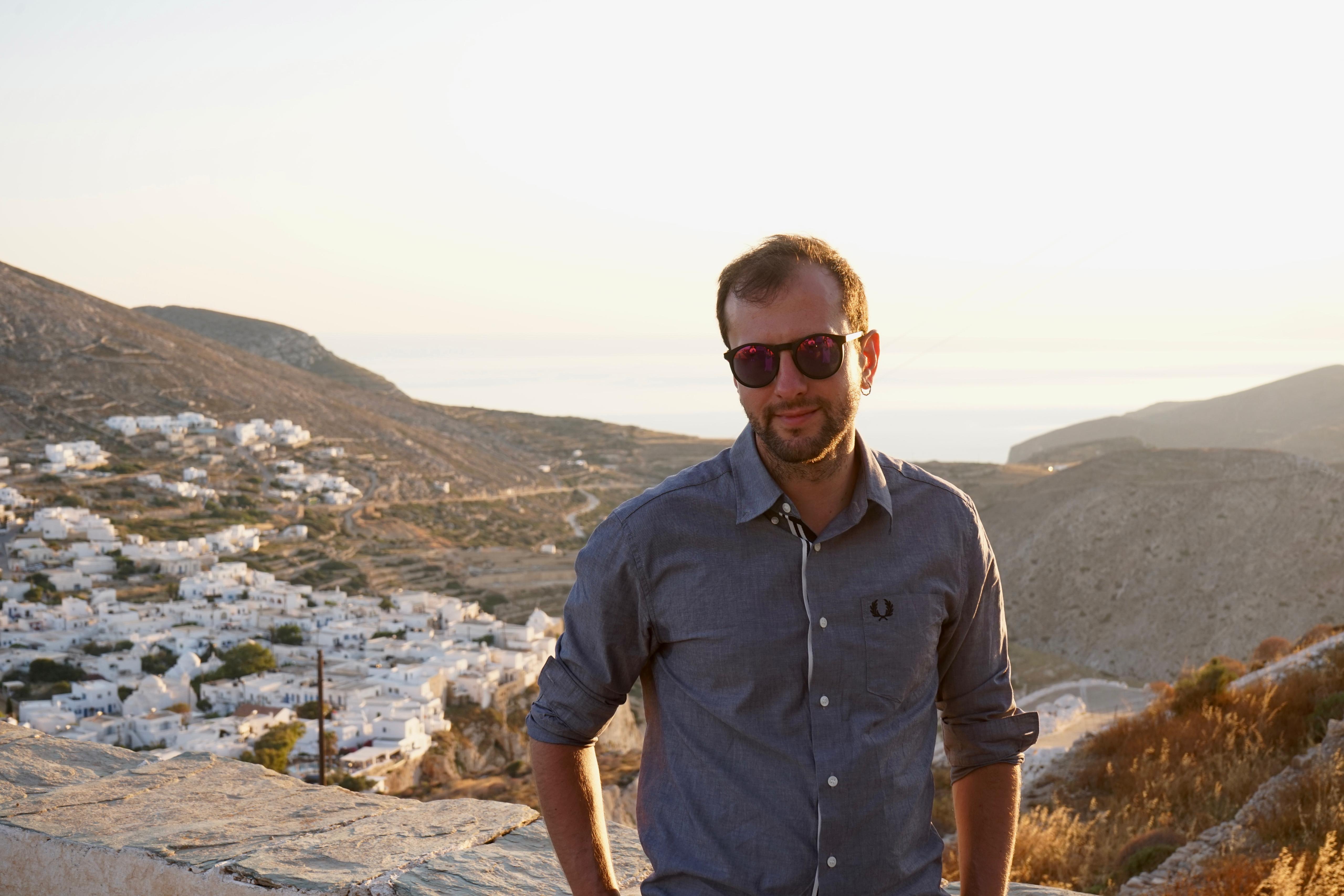
Host
Marc is a Barcelona-born UX/UI designer who has spent the past eight years living abroad across Germany, Greece, and now Italy. He’s also a professional futsal goalkeeper and an improv theatre actor.
On top of that, he hosts the Almost Local podcast, where he explores what it really takes to build a life and feel at home in a new place, sharing insights on adapting to new cultures, finding belonging, and navigating life beyond your home country.