RSS Feed
 Goodpods
 Apple Podcasts
 Spotify
 Amazon Music
 TuneIn
 iHeartRadio
 Pandora
 Podchaser
 Castbox
 Overcast
 Podcast Addict
 Castro
 PlayerFM
 YouTube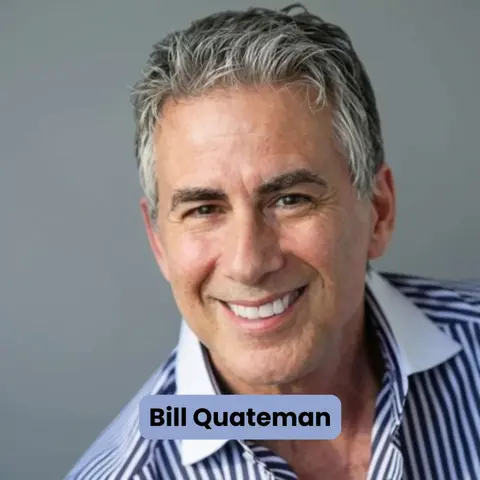
Key Takeaways
- Bill Quateman defines healthy aging as extending your peak span to protect your energy, independence, and purpose for as long as possible.
- Rather than relying on guesswork, hair tissue mineral analysis helps assess individual biochemistry to pinpoint nutritional deficiencies and metabolic function.
- Quateman emphasizes his Four P's of wellness: prevention, proactivity, preemptive action, and personal participation.
- Simple lifestyle adjustments—such as drinking water immediately upon waking, prioritizing proper sleep, and getting daily hugs—can significantly improve your immune system and overall health.
- The decline of human physiology often begins in our early 30s with the emergence of senescent zombie cells, making proactive health strategies vital at any age.
What if healthy aging were not about simply living longer, but protecting your energy, independence, and purpose for as long as possible? Bill Quateman believes the goal should be a longer “peak span,” where people continue living at their fullest capacity.
Bill is the founder of Advanced BioCell and has spent decades studying holistic health, personalized nutrition, cellular wellness, and regenerative health. He joins Rich Bennett to discuss how nutrition, movement, sleep, stress, meditation, and personal responsibility may influence the way we age.
In this episode:
- Learn why Bill says, “If you’re not testing, you’re guessing”
- Explore the relationship between metabolism, energy, and healthy aging
- Hear Bill’s Four P’s of wellness
- Discover what Bill means by “peak span”
- Learn about his surprising past as a recording artist
Bill also shares the question he wishes more people would ask themselves: Are we still holding on to old stories that cause trouble?
Learn more:
Advanced BioCell: https://advancedbiocell.com/
Bill Quateman’s music: https://billquateman.com/
The health information discussed represents the guest’s views and is provided for educational purposes. Consult a qualified healthcare professional before changing your diet, supplements, medications, or treatment plan.
Subscribe to Conversations with Rich Bennett, leave a review, and join the conversation by sharing what healthy aging means to you.
Community Wellness Day - Sloan Bella Collective
Healing Arts and Music Festival
Rate & Review on Apple Podcasts
Follow the Conversations with Rich Bennett podcast on Social Media:
Facebook – Conversations with Rich Bennett
Facebook Group (Join the conversation) – Conversations with Rich Bennett podcast group | Facebook
Twitter – Conversations with Rich Bennett
Instagram – @conversationswithrichbennett
TikTok – CWRB (@conversationsrichbennett) | TikTok
Sponsors, Affiliates, and ways we pay the bills:
Hosted on Buzzsprout
SquadCast
Follow the Conversations with Rich Bennett podcast on Social Media:
Facebook – Conversations with Rich Bennett & Harford County Living
Facebook Group (Join the conversation) – Conversations with Rich Bennett podcast group | Facebook
Twitter – Conversations with Rich Bennett & Harford County Living
Instagram – Harford County Living
TikTok – Harford County Living
Sponsors, Affiliates, and ways we pay the bills:
Recorded at the Freedom Federal Credit Union Studios
Hosted on Buzzsprout
Rocketbook
SquadCast
Want to be a guest on Conversations with Rich Bennett? Send Rich Bennett a message on PodMatch, here: https://www.podmatch.com/hostdetailpreview/richbennett
Disclaimer: This post contains affiliate links. If you make a purchase, I may receive a commission at no extra cost to you.
If you’re interested in podcasting and are looking for equipment and services, here are some of the ones we use and recommend:
Podcast products we have used, use, and/or recommend
Buzzsprout - Let's get your podcast launched - Start for FREE




Frequently Asked Questions
What is Advanced BioCell?
Advanced BioCell is an organization founded by Bill Quateman that focuses on holistic health, personalized nutrition, cellular wellness, and regenerative health solutions.
How does hair tissue mineral analysis work?
Hair tissue mineral analysis involves taking a small sample of hair from the scalp, which contains a record of minerals, toxins, and metabolic data deposited by the blood, allowing experts to evaluate individual nutritional needs.
What are the Four P's of wellness introduced by Bill Quateman?
The Four P's stand for prevention, proactivity, preemptive action, and participation, emphasizing that individuals must take personal responsibility for their health.
Why is drinking water in the morning important for heart health?
Drinking two glasses of water right when you wake up helps thin the blood, which becomes thicker overnight due to water loss, reducing the workload on your heart.
00:00 - Opening
01:35 - Introducing Bill Quateman
03:15 - The loss that started Bill’s wellness journey
04:33 - Discovering personalized nutrition
05:35 - What Bill’s first health assessment revealed
06:57 - “If you’re not testing, you’re guessing”
07:34 - Rich’s weight loss and prediabetes journey
08:57 - You are what your body retains
10:41 - How the testing and consultation process works
12:17 - What hair tissue mineral analysis examines
13:49 - Hormones, thyroid function, and hair loss
15:22 - Defining health through energy
17:19 - What happens when the body has limited energy
18:51 - Three foundations of longevity
20:08 - Genetics, habits, and family health patterns
21:51 - Lifestyle and environmental influences
22:29 - Can seven hugs support wellness?
23:13 - Morning hydration and coffee habits
24:27 - Understanding intermittent fasting
26:45 - Bill’s approach to cancer consulting
27:41 - Looking at the whole person
28:26 - The Four P’s of wellness
29:06 - When the body begins showing signs of aging
30:45 - Zombie cells and inflammation
32:04 - Sponsorship opportunities
33:44 - Veterans, insurance, and regenerative medicine
34:28 - Bill’s perspective on stem cell therapies
35:34 - Processed food and better nutritional choices
37:26 - Bill’s personal approach to healthy aging
38:11 - Meditation, sunlight, and spending time outdoors
39:46 - The body’s electrical activity
41:50 - Introducing ozone therapy
44:05 - Wellness devices and emerging therapies
44:41 - Plasma filtration and environmental exposure
45:50 - Helping people ask better health questions
49:27 - Becoming an active participant in wellness
50:21 - Finding your reason to live well
50:55 - How to connect with Advanced BioCell
51:38 - Taking charge of your own story
52:21 - Your Personal Life and personalized nutrition
54:11 - Bill’s surprising career in music
56:17 - Rediscovering Bill’s music through Yacht Rock Radio
57:27 - Bill’s vision for a regenerative medicine clinic
57:42 - What does “peak span” mean?
59:20 - Bill selects his final question
01:00:00 - Are you holding on to old stories?
01:01:08 - Rich’s closing thoughts and healthcare disclaimer
Wendy & Rich 0:01
Coming to you from the Freedom Federal Credit Union Studios, Hartford County Living Presents, Conversations with Rich Bennett. "I hope it's a good time."
"You're not going to show up!" "I'm not going to show up!" "I'm not going to show up!" "I'm not going to show up!" "I'm not going to show up!" "No, no, no, no, no, no."
Rich Bennett 0:27
Why do so many of us accept feeling tired, slowing down, we're living at less than our best as simply the price of getting older? Bill Quayton believes wellness and longevity aren't matters of luck. They require knowledge, intention, and a personal strategy. Bill is the founder of Advanced Biocell and has spent more than 30 years studying holistic health, natural medicine, cellular nutrition, and regenerative wellness. And today he helps people explore personalized approaches to healthier aging by connecting them with innovative practitioners, therapies, and resources. And trust me, I think you're going to learn a lot with this conversation, because we've talked about things like this before on the episode. But just looking at Bill's website, and I'm going to tell you everybody now, while you're listening, you can go explore it. It's advancedbiocell.com. There are some things on there that simply amaze me which we want to get into. So first of all, how's it going, Bill?
Bill Quateman 1:41
It's fabulous. I appreciate you having me on this. It's a pleasure to be here.
Rich Bennett 1:46
Oh, my pleasure. I think we've been playing tag for a while.
Bill Quateman 1:50
I think so. Yeah, a little back and. Yeah, that's all right. Here we
Rich Bennett 1:54
are. Before I dive into some of the things, you've been studying holistic health and natural medicine. Let me get this right. Since 1978.
Bill Quateman 2:06
Pretty much. Yeah.
Rich Bennett 2:07
Wow. So what first sent you down that path?
Bill Quateman 2:11
you know, it's always all of us. I think our stories of origin. I got my dad at a sub-harmetaker 48 and he passed 54 with the cocktail. You know, heart disease, cancer,
Rich Bennett 2:23
Yeah,
Bill Quateman 2:23
the whole line. And at that time, I would, you know, it was like, oh man, what's going on here? And then I learned that his father and my grandfather whenever I did the same thing. And I figured it don't have me in a psychology lecture in college. Well, one day I'm sitting there and that thought occurred. But my goodness, I need to know something that I don't know. So I don't do, you know. And so that got me started. It was an easy simple start. I just stop eating all the sugar I was eating. And as a result, I stopped getting the moon to pneumonia like colds every year. But it was enough of an indicator. I went on into an illustrious career in show business and was doing that for a number of years. I was raised a family and then I wrote a book about step families and. I was going to get on the Oprah Winfrey show to get back into the music business because it had been a change of events for a lot of different reasons. And I got through to them and I thought that I could get on the show because the woman said they played my music in house on the Oprah show all the time. And as I just didn't have enough books to be on the show. So what I did was I. figured, okay, thank you. But the next day a doctor in the field of personalized nutrition called and he wanted to write another book. So I'd formed a publishing company got into it with him and. That led me into what we call her tissue mineral analysis. He was an expert in what's called H T M a heritissue mineral analysis, which is the finest. Most in depth assessment of your individual biochemistry, which tells you exactly what your metabolic function is, which is how your body uses nutrients to make the energy that keeps you healthy. And it gets your past diseases and illnesses.
Rich Bennett 4:25
Wow
Bill Quateman 4:27
And gives you a specific. Desiring of supplements that your body actually needs. So you don't have to guess about them at all foods. And so that's where the starting point came in. And actually my first hair tissue mineral analysis test showed my own heart disease, developing right there on the page.
Rich Bennett 4:46
Really
Bill Quateman 4:47
yeah, yeah, I thought I was doing all the right stuff, you know, broccoli and spinach and eaten salmon, because it's got a lot of omega 3s and all the green stuff and so forth. But you know everybody's biochemistry is very, very different. So it turned out that the salmon was the wrong type of protein for me at that time. I already had too much calcium, and which was leaching out of my teeth and my bones and getting into the soft tissue, which are heart arteries, as well as other arteries, and because the calcium content in the broccoli and the spinach was already high, I had to stop eating all that stuff, which I did, and followed the program that I am now presenting to people for about a year, and all that stuff went away.
Rich Bennett 5:34
Wow. It's amazing the things out there that we think are good for us, but no matter what, it's gonna have something bad in it. Like you said, with the calcium, but Roy's taught each of your greens.
Bill Quateman 5:49
Well, if you're not testing, you're guessing.
Rich Bennett 5:53
Yeah,
Bill Quateman 5:53
you know what you're working with and that's the same with anything. Blood work is good, urine, stool.
Rich Bennett 6:01
Right.
Bill Quateman 6:02
All those things have good information. When it comes to your biochemistry, your nutritional values that make your metabolism work or not, the hair tip is there's just nothing like it. So, you know, if you sent me a address, I'll send you a sample kit and we can go through it and you can see where things are at for you. I think you'll find it fascinating.
Rich Bennett 6:26
Well, I'm sure I would. My, I started looking at my health a lot differently years ago 'cause I got up to 300 pounds and diabetes runs in my family. And I was constantly having chest pains. You know, I can't tell you how many times the ambulance was here. Thought I was having a heart attack. And then I started doing DDP yoga, lost the weight, put it back on 'cause I was doing the South Beach diet. Stop that, we knew diet still work. Changing your lifestyle works. And last two years ago, I went to a doctor two or three years ago and my A1C was I. I was pre-diabetic. I said, no, I'm not having that. So I changed my lifestyle. I started eating different count calories and everything. And now I actually watch what I eat and I've dropped down. And now I've plateaued right around 245 mark, but that's a lot better than 300. And the thing I'm learning, especially if all the different people that I have on the show is the different things that we eat, how some of it is good for you and a lot of it's bad for you but also the old philosophy, you are what you eat.
Bill Quateman 7:49
You are
Rich Bennett 7:51
to a point
Bill Quateman 7:52
about two from what you eat.
Rich Bennett 7:55
What was that again?
Bill Quateman 7:57
You are what you hold on to from what you
Rich Bennett 8:01
eat.
Bill Quateman 8:03
the stuff you eat just passes right through. That
Rich Bennett 8:05
Right,
Bill Quateman 8:05
you are what you're being is like incomplete because what's most important for whatever you eat, whether it's food or a supplement, is what is your body holding?
Rich Bennett 8:21
Like the calcium.
Bill Quateman 8:25
If it's holding calcium, if it's holding. You know, we get a lot of people come in with the, and they find out in the hair testing that they are deficient in protein. And they're deficient in protein, even when they're eating tons of meat. And the reason that deficient protein is because they don't have enough hydrochloric acid in their stomach to break down the protein so that the body can absorb it. That's a pretty simple.
Rich Bennett 8:49
Okay.
Wow,
Bill Quateman 8:51
You
Rich Bennett 8:51
okay.
Bill Quateman 8:52
know, that stuff, until you have this nutrition evaluation to find out what's really going on and make those course corrections, 'cause otherwise it's what we call guessing.
Rich Bennett 9:04
Yeah. Yeah, and we don't want to guess. I rather listen to the experts, you know. And
Bill Quateman 9:11
your body's, your body's the expert. That's the point. So what we do is we--
Rich Bennett 9:15
Yeah.
Bill Quateman 9:15
The test, so it's your body language being translated for you to understand what exactly are the supplements that you do need. What are exactly the ones that you don't need? 'Cause so many times you know, you could be going to Whole Foods and guessing about it. And it could be me, just pushing in the wrong direction.
Rich Bennett 9:33
Okay, so when people contact you and do this test, do you consult them afterwards so you can direct, okay, ooh, okay.
Bill Quateman 9:41
So look, point. What we do is, we, you know, we do a lot of remote. We send out here selection kits, people send us the hair back, we send it to the lab, the lab does the evaluation. They email me at 20 page report, and we send it to each individual and then set up a phone consultation to go over this. 20 page report, which kind of looks like high-roglyphics, but is really very simple once you get a little insight into it. So you then can take your own retesting, which is one of the most important things you could do, because it's like anything, you know, you're always going to be finding out what works and what doesn't work. And then the laboratory recommends a retest, which I've been doing every three months for about 18 years.
Rich Bennett 10:28
Wow.
Bill Quateman 10:29
So things shift a little bit. Things change a little bit. The supplement list changes a little bit, the dosage list changes a little bit. Everything you do affects how you feel. And I'm sure you know that rich and
Rich Bennett 10:43
yeah,
Bill Quateman 10:44
but as with, you know, lifestyle stuff, but as there was stress, some of it has to do with emotions and psychology, let along the food that you eat, that the food that you should eat, that you donate, the food you should not be eating. All these factors come into play to. Make or break our metabolic function, which is really the foundation of all of our health and wellness.
Rich Bennett 11:09
Let me get this straight. And you're getting all this from you said a hair test from a strand of hair.
Bill Quateman 11:16
Not a strand. It's about a half a teaspoon from the back of the scalp, back here, you snip about half a teaspoon.
Rich Bennett 11:26
Okay.
Bill Quateman 11:27
There's a little cardboard thing. The sides fold down from a folkroom. So when there's enough hair, and the end of the folkroom, the tips, you know, very signs.
Rich Bennett 11:37
Yeah.
Bill Quateman 11:38
It works like a charm. We send that. You send that back to us. When we send it to the laboratory. Yeah. But what happens is the stuff in your body circulates in your blood. And blood deposits all that information, the minerals and the toxins and the pollutants in little balls, just underneath the scalp from those balls.
The hair grows out through your scalp and those follicles, which is the first part of the hair growth, have all that information. So when we send the hair in the laboratory actually microwaves the hair gets that information. And that's where the evaluation is.
Rich Bennett 12:26
Wow.
All right. Now, that explains why somebody like me who has nothing on top. Why grow, guys always get that hit, grow that hair right below the scalp on the back of their neck.
Bill Quateman 12:41
Well, that has something that yeah, sure. Because that's where all the stuff gets deposited, but Hair growth has a. And hair loss is connected to all kinds of things. Not the least of which is tyroid function hormones are. And then just about everyone listening to this show are the ones that even aren't listening to this show have some type of hormone issue. The big ones. Either if we were a thyroid issue,
Rich Bennett 13:10
Mm
Bill Quateman 13:11
or
Rich Bennett 13:11
hmm.
Bill Quateman 13:11
I
The other one.
The other, there's too big, there's too big players, the thyroid and the adrenal.
Rich Bennett 13:25
OK,
Bill Quateman 13:26
we have an adrenal issue or a thyroid issue. And when you address that stuff, but specifically with the thyroid and then there's, you know, the lack of nutrition stuff again, your metabolism.
Rich Bennett 13:41
Mm hmm.
Bill Quateman 13:41
Which is right. It takes nutrients from any intake and turns that into energy for your body to use is the baseline for absolutely everything. There's a book by a gentleman named Thomas sea freed. It's called Metabolical cancer as a metabolic disease. Meaning what is health? Let's start there. What is help? What is health? How would you define health rich?
Rich Bennett 14:14
That's it. Well, that's that's a loaded question.
Bill Quateman 14:17
mean
Rich Bennett 14:17
Um,
Bill Quateman 14:18
Oh, it's a simple one. But tell me I tell me what you you're
Rich Bennett 14:21
I
Bill Quateman 14:22
God of it
Rich Bennett 14:23
We
Bill Quateman 14:23
is.
Rich Bennett 14:23
find it to where I'm feeling good where I can do everything. You know, I'm not relying on other other things or other people to help me. Because my, you know, my health is a lot better. I mean,
Bill Quateman 14:35
So what does that mean? That means you have the energy.
Rich Bennett 14:43
Yeah,
Bill Quateman 14:44
to do right? Right. So then in the simplest of terms, health is energy.
Rich Bennett 14:55
Makes sense, yeah, I could see that
Bill Quateman 14:58
when you're ill, when you're, when you're diseased, when you're sick, a surgery,
Rich Bennett 15:02
you
Bill Quateman 15:02
energy.
Rich Bennett 15:02
lose that
Bill Quateman 15:06
Yeah.
Rich Bennett 15:08
Wow,
Bill Quateman 15:08
you know, to, to get to the extreme, to run your deathbed, you can move.
Rich Bennett 15:14
Right.
Bill Quateman 15:15
That's really what health and wellness is, it's movement movement, movement and energy is at the basis of every move. So metabolism, metabolic function, however you want to call it. THe engine that makes that energy, because your body, the miracle that it is, when it's in good shape, takes that energy from the food or the supplements as you eat, and turns it into the fuel that your body needs to walk, to talk,
Rich Bennett 15:57
to
Bill Quateman 15:58
eat things, to, um, um, make it down the road to heal you from stuff, you know, your organs, your glands, your bones, your cells, your systems,
Rich Bennett 16:10
right?
Bill Quateman 16:11
I'll need that energy, and when the energy dips, your body in its wisdom,
Rich Bennett 16:21
sends
Bill Quateman 16:22
that energy to the big players, the heart, the lungs, the kidneys, the gallbladder, and so forth, because you've got to keep the engine room cooking, right? Well, what happens is, there's then energy depletion to other areas like the hair, and the fingernails, and the extremities, and crucially in this day and age, the systems. So, we have a number of different systems, we have a cardiovascular
Rich Bennett 16:55
system,
Bill Quateman 16:56
we have a cognitive function system, we have an immune system, so when there's not enough fuel to go around, those systems
Rich Bennett 17:09
things not.
Bill Quateman 17:11
When your immune system is short-changed, that leaves you open to getting opportunistic infections, that's what they call it in the trades opportunistic infections.
Rich Bennett 17:22
Wow.
Bill Quateman 17:24
So all these pieces, they're like a mosaic that fit together, that's what we do in advance, so we do everything we can to bring it to people's attention, so they get this picture that this is a mosaic. People say to me all the time, what does this take to live well and feel good answer is it takes everything.
Rich Bennett 17:43
Yeah, I guess too, because, you know, and I mentioned it in beginning how when people start one of the biggest excuses is, oh, it's just because I'm getting older. But you look at people today, and whether they're in their 70s, 80s, 90s, and I go back to a woman that we had on the show before when she was 101, and still had a fitness trainer. I mean, just staying active makes a big difference. You see a lot of people retire and they just sit down, they don't want to do anything. They relax, and then their health diminishes because they're not doing anything.
Bill Quateman 18:30
Three, most impacting things for longevity, which is one of the main topics. It's proper sleep, six to eight hours of sleep, and I good decent sleep, proper nutrition, eating what you're supposed to eat, knowing what you're supposed to eat,
and exercise.
Rich Bennett 18:57
Even if it's just
Bill Quateman 19:00
even if it's just walking now, let's go back a minute to one of the things you said, which was diabetes runs in your family.
Rich Bennett 19:06
walking right
Bill Quateman 19:07
The reason these runs in your family is because of the mindset, the habits of eating, ask a doctor, when he says, you're well, you have familial based diabetes say, really, what is the gene that I have, that's creating my familial diabetes
is facial go blank. He might ask you to leave his office.
Rich Bennett 19:40
Wow,
Bill Quateman 19:41
excuse, because there is no diabetes gene.
Rich Bennett 19:46
Really,
Bill Quateman 19:49
there's no blood pressure gene. You say, well, you have familial blood pressure.
Well, what gene do I have that is causing my high blood pressure, no answer, because there's no gene.
Rich Bennett 20:08
So is that practically for everything?
Bill Quateman 20:12
Well,
you know, Deepak Chopra you might have heard of Deepak Chopra your people night know Deepak Chopra, one of the great, great functional medical guys for many years is famous for saying genetics is only about 11 years. But there's basically about 11% of an influence. there's some things that are very rare actually that are genetically transferred. But generally speaking was called epigenetics. You may have heard of that. Epigenetics
Rich Bennett 20:43
Yeah,
Bill Quateman 20:43
above, those are the lifestyle factors, those are the personal program factors, are you meditating? Are you exercising? Are you getting seven hugs every day? Are you left? Do you like your job? Have you got a good relationship with your wife or your husband or your kids? Do you like your boss? Do you not like what you're doing? All of these factors come into play into how it affects this miracle body.
Rich Bennett 21:21
three minutes. Okay. I think you were just messing with me there to see if I was listening. You did say seven hugs, right?
Bill Quateman 21:29
Seven hugs. Seven hugs every day is shown in the scientific literature to improve and amplify your immune system.
Rich Bennett 21:38
Really?
Bill Quateman 21:40
Yeah.
Rich Bennett 21:42
Oh, God. Thank you for saying that because people always tell me I'm nuts because I'm a hugger. I love hugged people. See, I'd probably 700 hugs a day.
Bill Quateman 21:54
Well, you're gonna rip forever.
Rich Bennett 21:56
Why? I do have a goldmig to at least 100 and still be doing this.
Bill Quateman 22:00
There you go.
Rich Bennett 22:02
Yeah, I feel
Bill Quateman 22:02
that's the idea.
Rich Bennett 22:03
I did years ago.
Bill Quateman 22:05
That's the idea. That's book. It sounds like I'm doing a lot of good things. Anoth simple, simple little small little thing is you know, when we sleep, we lose about a pound or two of water.
Rich Bennett 22:17
Yes.
Bill Quateman 22:18
So one of the best things you could do for your heart in the morning when you wake up, certainly one thing would be you have some electrolytes, some salt with the chlor--with the minerals in it, but one of the best things you could do for your heart in the morning is to drink two glasses of water right when you wake up.
Rich Bennett 22:42
Okay,
Bill Quateman 22:42
because you wake up the morning with thick blood, thicker than when you went to sleep. And that two glasses of water makes that blood more fluid, so your heart doesn't work as hard.
Rich Bennett 22:58
Just straight water, not coffee, water.
Bill Quateman 23:03
When you drink and coffee, which is a okay thing, you have a cup of coffee,
Rich Bennett 23:06
Right,
Bill Quateman 23:07
you want to--with food, because otherwise it's a shock to the system and it gets the cortisol cooking and all that kind of stuff. I can't say that it's against the law because I do it 20 a time, but
Rich Bennett 23:19
right.
Bill Quateman 23:19
if you have some good protein, maybe some sunflower seeds, or some pine nuts, or some macadamia nuts, or some walnuts and stuff like that, you know, the whole empty stomach thing that brings us to the point of talking about intermittent fasting, which is tremendously beneficial for everything.
Rich Bennett 23:39
Okay, I'm glad you mentioned the fasting part, because I'm
the cook, so I've tried fasting before my wife doesn't like it because then they go hungry, but--oh,
Bill Quateman 23:55
that's just a pleasure to do the cooking, but don't do the eating.
Rich Bennett 23:58
Yeah. But I've also been--I been seeing something about sardine fasting, have you heard anything?
Bill Quateman 24:04
Well, that's not fascinating, but sardines are great for your heart.
Rich Bennett 24:08
Yeah. Okay. Interesting. I mean, well, the intermittent fasting, what--it correct me if I'm wrong, so you're--is it like fast part of the day, or one day, and then I can't remember how it works.
Bill Quateman 24:24
Well , a full-on intermittent fast is 18 hours, so make it eat yourself, have the last meal of the day at like 6 p. m.
Rich Bennett 24:35
Yeah,
Bill Quateman 24:37
and then 7, 8, 9, 10, a little, so the next meal you will eat will be new in the next day.
Rich Bennett 24:44
It's almost like you're getting ready for blood work, with some extra
Bill Quateman 24:48
hours and stuff. Something like that, something like that, but, I mean, you know, you can do 14 hours, but, you know, it's like what you're doing is you're giving your body a rest.
Rich Bennett 24:58
Right.
Bill Quateman 24:58
So it does process stuff all the time. I, you know, one fast, 24 hour fast, a week, or one 24 hour fast a month. You're just giving your body a rest and it's like one of the best things you could do, it's just taking care of the miracle. It's really got the only way to look at it. I mean, Albert Einstein has one of my favorite quotes. He says, "There's two ways to look at life, one is that nothing is a miracle and two is everything is a miracle."
Rich Bennett 25:33
Yeah,
Bill Quateman 25:35
you choose.
Rich Bennett 25:37
Wow. Something that I noticed too on your website. And I really wanted to hit on this because
everybody knew somebody that has or has had some type of cancer. And you do cancer consulting. Can you elaborate on that a little bit?
Bill Quateman 26:03
Sure.
Our point about health and wellness, whether it's mold or learn or HSV or whatever it gets to be fatigue. Most of the stuff we see is fatigue or cancer
has to do with looking at the whole picture. Like we said before, what we do is we work with the whole person.
Rich Bennett 26:33
Okay.
Bill Quateman 26:33
The convention community, you know, is very good at individual parts. The best part of Western medicine is trauma and emergency. If you have an trauma or you have an emergency, you want an ER and that's just all there is to it.
Rich Bennett 26:53
Right.
Bill Quateman 26:55
You really want to be a lot more discerning 'cause they see it as like, you know, the car replacement parts. You got a bad heart, let's give you a new heart.
Rich Bennett 27:04
Mm hmm.
Bill Quateman 27:05
You hit, let's give you a new hit. We talk about, you know, let's take care of ourselves before stuff goes wrong.
Rich Bennett 27:18
Right.
Bill Quateman 27:18
We operate on what's called, uh, the Four P's, prevention, proactivity, preemptive, and the most important P, participation. You got to take responsibility. You got to say, okay, I'm in, I'm in on it. I'm taking part in taking care of myself. Most people have no idea, and this is one of the things we talk to people about the decline of the human physiology, your body starts this diminished capability in your early 30s.
Rich Bennett 27:58
Wow.
Bill Quateman 27:58
So what are the things that happens when your life changes for you? Is you start to ask yourself better questions? What am I doing? Do I like my job? Do I like who I'm with? Do I like my friends? Am I having a good time? Am I open to changing? What do I want to change to? Do I need to know something? Is there something I want to learn? Do I have a new hobby? I want better questions. Let's ask yourself,
Rich Bennett 28:25
ye.
Bill Quateman 28:27
So one of the best questions you could ask yourself, if you understand that your physiological, your body's decline begins in his early 30s, when would be a good time to start working against that decline, when would be a good time to start the repair work, the regeneration that's really required because it's been happening, whether you know it or not. Would it be next week?
Would it be in two weeks or a month? Or would it be yesterday?
But what they say, the old adages, the best time to plant a tree is today.
Rich Bennett 29:18
Okay, I guess that makes sense because you really can't go back a day and do it. So you do it now.
Bill Quateman 29:25
Yeah, do it now. Well, that was the set up yesterday. He was a set up of just this in still a sense of urgency.
Rich Bennett 29:36
Well,
Bill Quateman 29:37
that's what's going on. I mean, whether you know it or not, there's sinescent cells. Those are cells that don't act like cells anymore. They don't divide and they don't die. They're not from a blob. And that blob creates inflammation. Those are called zombie cells. That starts in your early 30s. It's the first step into the territory of aging.
Rich Bennett 30:02
The second time I've heard that, zombie cells.
Wow.
Bill Quateman 30:11
Yeah.
Rich Bennett 30:12
Interesting.
Bill Quateman 30:13
They're not alive. They're not dead. They're just sitting there causing trouble.
Rich Bennett 30:17
Yeah.
Bill Quateman 30:19
The infection is arguably the biggest problem all of us have.
Rich Bennett 30:23
Oh, yeah,
Bill Quateman 30:23
inflammation, oxidative stress, acidity. You know, these are the things we do in our conversations to bring into people's attention that all this is going on, whether you know it or you feel it or not.
We're
listening to the
Rich Bennett 30:56
you're listening to the conversations with Rich Bennett. We'll be right back. You know, one of the things I love most about what we do with the show. And Hartford Kennedy living dot com is helping people discover great businesses. Not through flashy ads or gimmicks, but by building trust and creating real connections within the community. That's why we're always looking to partner with reputable businesses that went long term visibility. If you're a sponsor, your business can be featured across Hartford County living, conversations with Rich Bennett, the author, pitch, and the Ch SP podcast network through website exposure social media promotion, podcast advertising and more, whether you're a local business or located anywhere. There's lots of opportunities designed to fit a variety of goals and budgets. In fact, some sponsorship levels started just over a dollar a day. We keep our sponsor spots limited because we believe in quality over quantity. And we only partner with businesses that share our commitment to serving their customers well. Or more email me directly at rich Bennett at damben dot com. That's rich Bennett or ICH B E N N E T T at damben dot com D A N B E N dot com. Now let's go back to the conversation. ... You'd probably get a lot of veterans and athletes, don't
Bill Quateman 32:36
you? You know, not enough. I would love to be able to... that's an op. But, you know, they're hooked into the, uh, the VA. In a large...
Rich Bennett 33:01
even cover stem cell, really.
Bill Quateman 33:06
Not even, even not even close.
Rich Bennett 33:08
I had no idea.
Bill Quateman 33:11
No 'cause
Rich Bennett 33:14
it seems like you're here more and more people getting that done. And, and it helps.
Bill Quateman 33:20
--Oh, stem cells are magical. We have what is arguably the finest stem cell program in the world. We've been reversing Parkinson's and Alzheimer's and dementia and helping with
placements and, uh, knee replacement, accelerated, and so forth. MS, all kinds of stuff like that, with the stem cell program that we have.
Rich Bennett 33:43
Yeah. Oh, God. See, to me, it would make sense. And I'm sure everybody, it would make sense for it to be covered by insurance.
Bill Quateman 33:53
We have to understand, Rich, we are in an environment in a system that is there to support the system. Big insurance,
Rich Bennett 34:07
Yeah.
Bill Quateman 34:07
big pharma, big medicine, big food, big agriculture, and big government.
Rich Bennett 34:13
Yeah.
Bill Quateman 34:14
--Is there a deal to make money? --And people's health and wellness just isn't part of their thinking process, sadly, as it is. It's just the truth. So,
Rich Bennett 34:26
--Yeah.
Bill Quateman 34:26
if you know that, then you can make an informed decision. The main one thing that causes everybody to get and so sick is process foods. Simple and plain.
Rich Bennett 34:37
Yeah.
Bill Quateman 34:39
Something in a bag. You stop eating something in a box and just start eating fresh stuff. Your life will change.
Rich Bennett 34:48
And when you say fresh, those of you listening, I'm sure Bill, back me up on this, especially when it comes to meats and stuff like that. Get it local, because then you know what you're getting. Because even eggs and everything, you don't end produce. Produce, especially. Then we just have a big spinach scare.
Bill Quateman 35:11
Yeah. Well, you know, what you want to be able to do is find places. There's plenty of local places
Rich Bennett 35:15
Yeah.
Bill Quateman 35:15
to do. You know, your egg. Let's let's land on that for a minute. Your eggs want to be not only free range, but it wants to say organic.
Rich Bennett 35:22
Yes.
Bill Quateman 35:23
That's not organic. Kind of. It's not free range. That's less than the best they could have. If you're going to eat vegetables. If you want to get vegetables and fruits that are organic.
Rich Bennett 35:35
Mm
Bill Quateman 35:35
Becaus
Rich Bennett 35:35
hmm.
Bill Quateman 35:35
all that other gets sprayed on them when you want to make sure you cleanse the stuff. Really good. Anyway. There's plenty of meats that are available through the mail with frozen
Rich Bennett 35:50
Yes.
Bill Quateman 35:50
or grass fed meats that are really good.
Rich Bennett 35:53
It may cost more, but it's worth. You can't put a price on your health.
Bill Quateman 35:58
Well, you want to consider your health and investment. If,
Rich Bennett 36:00
yeah.
Bill Quateman 36:01
It meant you, you know, and that's really kind of what it is. There were plenty of people in the music industry that just wanted to live fast and die young. That's not the area
Rich Bennett 36:12
that we're in. No, no. Yeah. So how long have you been doing this now?
Bill Quateman 36:18
Gosh, you know, I've been in it really for the better part of 40 years. I'm 78 and a half years old.
Rich Bennett 36:24
Yeah. Well, that's a hell out of here. Yeah. All right. Those of you listening, Bill looks 20 years younger than me. And I'm 63 you are 78 and a half me. You look good.
Bill Quateman 36:39
Yeah. Well, you know, like I said, taking care of yourself is really at least a part time job. Yes.
Rich Bennett 36:46
Yeah.
Bill Quateman 36:49
So I'm taking stuff all day long, if you want to find me, I'm usually someplace taking some pills or some liquids or some powders or something like that. But again, it's putting all the pieces together, you know, it's
Rich Bennett 37:02
Yeah.
Bill Quateman 37:03
gone. It's all those things we talked about earlier. You know, meditation is crucial. Meditation, political. All of the problems that people have are their inability to sit still and be quiet in a room by themselves.
Rich Bennett 37:21
It
Bill Quateman 37:23
starts
Rich Bennett 37:23
and it's not that hard to do.
Bill Quateman 37:27
You know, people say, oh, that's really so hard. Well, those are the people that need to do it the most.
Rich Bennett 37:32
Exactly. Oh, when I started doing that and learning and doing breathing exercises as well, which is something you learn when you're meditating yoga. Oh, my God. And if you do it outside in nature, oh, just so much better. So much better.
Bill Quateman 37:51
Oh yeah. Oh yeah. 15, 20 minutes of sunlight in the middle of the day if you can.
Rich Bennett 37:57
Yeah.
Bill Quateman 37:59
Those wonders walking barefoot on the grass or the dirt or the concrete or the sand. You know you charge your battery.
Rich Bennett 38:07
You know what? All right so Bill you're probably going to think I'm disgusting but to this day I still think it was one of the neatest feelings. Walking barefoot out in the pasture and you don't look down and sure enough. Stepped it up off manure.
I just feel it was just it's stonk but it's
Bill Quateman 38:31
okay it's like mine it's like a mud bath I mean.
Rich Bennett 38:34
Oh yeah
Bill Quateman 38:35
you can wash your feet with care.
Rich Bennett 38:37
Yeah
Bill Quateman 38:37
Some care.
Rich Bennett 38:37
but it's so good.
Bill Quateman 38:38
but what what you're doing is you're charging your battery. See
Rich Bennett 38:42
Yeah
Bill Quateman 38:42
the earth is gigantic charger.
Rich Bennett 38:44
Yup.
Bill Quateman 38:46
And your body is electric. What is your heartbeat? Your heartbeat is electric. What do they do? EK electro and sephalogram. So it's all about electricity. We are voltage based. When electric current isn't working
Rich Bennett 39:06
Right.
Bill Quateman 39:06
A. When I'm feeling B we have no energy and see if it's not there we're dead. When you walk barefoot one of the biggest health problems people have is shoes.
Rich Bennett 39:17
Oh yes
buying the wrong kind.
Bill Quateman 39:22
yeah because you're cutting off your charge. That's where something like PEMF would come in. You lie on a PEMF pulse delectromagnetic frequency device
Rich Bennett 39:33
Oh
Bill Quateman 39:34
and it charges your cells back up, it puts the charge back in the cells. You know when we're 19 our cells are like nice round plump juicy grapes.
Rich Bennett 39:45
Okay
Bill Quateman 39:45
and they expect them to easily and effortlessly they take in water and light and oxygen and nutrients and they carry that stuff around to all the parts of the body and then they contract easily and effortlessly and push out the waste.
As we get older those cells start to diminish and they start to look like raisins
and they clump together and it's called ruile and so they can't really open much and they can't really close much so we start turning into toxic dump sites and elements and elements of malnutrition show up. So the idea is to make it so the electric charge of those cells is reinstated.
Rich Bennett 40:41
Right.
Bill Quateman 40:42
How do you do that? How do you do that? There's a number of ways to do that. ozone therapy is one of the best ways you could do that.
Rich Bennett 40:49
Use them
Bill Quateman 40:49
Uh-uh.
Rich Bennett 40:50
therapy?
Bill Quateman 40:51
Ozone therapy. You're not familiar with those?
Rich Bennett 40:53
No.
Bill Quateman 40:55
Oh my goodness. Me? Ozone therapy, that's basic things we do. Ozone is basically oxygen.
Rich Bennett 41:02
Right.
Bill Quateman 41:03
It's what active oxygen, meaning that it is a single molecule that connects with a two oxygen molecule and O3 to get a little science here is what they call ozone.
Rich Bennett 41:19
okay
Bill Quateman 41:20
Now since it's imbalanced and a molecule has to have four pieces attached, the ozone attaches to the stuff in the blood that shouldn't be there that's causing interferences and trouble. Mole, fungus,
bacteria.
Rich Bennett 41:40
Mm-hmm.
Bill Quateman 41:41
It stops viruses from replicating
and it expresses those things out of the blood. When you take an active charcoal that takes it out when you want to do some cool and hydrotherapy to take it out and cleanse, cleaning and detoxification whether it's the level of the blood or any other area is really crucial so that your body can do what it's supposed to do because it's the interferences. Whether it's the zombie cells or the malnutrition or the stress
Rich Bennett 42:17
Right.
Bill Quateman 42:17
or the lack of or no exercise or people that are negative around you or unpleasant relationship, kids that are causing to all the stuff that causes stress and negativity
wants to be released and let go of so that you can exactly so you can thrive into all those things and those interferences are what keeps you in a compromised circumstance.
Rich Bennett 42:48
Okay. So, I'm learning all kinds of stuff here. It's
Bill Quateman 42:56
great.
Rich Bennett 42:57
And now, in your business, you also, besides selling supplements and everything, you have overall kinds of stuff. You have devices, right?
Bill Quateman 43:07
Yeah, yeah. One of the main things we do is ozone therapy. We would call high dose 10 pass ozone therapy. That particular approach to it along with a bunch of other elements is, you know, it's reverse cancer. It gets rid of mold and lime. With, you know, it's a combination of stuff that we do. The stem cell program that we have, as I mentioned, is a phenomenal program.
Rich Bennett 43:32
Mm-hmm.
Bill Quateman 43:33
We have pins that we do and we are just starting this weekend, tomorrow is our first training for what's called plasma filtration. Plasma
Rich Bennett 43:45
Okay.
Bill Quateman 43:45
filtration. Plasma filtration is basically like an oil change for the blood.
Rich Bennett 43:54
Of all of us need that.
Bill Quateman 43:56
It needs that because you take the blood out and it gets basically scrubbed
Rich Bennett 44:01
Yeah.
Bill Quateman 44:01
of microplastics. We're all filled with microplastics. I mean, the research shows just about everybody has 0.05 percent microplastics in your brain alone.
Rich Bennett 44:15
Wow.
Bill Quateman 44:15
The bottle walk from all the stuff in the plastic containers. All the plastic leeches and aren't really aware
Rich Bennett 44:23
of it. Really.
Bill Quateman 44:23
Oh, yeah,
Rich Bennett 44:27
holy
cow.
Bill Quateman 44:32
So
these are all the pieces that go together.
Rich Bennett 44:39
That's mind blowing.
Bill Quateman 44:42
It is.
Rich Bennett 44:42
It's
Bill Quateman 44:43
too.
Rich Bennett 44:43
scary
Bill Quateman 44:43
That's the idea. The idea is what we want to do is we don't want to blow people's mind but we want to blow their minds up.
Rich Bennett 44:51
Yeah.
Bill Quateman 44:51
So that they so they know better. The idea is we just want people to know better. Because everybody's been brainwashed. You got
Rich Bennett 45:02
Yeah.
Bill Quateman 45:02
TV, 79% of the ads on TV or pharmaceuticals, 29% of the ads on TV are for the big food
Rich Bennett 45:13
Yep.
Bill Quateman 45:13
company.
Now, if that's not brainwashing, I don't know what is.
Rich Bennett 45:20
Yeah. You're right. You're right. They keep feeling that all that junk into your head and you start to believe it.
Bill Quateman 45:29
Not like that, but we're all food addicts because we were all trained very young age to sit there and watch TV and eat.
Rich Bennett 45:38
Mm hmm.
Now you're right. I mean, I remember, you know, as a kid, remember the old TV dinners we used to get, I think you're in a metal tray.
Bill Quateman 45:52
Yeah. Aluminum,
Rich Bennett 45:54
that stuff couldn't be good for you.
Bill Quateman 45:56
Well, it's not. It causes.
Rich Bennett 45:59
Oh, yeah. I mean,
Bill Quateman 46:01
there's a lot of it. Talks about aluminum being at the basis of inspiring Alzheimer's.
Rich Bennett 46:11
Well, look at many things also, especially if you get like spices from other countries, have let in it.
And the thing also, the thing that you're able to help people with Alzheimer's, MS, cancer, everything else.
I've always told people, we're not always, but lately, especially people that I know of cancers, like looking to the holistic stuff, look, look, they need to contact you because of all the stuff that you offer. It makes a difference. And something that you said earlier too with our bare feet on the ground,
getting the power and everything, the energy from there, think about, you know, when the earth was first created, you know, going back to the days before pharmaceutical companies, how did we get better is everything that was coming from the earth. That's how we got better. And we didn't any fertilizer sprees or anything.
Bill Quateman 47:25
Yeah. Now we're stuck too much to the corporate profit
Rich Bennett 47:28
Yeah.
Bill Quateman 47:28
mode. Global, globally.
Rich Bennett 47:30
Yeah.
Bill Quateman 47:30
Certainly this country has a problem with it. There's no two ways about it. But, you know, again, I come back to Albert Einstein, who one of my favorite ones is, he says, there are two things that are infinite, the universe and human stupidity. And
I'm not so sure about the universe.
Rich Bennett 47:59
That's somebody I would have loved to be able to sit down and have dinner
Bill Quateman 48:03
with.
Rich Bennett 48:05
That would have been a blast. Wow.
Bill Quateman 48:07
Well, it's really an eye opener to say, okay, well, let's think in different categories. Let's know better. Let's think about some other things. Let's ask ourselves some better questions.
Rich Bennett 48:19
Yeah.
Bill Quateman 48:19
I always tell, well, I have nothing to sell. I just have a lot of information that I hope you'll take advantage of. So we invite people to call us, we invite people to get started with hair testing. We can do that remotely. We do it all day, all the time, and find out a little bit more about how you take better care of yourself and feeling good and stay that way.
Rich Bennett 48:40
This way, as we get older, we can feel younger, you can you know be like Bill who claims he's 78 and a half and looks like he's 40 I think he's lying to me. But you are the prime example of how this stuff works. People just gotta look at you. It's like you look like it almost like Don Johnson.
Bill Quateman 49:09
Little bit little bit
Rich Bennett 49:13
little bit say I mean
Bill Quateman 49:14
it but you know just takes it to doing it takes it it takes the the desire
Rich Bennett 49:21
it
Bill Quateman 49:21
you have to say okay I want to be well I want to do what it takes to be well. And then you want to figure out why?
Rich Bennett 49:29
Yeah.
Bill Quateman 49:30
So you just live longer do you want to be run with your spouse you want to be there for your kids you want to be there for your grandkids Yeah that's that's the driving force. What do you want why do you want it and what are you willing to do to have it.
Rich Bennett 49:47
Yeah you're 110% correct. Tell everybody the website again.
Bill Quateman 49:54
This advanced biocell that's with a DAD VAN CED BIO CEL advanced biocell.com you could call us. You could send us an email care at advanced biocell it's all there. We're happy to talk with you about what's going on and put a plan together and help you get what you want.
Rich Bennett 50:22
Love that. Is there anything you would like that before you pick the last question?
Bill Quateman 50:30
No, no, I've been having a great time. I think the the whole idea is that everybody wants to understand that they are in charge of their own show. They're the star of you and take advantage of this miracle that you have.
Rich Bennett 50:50
Well yeah absolutely and here's the thing that sucks those of you listening you know him long show goes on but the thing is everything that builds company offers we could probably sit there and talk for an hour just on each each one because it's amazing.
You said you were a book but not about this
Bill Quateman 51:13
The book that I wrote with the doctor that I originally
Rich Bennett 51:16
okay.
Bill Quateman 51:16
was in is probably still on amazon is called your personal life and it's by Greg Teft T F F T and me. And it's all about personalize nutrition and the importance or it's based on ortho molecular medicine ortho molecular medicine is the original nutritional based medicine ortho molecular ortho is the smallest most appropriate molecular is form. So the smaller most appropriate form the smallest most appropriate molecule is a nutrition molecule that's where ortho molecular medicine comes in and they talk all about that and that's a book that kind of discusses all of those details in great depth it's it's it's a good read for people that really want to know what's really going on and
Rich Bennett 52:17
yeah.
Bill Quateman 52:18
The basis of how incredibly impacting proper nutrition can be
Rich Bennett 52:25
is that an audio form as well.
Bill Quateman 52:28
I don't think so
Rich Bennett 52:29
okay. Well it's it's probably available on kindu I would think if it's on amazon
and then people can do text to speech. Cause look, a lot of times if you're like me you got to have somebody read to you because I just it's just me.
Bill Quateman 52:47
Everybody's got their own on input and that's.
Rich Bennett 52:50
It correct me it from wrong and I think it just hit me a couple minutes ago in the beginning you said you were doing music and they got into this.
Bill Quateman 53:03
Yeah, yeah, I was a songwriter recording artist and performer, I made a bunch of albums so I signed back big time record company guy named Clive Davis
Rich Bennett 53:14
oh no, no, no, no, no, no, no, no, no,
Bill Quateman 53:17
no, no,
Rich Bennett 53:18
no, only love.
Bill Quateman 53:20
Yeah,
Rich Bennett 53:21
get out of here,
Bill Quateman 53:23
you don't know how do you know that
Rich Bennett 53:24
Because
Bill Quateman 53:25
song.
Rich Bennett 53:25
I'm
Bill Quateman 53:27
DJ. I'm a retired.
Rich Bennett 53:27
a
Bill Quateman 53:27
Oh, well, that's
Rich Bennett 53:28
Jay.
Bill Quateman 53:29
There you go.
Rich Bennett 53:31
Holy yeah, because if I'm not if I'm not mistaken, that was on billboard into top 100
Bill Quateman 53:37
it.
Rich Bennett 53:37
wasn't
Bill Quateman 53:39
Charter down billboard. I think you got to number nine.
Rich Bennett 53:42
Wow. Holy.
Holy
Bill Quateman 53:46
yeah, Bill Quay. All those sort of details.
Rich Bennett 53:50
You had a man, your hair back then Holy cow. Of course, everybody. That was what late. Was that 79.
73 sitting. It was it was at early 73. Okay, my hair was down to my butt. Yeah, it was those were today's.
Bill Quateman 54:16
yeah, that was fun time. Every fun cry. Seven days was a good month. It was a good month. Good year.
Rich Bennett 54:22
I enjoyed it. I don't remember most of my 80s but that's another story. I said, though I need you to pick a number between one and five.
Bill Quateman 54:35
That's why I said you know that song, that you knew the song altogether.
Rich Bennett 54:38
Oh yeah, I mean the thing is, I'd like, I would blow people's minds especially when I was DJing in the clubs and everything because you know you heard of deep tracks. You're playing the deep tracks, but there are a lot of times I would pick out songs that where it hits if people don't remember and play them and they're like, man, I haven't heard that in a long time. It triggers a memory. And, unfortunately, I don't make music like that anymore but
Bill Quateman 55:09
you know, a place to hear that music these days is a place called 'Yacht Rock Radio' or, you've been
Rich Bennett 55:14
listening to it all the time.
The funny thing is, when I first started listening to 'Yacht Rock Radio', I, at first I think at 'Yacht Rock' okay, was that like Jimmy Buffett and all that? Oh no. Some of them all there, but, yeah, I'm getting blown away by the stuff I'm hearing on there.
Bill Quateman 55:36
Yeah, no, it's great stuff. There was a former Columbia, Sony music executive that has accompanied out something
about visibility and he called me up on the day and he said, "Hey listen, you know, he works with artists and they've had good music but didn't get the promotion shot that they should've gotten," he helped some get organized. So he started to work with me and he got me onto 'Yacht Rock Radio' and I've got like, you know, thousands and thousands of downloads for...
Rich Bennett 56:11
Oh wow!
Bill Quateman 56:12
"Yacht Rock Radio".
Rich Bennett 56:12
That's
Bill Quateman 56:13
It's
Rich Bennett 56:13
awesome.
Bill Quateman 56:13
in it. It's really fun to watch.
Rich Bennett 56:16
Yeah. Net, do you still play it all?
Bill Quateman 56:19
No. No. No, I haven't got time. We're just on the verge of opening a huge single-source clinic that will have absolutely everything in one place at one time in Los Angeles for a regenerative medicine.
Rich Bennett 56:33
Oh nice.
Bill Quateman 56:34
What we do is we're working in what we call 'peak span'.
Rich Bennett 56:39
Okay.
Bill Quateman 56:40
I think we talk of 'repeak span' is how can you live your best life the longest?
Rich Bennett 56:46
Yeah.
Bill Quateman 56:47
Rather than just the length. You know, people are thinking about longevity and biohacking and age reversal and life extension and that's all good stuff. What we're talking about is how long can you live in full capacity for as long as possible. So we can have everything in one place and it's been a dream for, boy, six, seven years and it's come into life and we're about to move forward with it in the next month or two and so this fellow from Sony was talking to me about getting back on the road because he said, well, you still got it together, you got it going tonight. I thought, well, it would be fun for sure, but I'm just so consumed with what I'm doing here. It's
Rich Bennett 57:33
Yeah.
Bill Quateman 57:33
very much the same, you know, I've always wanted to help people. I've always wanted to be of service and I have been
Rich Bennett 57:39
Yeah.
Bill Quateman 57:39
and that's how you're now always with the regenerative health.
Rich Bennett 57:43
You have a passion for
Bill Quateman 57:45
it. Yeah.
Rich Bennett 57:46
And yeah, that's important. Yeah, when you... it's like me doing this now. I love, I don't DJ anymore. And Matt, if I went on radio, I didn't even like talking to people. I rather played the tunes, but now that I started doing this 11 years, I love this because I'm learning, I'm learning
Bill Quateman 58:05
Yeah.
Rich Bennett 58:05
so much. Something I forgot to do in high school.
Bill Quateman 58:10
Never too late. Never too late, Rich.
Rich Bennett 58:12
No, I know. I know. All right. So Bill, I need you to pick a number between one and five.
Bill Quateman 58:17
I got it.
Rich Bennett 58:18
Well, you got to tell me the number.
Bill Quateman 58:21
Oh, three.
Rich Bennett 58:22
Three. All right. I need you to pick a number between 41 and 60.
Bill Quateman 58:31
41 and 60.
Rich Bennett 58:32
Yeah.
Bill Quateman 58:35
Okay. 55.
Rich Bennett 58:38
55. All right. This is the last question. And I, the listeners know how this worked. I got 100 different questions here. I don't know what they are. Somehow or another, they align with what we've been talking about. 55.
This can't align with what we've been talking about. What is a question you wish more people would ask themselves?
Bill Quateman 59:07
Am I still holding on to old stories that cause trouble?
Rich Bennett 59:15
Wow.
Yeah. That is so true. People do that too often. And then what you do, it just brings their mood down. It's the past. Let it go. Let it go. Wow. Bill, I want to thank you so much. It's been an honor. Now I gotta see now. I gotta go back and I knew I gotta. You got to be on Spotify or something. Besides jot rock radio. I'll find it somewhere.
Bill Quateman 59:48
Uh, yeah, all the stuff's on Spotify. If you go to Bill Quayton and Dotcom, there's all the albums and all the music's there to lead you, either to Spotify or, uh, I think Apple.
Rich Bennett 1:00:00
… What another excellent conversation. Bill reminded us that healthy aging isn't simply about adding more years to our lives. It's about protecting the energy, independence, purpose, and quality of life within those years. We talked about nutrition, sleep, movement, stress, meditation, personalized health strategies, and the importance of becoming an active participant in our own well-being. As Bill put it, if we're not testing, we may just be guessing. But any health decision should still be researched carefully and discussed with a qualified health care professional. I also loved Bill's idea of peak span. Living at our fullest capacity for as long as possible. And what a surprise, discovering his earlier career as a recording artist, and learning that I already knew his music. Or at least one of the songs. But perhaps the most meaningful moment came with his final question. Are we still holding on to old stories that cause trouble? Taking care of ourselves isn't only about what we eat or how we exercise. It can also mean releasing what no longer serves us, asking better questions, and deciding that the best time to begin is now. To learn more about Bill and advanced by or sell, visit advancedbyersale.com. Also check out his music website billquatement.com, and I'll make sure I have links to both of these in the show. And remember, the information shared in this episode is meant to educate and encourage further conversation. It should never replace guidance from your own licensed health care professional. Until next time, I'm Rich Bennett, thanks for listening and remember every great conversation starts with someone willing to listen and someone willing to share. Now it's your turn. Join the conversation by sharing this episode, leave in a comment or reaching out to me directly. Take care, be kind to one another, and I'll talk with you again soon.