RSS Feed
 Goodpods
 Apple Podcasts
 Spotify
 Amazon Music
 TuneIn
 iHeartRadio
 Pandora
 Podchaser
 Castbox
 Overcast
 Podcast Addict
 Castro
 PlayerFM
 YouTube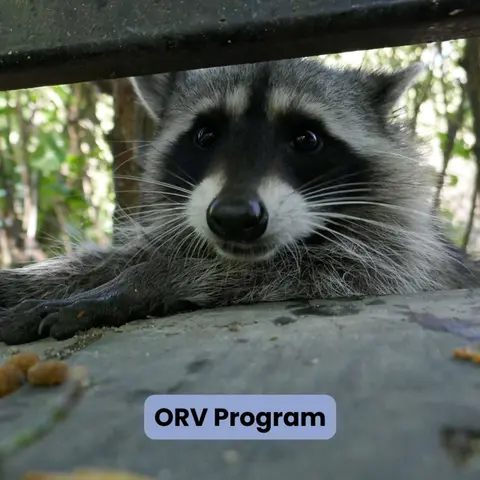
Key Takeaways
- The Harford County Health Department launched a pilot program to distribute 15,000 oral rabies vaccine baits to target raccoon populations and reduce rabies risk.
- Baits consist of fish meal-coated packets that inoculate raccoons when bitten, and they are placed strategically in wooded areas and parks at least six feet off trails to minimize pet and human contact.
- State law in Maryland requires all dogs, cats, and ferrets over four months old to be vaccinated against rabies, even if they are indoor pets, because bats can still find their way inside homes.
- Raccoons, foxes, and groundhogs represent the primary wildlife species carrying rabies in Harford County, making targeted vaccination efforts crucial for community health.
- The oral rabies vaccine baits cannot cause rabies or act as poison; they only contain a portion of the virus designed to safely stimulate an immune response.
What does it take to protect a community from rabies before an animal ever reaches your backyard? In Harford County, part of the answer is a new pilot program that will place 15,000 oral rabies vaccine baits where raccoons are likely to find them.
Rich visits the Harford County Health Department to talk with Hannah Lux, Bonnie Harbin, and Ronya Nassar about the work behind the program and what residents need to know. Hannah and Bonnie explain how the baits work, why raccoons are the focus, and how the team chooses placement areas. They also address questions about pets, unusual wildlife behavior, and bats inside homes.
In this conversation, you’ll learn:
- Why vaccinating raccoons can help reduce rabies risk
- Where the pilot’s vaccine baits will be placed
- Why dogs and cats still need their regular rabies shots
- When a wildlife encounter warrants a call to the health department
- Why you should leave a vaccine bait in place if you find one
For local guidance, visit Harford County Health Department or call its Environmental Health office at 410-877-2300. If you found this conversation useful, share it with a pet owner and join the conversation by leaving a comment or reaching out to Rich directly.
Community Wellness Day - Sloan Bella Collective
Healing Arts and Music Festival
Harford County Health DepartmentTo protect, promote, and improve the health, safety, and environment of Harford County residents.
Disclaimer: This post contains affiliate links. If you make a purchase, I may receive a commission at no extra cost to you.
Rate & Review on Apple Podcasts
Follow the Conversations with Rich Bennett podcast on Social Media:
Facebook – Conversations with Rich Bennett
Facebook Group (Join the conversation) – Conversations with Rich Bennett podcast group | Facebook
Twitter – Conversations with Rich Bennett
Instagram – @conversationswithrichbennett
TikTok – CWRB (@conversationsrichbennett) | TikTok
Sponsors, Affiliates, and ways we pay the bills:
Hosted on Buzzsprout
SquadCast
Follow the Conversations with Rich Bennett podcast on Social Media:
Facebook – Conversations with Rich Bennett & Harford County Living
Facebook Group (Join the conversation) – Conversations with Rich Bennett podcast group | Facebook
Twitter – Conversations with Rich Bennett & Harford County Living
Instagram – Harford County Living
TikTok – Harford County Living
Sponsors, Affiliates, and ways we pay the bills:
Recorded at the Freedom Federal Credit Union Studios
Hosted on Buzzsprout
Rocketbook
SquadCast
Want to be a guest on Conversations with Rich Bennett? Send Rich Bennett a message on PodMatch, here: https://www.podmatch.com/hostdetailpreview/richbennett
Disclaimer: This post contains affiliate links. If you make a purchase, I may receive a commission at no extra cost to you.
If you’re interested in podcasting and are looking for equipment and services, here are some of the ones we use and recommend:
Podcast products we have used, use, and/or recommend
Buzzsprout - Let's get your podcast launched - Start for FREE




Frequently Asked Questions
What is the Harford County rabies program?
The Harford County Health Department's oral rabies vaccination program is a pilot initiative that places 15,000 fish meal-coated vaccine baits in county and state parks to immunize raccoons and reduce rabies transmission.
Are the oral rabies vaccine baits dangerous to humans or pets?
No, the baits are safe for humans and pets, cannot cause rabies because they only contain a portion of the virus, and are typically placed away from walking trails to prevent accidental contact.
Do indoor cats need a rabies vaccination in Harford County?
Yes, Maryland state law requires all cats, dogs, and ferrets over four months old to have a current rabies vaccination, and indoor cats still need protection because bats can accidentally enter homes.
What animals are the primary carriers of rabies in Harford County?
Raccoons are the main focus of the new program due to high regional risk, while foxes, groundhogs, bats, and skunks are also among the primary wildlife species that occasionally test positive for rabies in the area.
00:00 - Introduction: Harford County’s rabies prevention effort
02:44 - What is the oral rabies vaccination program?
04:37 - Where will the baits be placed?
06:28 - The 15,000 bait pilot and fieldwork
08:13 - Mapping the placement areas
10:47 - Why the program focuses on raccoons
13:22 - Rabies risks among local wildlife
15:25 - How vaccine uptake can be measured
17:13 - Signs of illness in wildlife
21:15 - Hannah and Bonnie’s paths into public health
24:13 - Rabies myths and pet vaccination
28:20 - What it took to launch the program
31:10 - Community interest and possible expansion
35:10 - When to contact the health department
36:26 - What to do if there is a bat in your home
38:26 - Final advice: be aware, not alarmed
39:56 - Identifying a bait and getting help
40:54 - Rich’s closing thoughts
Wendy & Rich 0:01
Coming to you from the Freedom Federal Credit Union Studios, Hartford County living presents, Conversations with Rich Bennett. Very good to see you.
I really don't wanna be here tonight, I really don't want to be here tonight.
Rich Bennett 0:27
Rabies is one of those historic, terrifying diseases we rarely think about until raccoon extremely in the backyard or back gets into the house. But behind the scenes, public health officials are actively working to keep us safe at the source. In this episode, I am joined by members of the Hartford County Health Department to talk about their brand-new oral Rabies vaccine program. How they are dropping thousands of vaccine-laced baits across the county to protect wildlife, what it means for local pet owners and what you need to know to keep your family safe. Alright, so I am
Ronya Nassar 1:10
back
Rich Bennett 1:11
actually at the Hartford County Health Department today. And I got with Ron, yeah, God, when did I mention it to you last year about doing another recording about this?
Ronya Nassar 1:21
Yeah, I think
Rich Bennett 1:22
But
Ronya Nassar 1:22
about
Rich Bennett 1:22
do you have the new program now, too?
Ronya Nassar 1:24
it, yep.
Rich Bennett 1:25
So, good thing we didn't record it back then.
Ronya Nassar 1:28
You got more information now,
Rich Bennett 1:30
it's better. There's
Ronya Nassar 1:31
no better time than the present rich.
Rich Bennett 1:32
Well, yeah, this is true. So, we are going
Ronya Nassar 1:35
talk
Rich Bennett 1:36
to about something that is
very important, not just in Hartford County, but everywhere. And I get yelled at by Ron, yeah, and everybody else about this. About rabies. But also, something that Hartford County Health Department has new, which is the oral rabies vaccination program?
Hannah Lux 1:57
Yes.
Rich Bennett 1:58
That's right.
Bonnie Harbin 1:59
yep.
Hannah Lux 1:59
Correct,
Rich Bennett 2:00
Alright, well let's just dive right into that. What is that?
Bonnie Harbin 2:04
Yeah, so oral rabies vaccination is a process of raccoon rabies
Ronya Nassar 2:09
control.
Bonnie Harbin 2:10
So, what it is is we're putting out baits. There's two different kinds, so there's like a little bracket that has a fish meal coating on it that has the vaccine inside of that.
Rich Bennett 2:21
Okay.
Bonnie Harbin 2:22
And then there's one that's just like a ketchup packet type thing that has just fish meal on the outside. It's a pretty light coating. So we put that
Rich Bennett 2:30
It's a
Bonnie Harbin 2:30
out.
Rich Bennett 2:30
love trash.
Bonnie Harbin 2:31
Oh, love it and
Rich Bennett 2:33
they
Bonnie Harbin 2:33
they really love fish meal. So, they come across it out there. They pick it up. They bite into the packet. Once they bite into it, they become inoculated within the oral cavity. So, by eating it, they're becoming vaccinated for rabies. So, we're trying to get our numbers down through
Rich Bennett 2:49
these
Bonnie Harbin 2:49
vaccination
Rich Bennett 2:50
This
Bonnie Harbin 2:50
processes.
Rich Bennett 2:50
is not something that replaces the shots for humans or dogs or
Bonnie Harbin 2:55
that.
Rich Bennett 2:55
anything like
Bonnie Harbin 2:55
No, and it's not going to completely eliminate rabies.
Rich Bennett 2:58
Right.
Bonnie Harbin 2:58
Right.
Rich Bennett 2:59
Wow. So, where did this program originally launch? Was it in Toronto County in the state?
Hannah Lux 3:05
In the state of Maryland, yeah. So, the Toronto County started it in the 90s.
Rich Bennett 3:08
Wow.
Hannah Lux 3:09
So, yeah, they've been doing it for a long time and it has been proven to be very effective for them. They
Ronya Nassar 3:14
have
Hannah Lux 3:15
some of the lower numbers
Rich Bennett 3:16
--
Hannah Lux 3:16
in the
Rich Bennett 3:16
Right.
Hannah Lux 3:16
-- for different counties for rabies. So, yeah, it was really exciting for us to be able to move that program on, move it up to Harper County, and hopefully we can replicate their success.
Rich Bennett 3:29
All right, so with this -- Like you said, they're baits, little catcher packets, and I guess a little box or whatever.
Bonnie Harbin 3:38
Yeah, it's like a little, like, 1 1/2 by 1 1/2 inch square of fish meal,
Rich Bennett 3:43
So,
Bonnie Harbin 3:43
come here, come here.
Rich Bennett 3:44
where do you guys put them at?
Bonnie Harbin 3:46
What did areas -- so, are -- we're doing a pilot program this year?
Rich Bennett 3:50
Okay.
Bonnie Harbin 3:50
So, we're just gonna start small. Of course, Toronto County has been doing it for 30 years. They put it throughout their entire county.
Rich Bennett 3:56
Right.
Bonnie Harbin 3:56
We're just starting with county and state-owned properties, so mostly the parks.
Rich Bennett 4:01
Okay.
Bonnie Harbin 4:01
And then, any place that's had a positive rabies specimen within the past three years.
Rich Bennett 4:07
Okay.
Bonnie Harbin 4:08
do a distance around that property as well to try
Ronya Nassar 4:12
We
Bonnie Harbin 4:12
to vaccinate the raccoons in that area.
Rich Bennett 4:15
How hard is it -- because you know how people are curious -- so, somebody could be walking around and see this thing and pick it up and think it's trash -- or is it -- are they hidden to where people won't see them?
Hannah Lux 4:30
Yeah, so part of our goal is we want to bait where the raccoons are.
Rich Bennett 4:36
Okay.
Hannah Lux 4:36
And fortunately, that is not always where the humans and the pets are. So in those parks and other areas we are looking for densely wooded areas.
Rich Bennett 4:45
Okay.
Hannah Lux 4:45
As we're walking through the parks, you're not going to see us putting the baits on like the soccer field, the baseball field, anything like
Rich Bennett 4:52
We're
Hannah Lux 4:52
that.
Rich Bennett 4:53
along the trails.
Hannah Lux 4:54
No, if we are walking trails, we are throwing the baits at least six feet. So any dog on a six foot lead as they should be when they're walking through the parks, they wouldn't be able to get to it.
Rich Bennett 5:05
Okay.
Hannah Lux 5:06
So yeah, we are trying to avoid any human or pet contact as much as possible.
Bonnie Harbin 5:13
And studies have shown that the bait is usually consumed within a week once we set it out. So...
Rich Bennett 5:19
Say they eat the whole thing.
Bonnie Harbin 5:20
Yeah.
Rich Bennett 5:20
Oh, wow. Oh my god. Have me these things do you have to put out that?
Hannah Lux 5:25
We are...
Rich Bennett 5:26
A lot of wildlife.
Hannah Lux 5:27
Yeah, so for this year because it is a smaller pilot program, we have ordered 15,000 baits that we're putting out.
Rich Bennett 5:35
15,000?
Hannah Lux 5:36
Yeah, it is...it
Rich Bennett 5:37
Wow.
Hannah Lux 5:37
is a lot. It is even more when you consider that it's primarily four of us. We will be getting some help from other team members, but we may be foolishly or optimistically have thought that the four of us would be able to do most of it by ourselves.
Bonnie Harbin 5:55
Yeah, I mean, it's...or oil rabies vaccination has always been something that has been an interest of mine in Hannah's.
Rich Bennett 6:00
Right.
Bonnie Harbin 6:01
Hannah did her master's work dealing with Anne Rondle County and rabies there. And I just always thought it was interesting them throwing the baits out of the helicopters for the raccoons to get.
Rich Bennett 6:14
That's the way they do it down there?
Bonnie Harbin 6:15
In the really densely wooded areas where you
Rich Bennett 6:17
in.
Bonnie Harbin 6:18
can't
Rich Bennett 6:18
I
Bonnie Harbin 6:18
really
Rich Bennett 6:18
got some
Bonnie Harbin 6:18
hike
Rich Bennett 6:18
makes sense. Yeah.
Bonnie Harbin 6:19
So they have access to police helicopters that the gentleman from the USDA will go up
Rich Bennett 6:25
and bait
Bonnie Harbin 6:26
through that.
Rich Bennett 6:28
And you guys don't...I guess I don't need...would you be able
Ronya Nassar 6:31
those?
Rich Bennett 6:31
to use So help you put them out?
Bonnie Harbin 6:33
In the future possibly...it's
Rich Bennett 6:35
Okay.
Bonnie Harbin 6:36
not something that we're looking at this year again. We're just kind of sticking with the four of us. We just started doing this a couple of weeks ago. And, you know, at this point in time, we're
Rich Bennett 6:46
Oh,
Bonnie Harbin 6:46
talking
Rich Bennett 6:46
it's
Bonnie Harbin 6:46
about...
Rich Bennett 6:46
that.
Ronya Nassar 6:47
Yeah,
Bonnie Harbin 6:47
we're talking right along. At least for the distribution of the bait. This planning process has taken us well over a year.
Rich Bennett 6:53
Wow. 15,000's
Ronya Nassar 6:55
lot.
Rich Bennett 6:56
a And there's a lot of wooded areas here in Hartford County.
Bonnie Harbin 6:59
Right.
Rich Bennett 7:00
And only four of you are doing it?
Hannah Lux 7:02
Yeah. Well, we
Ronya Nassar 7:05
have created
Hannah Lux 7:05
of like map zones to figure out how much bait needs to go where we have... I think
Rich Bennett 7:11
kind
Hannah Lux 7:11
about 125 of those zones. So ideally we will be done baiting by the end of November's our goal. Again, because this is our pilot program, we don't
Rich Bennett 7:22
to... Fast.
Hannah Lux 7:22
entirely know how
Ronya Nassar 7:23
But
Hannah Lux 7:25
we think that we should be done around and of November, fingers crossed.
Rich Bennett 7:30
So how far apart do you put the traps out?
Hannah Lux 7:34
The baits are
Rich Bennett 7:34
Or
Hannah Lux 7:34
the...
Rich Bennett 7:34
the baits. I'm sorry. Well, there's traps too.
Hannah Lux 7:36
There will be
Rich Bennett 7:37
Okay.
Hannah Lux 7:37
traps at the end. Yeah, we can get into
Rich Bennett 7:39
Okay.
Hannah Lux 7:39
the...
Rich Bennett 7:40
See how far apart do you put the baits?
Hannah Lux 7:42
So, the calculation... ...County does about 75 baits per square kilometer. You can go higher than that. So we decided because it's a pilot program, we're going to double that, do 150 baits per square kilometer. It's a little... you know, wonky, depending on the size of the... Or the shape of the park.
Rich Bennett 8:03
Yeah.
Hannah Lux 8:04
You know, or the area. But that's the goal. We are taking that information. We know how many
Ronya Nassar 8:11
baits we need for
Hannah Lux 8:12
each area or each park. And kind of spacing them out, you know, based on the wooded area of
Ronya Nassar 8:21
the
Hannah Lux 8:21
park or, you know, wherever we're baiting. So, I mean,
Bonnie Harbin 8:24
Fix of wooded areas and vives. Just...this
Hannah Lux 8:26
yeah.
Bonnie Harbin 8:27
feels like a good... This looks like a good area where raccoons would want to hang
Hannah Lux 8:30
We
Bonnie Harbin 8:30
out.
Hannah Lux 8:30
see an animal path list or one
Bonnie Harbin 8:31
Yeah,
Hannah Lux 8:31
here.
Bonnie Harbin 8:32
exactly.
Hannah Lux 8:32
But we're trying to space them out generally within each
Rich Bennett 8:36
area. Right. So
Hannah Lux 8:37
that one raccoon isn't, you know, just taking a pile of them. You know, they are individually thrown out.
Rich Bennett 8:43
So, for those listening, because if I had a...
Ronya Nassar 8:47
...phone
Rich Bennett 8:48
and people could call in, I know this would be a question. Why focus on just raccoons?
Hannah Lux 8:54
So that is what the vaccine is labeled for.
Rich Bennett 8:58
Okay.
Hannah Lux 8:58
They're labeled for raccoons and coyotes only. While they are safe for, I think it's at least 50 different species of animals, including birds, other mammals, things like that. They have only been tested in raccoons and coyotes to show an appropriate immune response. The theory is that probably other mammals that eat them will get some level of but we can't say that it's an adequate level of protection. And for us, raccoons are our biggest risk on the East Coast, so it kind of benefits us that it is specifically for raccoons anyway.
Rich Bennett 9:39
You say coyotes have we or has the county had any rabbi coyotes that you know of?
Bonnie Harbin 9:46
Not that we've submitted for testing, no? No.
Rich Bennett 9:48
Okay.
Hannah Lux 9:48
not
Ronya Nassar 9:49
And it's
Hannah Lux 9:49
an animal that we routinely
Rich Bennett 9:51
submit. A coyote?
Bonnie Harbin 9:54
Yeah, I mean, I haven't I've worked the program for eight years. I haven't submitted a coyote myself.
Hannah Lux 9:58
I think there's been one in the last long time.
Bonnie Harbin 10:02
Yeah,
Rich Bennett 10:03
probably smells of raccoons or whatever. The rabies like that, I'm going to eat you, forget
Hannah Lux 10:08
it. Yeah.
Rich Bennett 10:09
What's the way?
Bonnie Harbin 10:09
So since raccoons are the ones that we're focusing on, they eat the bait, it still stops the spread from other
Rich Bennett 10:16
Right.
Bonnie Harbin 10:16
non-target species. So less raccoons with rabies means less likelihood that's going to get spread to ground hogs or foxes.
Rich Bennett 10:23
I don't know if you guys can answer this, but this is always bad for me. So where does rabies actually start? Is it with the bats? The actual virus?
Bonnie Harbin 10:35
So rabies is one of the oldest
Ronya Nassar 10:37
record.
Rich Bennett 10:38
I
Bonnie Harbin 10:38
mean, there's middle-aged paintings showing depicting dogs with rabies. Where you see the main rabies variance depends on where you are in the country. What continent you're on? So in the United States, the East Coast is primarily raccoon rabies. Especially in this area, back in the 1970s, trappers introduced a large amount of raccoons to West Virginia, Virginia, for trapping purposes, and some of those had rabies, and it causes big explosion of the raccoon rabies variant. Bats are common throughout the United States,
Rich Bennett 11:16
Yeah.
Bonnie Harbin 11:17
the middle portion of the country. You're going to see a lot of skunk rabies.
Rich Bennett 11:24
many
Bonnie Harbin 11:24
Too
Rich Bennett 11:24
people
Bonnie Harbin 11:26
here that we submit. I did see one the other day, but yeah, that have a lot of contact with people around here. Southwestern United States, you're going to see a lot of foxes, Alaska's foxes. And then of course, there's like Puerto Rico has the Montguys variant. So it really just depends on where you live. What's truly the
Ronya Nassar 11:43
around
Bonnie Harbin 11:43
animal that's fertilizing the disease in that area?
Rich Bennett 11:48
So what are the main animals you guys are
Ronya Nassar 11:50
are
Rich Bennett 11:50
seeing here that besides the raccoons?
Hannah Lux 11:53
Besides the raccoons, we typically see groundhogs, foxes, sometimes we'll have feral cats. Bats, you know, will get a few bats a year that are positive. And again, every now and then we'll get a skunk that's positive, but it's mostly the foxes and the groundhogs and the raccoons that are going to be our main positive animals in Harbor County.
Rich Bennett 12:14
There's a few listening. Yes, I'm going to say it now. I apologize because I know I've said it's very rare for foxes to get rabies.
Ronya Nassar 12:24
not
Rich Bennett 12:24
But it is it is not as they're one of the high, those three are the highest ones here that are carrying them, right?
Hannah Lux 12:31
Yes.
Rich Bennett 12:32
Yeah. Cute little things too.
Hannah Lux 12:34
Yeah. And despite the internet myths, possums can also get rabies. So while we don't often have them, it is possible.
Rich Bennett 12:45
So with your telebees, Rich, just keep petting the
Ronya Nassar 12:48
dolls.
Rich Bennett 12:48
neighbors Stay away from the
Hannah Lux 12:51
Pretty
Rich Bennett 12:51
wildlife. Yeah.
Hannah Lux 12:52
much.
Rich Bennett 12:52
Yes. Okay.
Bonnie Harbin 12:53
But don't let them bite you either.
Rich Bennett 12:54
Well, yeah. What about feral? I mean,
Ronya Nassar 12:58
yeah.
Rich Bennett 12:59
Yeah.
Bonnie Harbin 13:00
Only mammals carry rabies.
Rich Bennett 13:01
Okay.
Ronya Nassar 13:01
You got to worry about HPAI away.
Bonnie Harbin 13:05
Those
Ronya Nassar 13:06
types of animals.
Rich Bennett 13:07
Okay. What are you about? What.
Bonnie Harbin 13:08
A-
Ronya Nassar 13:09
A- A- Sorry. I was just like,
Hannah Lux 13:13
yeah. High path A- A-
Ronya Nassar 13:15
You're
Rich Bennett 13:16
just taking the fun out of all me playing with any animals.
Bonnie Harbin 13:19
Just don't think about it.
Rich Bennett 13:20
Well, okay, when you got things coming in your yard, although I think one of the foxes may have gotten the duck.
Ronya Nassar 13:26
So
Rich Bennett 13:27
I don't miss her. Are you
Ronya Nassar 13:29
measuring?
Rich Bennett 13:34
Who's a
Ronya Nassar 13:36
mallard? A mallard, yeah. Mr. and Mrs. Mallard?
Rich Bennett 13:39
I had to be Matt. No, I think we named it Mallory. Do I?
Bonnie Harbin 13:43
Mallards are the the male duck. I call it Mallards.
Rich Bennett 13:46
I
Bonnie Harbin 13:47
thought.
Rich Bennett 13:48
I thought. No, the Males are the pretty one. And the female is the brown
Bonnie Harbin 13:52
No,
Rich Bennett 13:52
one.
Bonnie Harbin 13:52
I got me googling.
Hannah Lux 13:53
Well that, that is probably accurate
Rich Bennett 13:55
Yeah.
Hannah Lux 13:55
because that's most
Ronya Nassar 13:57
Right.
Rich Bennett 13:57
burned.
Ronya Nassar 13:57
Right. You'll
Rich Bennett 13:57
get how many birds in, in everything else. For some reason.
Hannah Lux 14:03
Yeah. And the
Ronya Nassar 14:04
jerk.
Hannah Lux 14:04
male is a
Bonnie Harbin 14:06
Oh, it's a Drake. I was wrong.
Rich Bennett 14:09
Like the singer,
Bonnie Harbin 14:10
Jokes.
Rich Bennett 14:10
yeah. No. Okay.
Ronya Nassar 14:11
Look at you showing how
Rich Bennett 14:13
he's
Bonnie Harbin 14:14
up.
Rich Bennett 14:14
I say you mentioned earlier about traps.
Ronya Nassar 14:17
Yeah.
Rich Bennett 14:17
Yeah. So you guys, you put the baits out of your putting traps out as well.
Bonnie Harbin 14:20
So what we do, so the USDA will, uh, trap out different locations. So in anuronal county, they have several locations throughout different parks. Uh, you put out traps about a month after you bait the area.
Rich Bennett 14:33
Oh.
Bonnie Harbin 14:33
so you try to catch as many raccoons as you can in those areas. You take a blood sample. See if they have any kind of immune response. Um, so that's basically seeing if the program is working, seeing if you're reaching those raccoons in those areas.
Ronya Nassar 14:48
Um,
Bonnie Harbin 14:48
Um, so once they take the blood sample. Um, you know, they release the raccoons. It's not like we're catching them and then, you know, euthanizing them or anything like that. So we are. They are caught in. They're given an ear tag for tracking purposes. Um, so here in this county, we have two areas that we're going to be setting out traps at. Um, in October, in late October.
Rich Bennett 15:10
Okay, now because I do know they're like some people if they have
Fox, raccoons, whatever coming on, their property. Sometimes they'll put traps out as well. If these people do catch something, should they contact you
Hannah Lux 15:24
Not unless
Rich Bennett 15:25
control.
Hannah Lux 15:26
I mean, if the animal has had contact
Rich Bennett 15:29
Yeah.
Hannah Lux 15:29
with people or pets, then yes. If the
Rich Bennett 15:30
Okay.
Hannah Lux 15:30
animal is alive, we want to
Ronya Nassar 15:32
control
Hannah Lux 15:33
if it is deceased. Contact us only if it's had contact with people or pets or suspected contact. If it is just, you know, an animal that's been living in your yard, but nobody has bothered it, but you're trying to trap them out for control.
Rich Bennett 15:48
Yeah,
Hannah Lux 15:49
then, you know, you can hire a licensed wildlife cooperator. They can come out and trap them and do, you know, whatever the next steps are for them. But we would not
Rich Bennett 16:01
need.
Hannah Lux 16:01
necessarily
Rich Bennett 16:01
Okay. Oh,
Hannah Lux 16:02
unless there was that contact with people or pet.
Bonnie Harbin 16:04
Yeah.
Rich Bennett 16:05
Alright, so when it comes to any animals that had the rabies virus, what are there certain signs we can look for in them to make sure because let's face it if. Like when I was at there with the Fox, if that thing would have started coming over, how would we been able to tell or can you tell.
Hannah Lux 16:26
Yeah. So there are two general forms of symptoms. There's the furious form or the paralytic form. So the furious form is kind of what you would naturally think of in the media. Like rabbit, like mad dog.
Rich Bennett 16:42
Like Kujo or something.
Hannah Lux 16:46
The animals more likely to interact with the person or pet because they have less fear.
Rich Bennett 16:52
Oh,
Hannah Lux 16:52
other people, animals. So in the furious form, you're more likely to get aggression. That's where you're going to see an animal going after someone, you know, attacking them out of nowhere. Um, and
Ronya Nassar 17:05
parent's
Hannah Lux 17:05
then in the where you get kind of the more Docile animals.
Ronya Nassar 17:10
that's
Hannah Lux 17:10
Um, so they might be litrugic. They might be just kind of laying around in your yard, but also seeming to be interested in people or pets.
Rich Bennett 17:19
Yeah,
Hannah Lux 17:20
attacking but interested. So all those things could be rabies. There are other diseases that wildlife can get that it could be. Um, but if an animal, I mean, regardless of its behavior, if it's acting strangely and you have contact with it
Ronya Nassar 17:35
person.
Hannah Lux 17:35
A pet has contact with it.
Ronya Nassar 17:36
We want we want to know.
Rich Bennett 17:38
We
Hannah Lux 17:38
want to try to test that. We want to try to test that animal to know for sure if it was rabies. Um, but yeah, typically it's either that kind of aggressive or that really docile.
Bonnie Harbin 17:48
Yeah, and when we were talking about contact with people or pets, we're talking about things like a bite, a scratch,
Rich Bennett 17:55
bite
Bonnie Harbin 17:55
or saliva contact with an open wound.
Rich Bennett 17:59
So with, hey, I just I'm, I keep thinking of these foxes that are in my neighborhood.
Bonnie Harbin 18:11
mean, foxes are pretty closely related to
Rich Bennett 18:13
I
Bonnie Harbin 18:13
dogs, uhm, so it doesn't necessarily mean they're rabid, uhm, but if you're looking more for like, if they're like fighting with them or if they're the fox is looking a little disorientated, if it's...
Rich Bennett 18:26
yeah.
Bonnie Harbin 18:30
fun to learn
Ronya Nassar 18:30
Right.
It's really pretty much what you're talking about.
Bonnie Harbin 18:30
about the health of that animal. Now whether that be rabies or just temper, you know, there's a whole host of these, these, these animals can have, uhm, we get calls all the time like, hey, this, my dog fought with this fox, the fox doesn't look good, I think it might have rabies, but it was
Rich Bennett 18:45
It's
Bonnie Harbin 18:45
just
Ronya Nassar 18:45
kinda
Bonnie Harbin 18:45
mange or something like...
Rich Bennett 18:46
Yeah.
Hannah Lux 18:47
I will say we do not want dogs to be playing with foxes.
Rich Bennett 18:51
We're
Hannah Lux 18:51
Even
Rich Bennett 18:51
not,
Hannah Lux 18:52
if
Rich Bennett 18:52
right.
Hannah Lux 18:52
the foxes are perfectly healthy, we do not want dogs to be
Rich Bennett 18:55
foxes.
Hannah Lux 18:55
playing with
Rich Bennett 18:55
Right.
Hannah Lux 18:56
Keep your animals, you know, away from any wild
Bonnie Harbin 18:59
life
Hannah Lux 18:59
that you can.
Rich Bennett 19:01
I know. Right. I agree with you there, but sometimes it's hard because you have, like, where I'm at, there's a fenced in yard, and... The one neighbor has two dogs, two or three dogs that are always at their playing, and I think she has it on the camera where the foxes are, and these things are slick too. They will steal stuff in a heartbeat.
Bonnie Harbin 19:23
Or slide.
Rich Bennett 19:24
Yeah.
Ronya Nassar 19:24
Yeah, I
Rich Bennett 19:27
found these papers in my backyard. I don't even subscribe to a newspaper.
Bonnie Harbin 19:31
You got a gift.
Rich Bennett 19:32
Oh, yeah!
Bonnie Harbin 19:33
Are you sure you
Rich Bennett 19:34
gifts?
Bonnie Harbin 19:34
get plenty
Rich Bennett 19:34
Hey, some of the gifts there are leaving. I don't want.
Hannah Lux 19:36
of
Rich Bennett 19:37
And I know my one neighbor,
because his yard is actually brown now.
Bonnie Harbin 19:41
Ugh.
Rich Bennett 19:42
Yeah. Which I found, and I didn't notice, or the urine from the fox.
And they love digging in his yard.
Bonnie Harbin 19:49
Oh, they love to dig.
Rich Bennett 19:50
Yeah.
Bonnie Harbin 19:51
Them and Groundhogs, I like digging.
Rich Bennett 19:55
And we have them around too, and they can be a pain.
All right, so with you two, because I just find this interesting.
What pulled you into...
Deal always rabbit animals.
Hannah Lux 20:07
Um, so I actually did my undergrad in animal science. So I wanted to be a vet, couldn't afford vet school. So then I went to a master's program, and the public health, my focus was on infectious diseases and zoonotics. Zoonotic diseases are diseases that pass between humans and animals.
Rich Bennett 20:25
Okay.
Hannah Lux 20:25
like rabies. And then when it came to my field experience that I needed for my degree, I
Bonnie Harbin 20:32
Ending
Hannah Lux 20:32
ended up
Bonnie Harbin 20:33
up
Hannah Lux 20:33
at Anne-Ronda County, their animal control, or animal care and control. And
Ronya Nassar 20:40
I
Hannah Lux 20:40
kind of found projects for myself, and one of them was to look at their rabies data and see what I could see. So I made some maps with their rabies data, and also did some, like, brochures and things. But I've always had kind of a weird interest in infectious diseases, and then have always loved animals, and rabies kind of fell in my lap. So then when I was...
job. I thought,
Rich Bennett 21:04
(don't
Hannah Lux 21:04
I actually thought when I was hired, I didn't know if I was going to be in food, or in, like, our resource side for per testing and things. And then when I started, they were like, oh, actually, no, you're in rabies. It's great. That is way better
Rich Bennett 21:18
know what else they're
Hannah Lux 21:18
than either food or resource
Ronya Nassar 21:20
talking
Hannah Lux 21:20
it. So
Ronya Nassar 21:21
about.)
Hannah Lux 21:22
yeah, I mean, I guess it's somehow been a thing for a long
Rich Bennett 21:26
Real-person
Hannah Lux 21:26
time for me. I don't know.
Rich Bennett 21:28
Wow.
Bonnie Harbin 21:29
Mine's a lot less interesting.
Rich Bennett 21:31
(laughs)
Bonnie Harbin 21:32
So I went to school for geography and environmental studies.
Rich Bennett 21:36
Okay.
Bonnie Harbin 21:38
So I've always loved seeing the spatial interaction between people and their environment. Environmental health has always been an interest of mine. Ever since I was a kid, my grandma would take me to the health department to get burn permits, which is the same office.
Ronya Nassar 21:51
We're
Bonnie Harbin 21:51
in. We're in. And I would see, like, the rabies map on the wall, and I always thought that was so cool. But I started here in resource protection, doing water samples. And then there was
Hannah Lux 22:03
an open. (laughs)
Bonnie Harbin 22:04
There was an opening in rabies and vector control at the time. And I was like, yeah, I want in. And it's been great. I mean,
great office to be in.
Hannah Lux 22:16
Yeah? We
Rich Bennett 22:16
I like
Hannah Lux 22:17
like it.
Ronya Nassar 22:17
get
Rich Bennett 22:17
it. You get to into the woods, right?
Ronya Nassar 22:19
Yeah,
Hannah Lux 22:19
yeah, that is a benefit. We've always been able to do field work,
Bonnie Harbin 22:22
but
Hannah Lux 22:22
but this fall we're really getting our hiking in.
Bonnie Harbin 22:26
Yeah, and it's so funny, I was
Ronya Nassar 22:28
[laughter]
Bonnie Harbin 22:28
just, um, so I guess it was Monday, so two days ago, um, I went to go pick up a fox at somebody's house that had an interaction with her dog. Um, so I think the dog found the fox dead, um, but it was, it has face open it so I went to go pick it up.
To me last week when I was looking at their failing septic
Rich Bennett 22:58
system.
Bonnie Harbin 22:59
So, no, this is all good.
Rich Bennett 23:05
For the Valival even gonna say it, aren't you, when it comes to rabies and end of vaccine, because I know you guys hold the vaccination for pets and everything.
Bonnie Harbin 23:16
But,
Rich Bennett 23:17
um, what's some of the biggest myths out there that people are getting wrong,
Ronya Nassar 23:21
I got a good one.
Bonnie Harbin 23:23
Go ahead, go off.
Ronya Nassar 23:25
That the oral rabies vaccine is actually causing rabies,
Hannah Lux 23:29
yes,
Rich Bennett 23:29
why,
Ronya Nassar 23:30
why? That the vaccine actually causes rabies? Yeah, that's, that's my, that's my favorite.
Hannah Lux 23:35
so, you know, people are concerned that the vaccine could cause rabies,
Ronya Nassar 23:39
Yeah,
Hannah Lux 23:39
it absolutely cannot cause rabies. Um, so there does not have to be any fear that we are putting out a rabies causing. Thing into the environment where not,
Ronya Nassar 23:52
cannot,
Hannah Lux 23:53
it
Ronya Nassar 23:53
it is
Hannah Lux 23:55
generally generally safe for most people in pets. Um, so yeah, there's not something that people have to be concerned
Bonnie Harbin 24:01
Yeah,
Hannah Lux 24:01
about.
Bonnie Harbin 24:01
it only has a portion of the rabies virus in it. Um, it's, so it absolutely can't cause rabies and it's also not a poison either. Some people think we're putting
Hannah Lux 24:10
poison. Right,
Bonnie Harbin 24:11
for.
Rich Bennett 24:11
It's not
Hannah Lux 24:12
if
Rich Bennett 24:12
like
Hannah Lux 24:12
anything, we're making the raccoons healthier. Yeah, um, yeah, another one is indoor cats don't need to be vaccinated for rabies. That's a big one. People think, well, my cat number goes outside, so why does it need to be vaccinated? Well, first of all, it's state law. Um, that any dogs cats or ferrets four months or older have to be vaccinated for rabies in the state of Maryland, but also cats get out and bats get in.
Rich Bennett 24:36
I was just going to say, bats get in too.
Hannah Lux 24:38
Right. Yeah, so if there is a bat in somebody's house and it comes back and it tests positive for rabies or it escapes and we're not able to test it. So we have to just assume it was positive to be on the safe side. The quarantines for animals are pretty significantly different if it's an animal who has
Ronya Nassar 24:54
had previous
Hannah Lux 24:55
rabies vaccine versus one who's never had one. It's the difference between 45 days for an indoor cat their life doesn't change at all versus four months double caged where they have to be in a double enclosure, only one person can interact with them for four months, it's not great. So
Rich Bennett 25:11
right
Hannah Lux 25:13
definitely make sure that your indoor cats are up to date on the rabies vaccines.
Bonnie Harbin 25:18
Yeah, That, you know, we're putting these baits out and that someone could, you know, pick them up and it's going to make their dog sick or, you know, it's going to make them sick. So if there's someone's dog does interact with one of the baits, it's honestly better to just let them eat the bait
Rich Bennett 25:35
yeah.
Bonnie Harbin 25:35
instead of trying to pull it out of their mouth. The baits just going to cause them some mild GI upset because it's pretty fatty.
Hannah Lux 25:43
And that's most likely if they eat more than one one single bait is not particularly likely to cause any side effects.
Rich Bennett 25:51
But
Hannah Lux 25:52
also can't be used as a substitution to vaccinate your cats order dogs. A
Bonnie Harbin 25:58
lot of people have commented asking why their dog can't just take an oral vaccine instead of getting a shot. It's like well. This is labeled for raccoons and coyotes. It's also more effective to get an intermuscular vaccination. You're more, you're going to see more of an uptake in an immune response with
Ronya Nassar 26:19
device
Bonnie Harbin 26:19
a we try to answer. We try to educate here.
Ronya Nassar 26:23
So the main
Bonnie Harbin 26:24
point of our job is to educate people.
Ronya Nassar 26:27
We want
Bonnie Harbin 26:28
inform these people that you know these baits are net positive.
Ronya Nassar 26:31
to
Bonnie Harbin 26:31
They're going to be helping all mammals in the environment in some way, shape, or
Ronya Nassar 26:36
form.
Bonnie Harbin 26:36
And we want people as excited as we are for the program.
Rich Bennett 26:39
Well, so here's the thing to and I'm going to this is my response to somebody to put a post out because you know, you guys put the reports out when
Ronya Nassar 26:50
they're.
Rich Bennett 26:50
And thank you for that putting the reports about when an animal is test positive for rabies. And I'll never forget somebody post it. Well, were you going to do about it? Well, this is what they're doing about
Hannah Lux 27:02
it. Yes.
Rich Bennett 27:03
Yes. Yeah, it ain't let you can't stop rabies.
Bonnie Harbin 27:06
Right,
Rich Bennett 27:06
but you
Ronya Nassar 27:07
can
Rich Bennett 27:07
at least try to control
Hannah Lux 27:09
as much as
Rich Bennett 27:09
as much
Bonnie Harbin 27:10
possible.
Rich Bennett 27:10
as possible.
Ronya Nassar 27:12
I want to say though like I want to give these two ladies like a lot of props to as well because we did get a lot of comments I was like what are we going to do what are we going to do about it?
Rich Bennett 27:22
It's yeah.
Ronya Nassar 27:22
And so this has been talks now for about like a year and a half and a program like this can't get set up overnight. There's a lot that these two women did to this program up and running and it's logistically it's it's a long process
Rich Bennett 27:39
yeah
Ronya Nassar 27:40
and there's reasonings for why we started in the fall versus like why we couldn't start right away and you know we got funding from the county and like we were really thankful for that and you know just even thinking about okay where are you going to store these vaccines
Rich Bennett 27:54
going to
Ronya Nassar 27:54
how are you
Rich Bennett 27:55
get them
Ronya Nassar 27:55
you know they also have two they both also have other jobs to do so
Rich Bennett 28:00
yeah the skeptics
Ronya Nassar 28:01
yeah
Bonnie Harbin 28:02
so yeah that's all it's still only
Ronya Nassar 28:03
fracture
Bonnie Harbin 28:03
a
Hannah Lux 28:04
small for
Rich Bennett 28:04
yeah
Ronya Nassar 28:05
so these these these ladies get like a lot of props because it's it's a lot to do and everybody kept asking what are you gonna do about what are you gonna do about it? There was we've been talking about what we're gonna do about it it's just not something that can get set up overnight in reality what these two ladies did overnight has been amazing like to set everything up that they did and the time frame that they did um it's it's really like commendable so
Rich Bennett 28:28
yeah
Ronya Nassar 28:28
I think with everybody's like oh what are you gonna do what are you gonna do? Well they've been working hard on putting this out
Bonnie Harbin 28:34
yeah and I mean other
Ronya Nassar 28:35
have
Bonnie Harbin 28:35
counties Rundle
Ronya Nassar 28:36
and
Bonnie Harbin 28:37
County to ask like hey how do I start a program but it is such a complicated thing to set up a lot of the counties haven't been able to put the
Hannah Lux 28:46
resources towards that
Bonnie Harbin 28:47
effort um just very enthusiasticly if not naive enough to to try
Hannah Lux 28:55
to we love giving
Ronya Nassar 28:56
more
Hannah Lux 28:56
ourselves
Bonnie Harbin 28:58
yeah
Rich Bennett 28:59
because like you said it's a pilot program
Ronya Nassar 29:03
but
Rich Bennett 29:04
once you see that it's work in next year year then you can increase would you say 150,000?
Hannah Lux 29:12
No so it would
Rich Bennett 29:12
currently
Hannah Lux 29:12
be
Rich Bennett 29:13
no
Hannah Lux 29:13
we are
Rich Bennett 29:13
15,000
Hannah Lux 29:15
that's what we're doing now
Rich Bennett 29:16
right
Hannah Lux 29:16
15,000
Rich Bennett 29:16
okay
Hannah Lux 29:17
yeah
Rich Bennett 29:18
wow
Ronya Nassar 29:18
yeah yeah
Bonnie Harbin 29:20
a lot
Rich Bennett 29:20
that's
Hannah Lux 29:20
I don't think we're gonna be able to turn around and do what NRW count like the
Ronya Nassar 29:25
of mate
Hannah Lux 29:25
scale that NRW does by next year I think it'll probably be a bit more incremental mostly because we don't have access to
Rich Bennett 29:33
right
Hannah Lux 29:33
the helicopter at this point um but yeah I mean we do hope to expand even if it's just a little bit
Ronya Nassar 29:40
we're
Hannah Lux 29:40
every year
Ronya Nassar 29:40
hoping to
Hannah Lux 29:41
expand and I will say for the people who
Ronya Nassar 29:44
you
Hannah Lux 29:44
you know
Ronya Nassar 29:44
know have been saying what took so
Hannah Lux 29:46
I'm
Ronya Nassar 29:46
long
Hannah Lux 29:47
just happy that they're happy that we're doing one even if there might be slightly grumpy that it took us a little while we have been working really hard as Aranya said but I would much prefer somebody be upset that we hadn't done it sooner sooner but happy that we're doing it at all
Rich Bennett 30:02
yeah
Bonnie Harbin 30:02
yeah and I've just seeing all the comments I mean the press release that Ranya put out saying the start of the ORV program had more likes and shares than anything else I've
Hannah Lux 30:12
seen
Ronya Nassar 30:13
before
Bonnie Harbin 30:14
and all of the comments were just so
Ronya Nassar 30:17
thank
Bonnie Harbin 30:17
you so much for doing
Rich Bennett 30:18
yeah
Bonnie Harbin 30:19
we've really been wanting this thank you how do I get like how do I get baits for my property how do I so people have been very enthusiastic you know and that's been you know across party lines
Rich Bennett 30:29
yeah
Bonnie Harbin 30:30
democrat everyone
Ronya Nassar 30:30
republican
Bonnie Harbin 30:31
likes ORV program and you know hopefully we can get to the point where we're able to help those who are requesting for like their individual property that we're able to do more baiting throughout the county but that's not going to be for for quite a while
Rich Bennett 30:46
I could see it I mean this thing taking off I now I know we the yeah because our police department does not
Hannah Lux 30:53
anymore
Rich Bennett 30:53
have helicopters
Hannah Lux 30:53
I don't
Bonnie Harbin 30:54
no
Hannah Lux 30:54
believe
Rich Bennett 30:55
but are these are these baits too big for like drones to
Bonnie Harbin 30:59
we got a lot of people in our division going like oh the drones let's do the
Ronya Nassar 31:02
handle
Bonnie Harbin 31:03
drones um I don't know if drones have the capability to drop as
Hannah Lux 31:07
individual like I I am not well versed in
Rich Bennett 31:10
okay
Hannah Lux 31:11
drones I don't know if they have the carrying capacity like they might be able to carry all of the baits but then are they able to individually select and drop I don't know maybe um not ones at the health department owns us
Bonnie Harbin 31:25
then we'd
Hannah Lux 31:25
we
Bonnie Harbin 31:25
also
Hannah Lux 31:25
don't
Bonnie Harbin 31:25
have to
Hannah Lux 31:25
own
Bonnie Harbin 31:25
find a
Hannah Lux 31:26
any drones um yeah so it's we would potentially look into
Rich Bennett 31:33
if that yeah we have
Hannah Lux 31:34
access to um but as of this point I don't know
Bonnie Harbin 31:37
Yeah. At this point, we're just doing, uh, on foot and by car. Um, so we have, you know, a group of people going out by car. So I'm going out this afternoon. Um, I'm gonna have somebody driving while I'm throwing bait out the side of the car. Into the wooded areas.
Yeah, I mean, that might be, that would probably be a good idea going forward, especially like, you know, different areas like monpot trail places that are a little bit wider that we can, you know,
Hannah Lux 32:16
yeah, the thing is though that those deep in the woods areas probably aren't accessible by an A. T. D. either.
Bonnie Harbin 32:21
yeah, I mean, we've done some baiting already that's been like, we go up. There's like a massive uphill. I was like, uh, well, I guess I'm just going to throw it up there and pray,
Hannah Lux 32:29
Yeah,
Bonnie Harbin 32:29
but a
Hannah Lux 32:31
little bit of bush whacking.
Bonnie Harbin 32:32
Yeah, so a lot of, uh,
Ronya Nassar 32:34
ultimate, horrible
Bonnie Harbin 32:35
old rows and sticker bushes and.
Rich Bennett 32:37
Have you guys come across any of the animals while you're throwing a
Bonnie Harbin 32:40
lot of deer,
Rich Bennett 32:42
no, no,
Hannah Lux 32:43
but
Rich Bennett 32:43
but not the raccoons or anything.
Bonnie Harbin 32:44
It's all to box turtles,
Hannah Lux 32:46
they can't get it, but
Ronya Nassar 32:47
but
Hannah Lux 32:48
no, I mean, that is the thing, uh, the other
Ronya Nassar 32:51
side of,
Hannah Lux 32:52
is, is if you're seeing these
Ronya Nassar 32:53
animals, because
Hannah Lux 32:54
you're not that likely, I mean, most
Ronya Nassar 32:58
the animals are not.
Rich Bennett 32:59
of
Bonnie Harbin 33:00
Yeah,
Hannah Lux 33:01
yeah, so you're not often going to see raccoons in the middle of the day, it's possible and that does, again, does not necessarily mean they're rabid, but it is unusual to see the raccoons during the day. So while we're in the woods and things like that so far, I haven't
Ronya Nassar 33:18
seen. They're
Hannah Lux 33:19
probably sleeping in a tree somewhere.
Rich Bennett 33:21
Now, when you say middle of the day, you're talking about basically like afternoon area time.
Hannah Lux 33:28
Anything that's not night, dawn or dusk.
Rich Bennett 33:31
OK,
Hannah Lux 33:32
really.
Rich Bennett 33:33
I'm just, I'm just trying to think of when I see these guys have there, it ain't choosing.
Bonnie Harbin 33:37
I mean, fox is fox is kind of chill outside.
Hannah Lux 33:39
And especially these foxes, they sound like they are incredibly used to your neighbors.
Rich Bennett 33:44
Oh,
Hannah Lux 33:45
so they
Bonnie Harbin 33:46
they
Hannah Lux 33:46
might
Bonnie Harbin 33:46
probably
Hannah Lux 33:47
adapt there, they're sleeping schedule.
Rich Bennett 33:50
Yeah,
Hannah Lux 33:50
on there. You know, if they've been there for a while and they're pretty comfortable, that's, that's going to be a different story than the raccoons living in the woods who do. Normally come across people.
Rich Bennett 33:59
Right.
when should
Bonnie Harbin 34:02
Yeah. So
Rich Bennett 34:02
somebody somebody contact you guys when it comes to seeing an animal that they may think it's rabbit, they mean not.
Bonnie Harbin 34:10
Yeah, so if they have a situation where they look outside and their dog has their face in something and they realize it's like a dead animal dead. Rebees,
Ronya Nassar 34:21
Vector
Bonnie Harbin 34:22
or whatever, or if they're animal, if they're pet is being attacked by an animal, or if they get bitten or scratched, if they just
Ronya Nassar 34:29
see.
Bonnie Harbin 34:30
An animal acting strange.
Rich Bennett 34:31
Yeah,
Bonnie Harbin 34:32
it's really not something that the health department will get involved in.
Rich Bennett 34:35
Right.
Bonnie Harbin 34:36
Even animal control, it's really only if it's something that's causing an issue.
Rich Bennett 34:43
It's
Bonnie Harbin 34:43
like so biting or scratching you or your pets.
Hannah Lux 34:47
And now, bats are slightly different. Well, it is not our most commonly rabbit animal. You always have to be cautious with bats. If you have a bat in your house, if you have any pets in your house that may have had contact with that bat, we want to test that bat. If anybody was sleeping or if you have children, vulnerable adults, anything like that that might have been with that bat, we want to test the bat. So the vast majority of times when there's a bat in somebody's house, they don't know exactly when it came in.
Rich Bennett 35:18
Right.
Hannah Lux 35:18
So we're probably going to want to just test the bat to be
Ronya Nassar 35:21
on the outside.
Hannah Lux 35:22
So if you have a bat in your house, don't just let it out the window like my grandma does. Make sure that you try to contain it. If you can, if it's alive, they can call animal control to catch it. If it's already dead, they can call us and we'll come out and we'll send it for
Rich Bennett 35:35
I'm
Hannah Lux 35:35
testing.
Rich Bennett 35:36
surprised you guys don't get a lot of calls. I think maybe not for the houses, but you look at a lot of these barns, these venues that are barns that have weddings, bats love them
Bonnie Harbin 35:46
Yeah,
Rich Bennett 35:46
barns.
Bonnie Harbin 35:47
I mean, but it kind of depends on when you're finding them. So if they're not necessarily sleeping quarters. So typically, if you have a large group there, they're going to kind of know where the bat is
Rich Bennett 35:58
Right.
Bonnie Harbin 35:58
flying at them. Now, if it was like to swoop down and hit somebody, we would still want to test that
Rich Bennett 36:02
Yes.
Bonnie Harbin 36:03
bat even though we don't know if there was a bite or scratch, their bites are so small. It's really just better to just test the bat.
Hannah Lux 36:10
Yeah, but we do actually get a fair number of calls about bats in the house when we get a fair number where somebody didn't realize that they should have called it before they let it go. and so then, you know, we have to treat it as a--
Rich Bennett 36:20
Yeah, I was gonna say what happens if and I just I think I'm my sister all the time because she thought she it was a miskeying she went like that bat fell and then flew away. So of course they didn't have the bat.
Hannah Lux 36:33
Yeah.
Rich Bennett 36:33
But
she started to get the shots.
Hannah Lux 36:37
Yeah. So I mean we would leave that up to our nurses because they're
Rich Bennett 36:40
Okay.
Hannah Lux 36:40
the best. medical professionals, but typically from my experience, they tend to recommend post-exposure if we don't know if the bat could have had conduct with
Rich Bennett 36:49
Mm-hmm.
Hannah Lux 36:49
you if you were asleep with the bat in your room and we would proceed with quarantines for your animals just in case your dog can't tell you if you know a
Rich Bennett 36:57
Right.
Hannah Lux 36:57
bat landed on them. Oftentimes cats are the culprit, they bring the bat in if they're an indoor outdoor cat or they catch the bat that's in your house. So yeah a lot of times we do have to end up, you know, people getting post-exposure treatment for bats in
Rich Bennett 37:14
Yeah.
Hannah Lux 37:14
their houses because
Rich Bennett 37:15
That's
Hannah Lux 37:15
they
Rich Bennett 37:15
not fun.
Hannah Lux 37:16
yeah the bat just got away.
Rich Bennett 37:18
Do you ladies have anything to add? Does anybody have anything to add?
Bonnie Harbin 37:25
Yeah I mean I just I'm again very glad we're able to
Ronya Nassar 37:28
start this
Rich Bennett 37:29
program. It's
Bonnie Harbin 37:30
not only gonna the animal but the more rabies
Rich Bennett 37:33
benefit the public.
Bonnie Harbin 37:34
the the more of a reduction we have that saves in medical costs,
Rich Bennett 37:37
Yeah
Bonnie Harbin 37:37
saves you in vet visits. So those are all kind of benefit side benefits to
Ronya Nassar 37:43
these
Bonnie Harbin 37:44
raccoons. So yeah we're
Ronya Nassar 37:46
excited.
Bonnie Harbin 37:46
just really
Ronya Nassar 37:47
Yeah
Hannah Lux 37:48
and I think
Ronya Nassar 37:49
don't
Hannah Lux 37:49
we
Ronya Nassar 37:50
want people to panic.
Hannah Lux 37:51
There's no reason to panic about rabies but we want people to be aware of it. We want people to be aware, you know.
Ronya Nassar 37:57
Same way
Hannah Lux 37:58
from wildlife, pets way from wildlife if they do have contact making
Ronya Nassar 38:01
their
Hannah Lux 38:01
sure to call us that you know there's no reason to panic but it is something to consider you know rabies as a serious disease.
Bonnie Harbin 38:10
and it is endemic in the area. So I mean
Rich Bennett 38:12
Yeah
Bonnie Harbin 38:12
it's rabies is here to stay but it's not something to like she's like she said panic over I know we see a lot in the news about like recent attacks. So there was like the beavers in Frederick County, different areas we there was the goats in North Carolina. There was a massive exposure to rabbit goats. Yeah yeah it was like 250.
So it's not something that's just kind of popping up out of nowhere. It's always been here. So again we just want people to be aware, but
Ronya Nassar 38:44
not. Yeah
Hannah Lux 38:46
and excited for our program because we're excited.
Rich Bennett 38:48
I'm excited for it too. And those of you. Oh actually I do have a question for you. So with these
Ronya Nassar 38:56
things.
Rich Bennett 38:57
Are they marked in any way? So if somebody comes across them?
Bonnie Harbin 39:01
so it it has a phone number on the side. So
Rich Bennett 39:03
Yeah
Bonnie Harbin 39:03
it does say rabies vaccine and then there's a phone number. If they have any questions it'll go straight to an environmental health specialist that
Rich Bennett 39:12
don't pick it up and throw it away. Leave it there, right?
Bonnie Harbin 39:14
Yeah leave it or if you want to put on a glove and throw it
Ronya Nassar 39:16
back into the
Bonnie Harbin 39:17
woods maybe a raccoon carried it into your yard. That's probably the only
Rich Bennett 39:20
see.
Bonnie Harbin 39:20
way you're gonna
Rich Bennett 39:20
Thought about that.
Bonnie Harbin 39:21
Yeah just throw it back in the so
Ronya Nassar 39:23
the
Bonnie Harbin 39:24
glove on.
Rich Bennett 39:25
Alright so what's the phone number website?
Ronya Nassar 39:28
So
Rich Bennett 39:29
Sarah look Sarah was getting ready.
Ronya Nassar 39:30
Harpercannyhealth.com
Rich Bennett 39:35
What's the phone number?
Ronya Nassar 39:39
In
Hannah Lux 39:39
the office it's 410-877-2300 so 2300.
Rich Bennett 39:46
a huge thank you to Rania, Bonnie, Hannah, and Sarah from the Harvard County Health Department for joining me. I knew rabies was something we needed to take seriously, but I didn't realize how much planning and hands-on work goes into preventing it. Their new pilot program will place 15,000 vaccine baits in areas where raccoons are likely to find them. It's a big undertaking, especially for four people, and I appreciate the people doing that work for our community. The message I'm taking away is simple. Be aware, but don't panic. Keep your pets vaccinated and away from wildlife. If you're your pet has contact with a wild animal or you find a bat in your home, contact the health department so they can help you figure out what to do. And if you come across one of those vaccine baits, leave it for the raccoons. Until next time, I'm Rich Bennett. Thanks for listening and remember, every great conversation starts with someone willing to listen and someone willing to share. And now it's your turn. Join the conversation by sharing this episode, leave in a comment or reach an anthem me directly. Take care, be kind to one another, and I'll talk with you again soon.